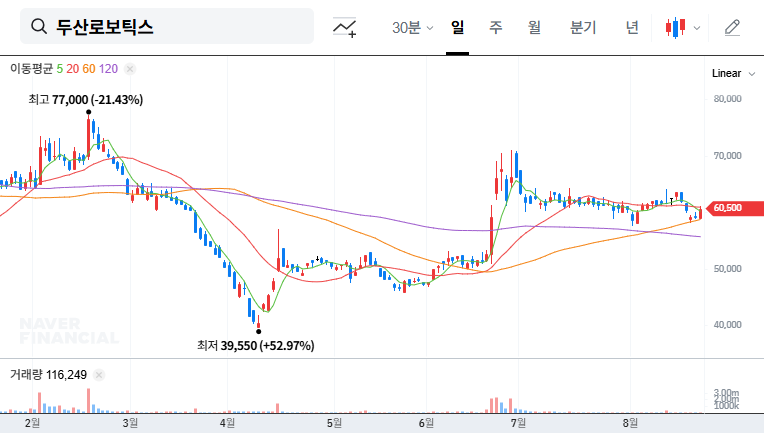
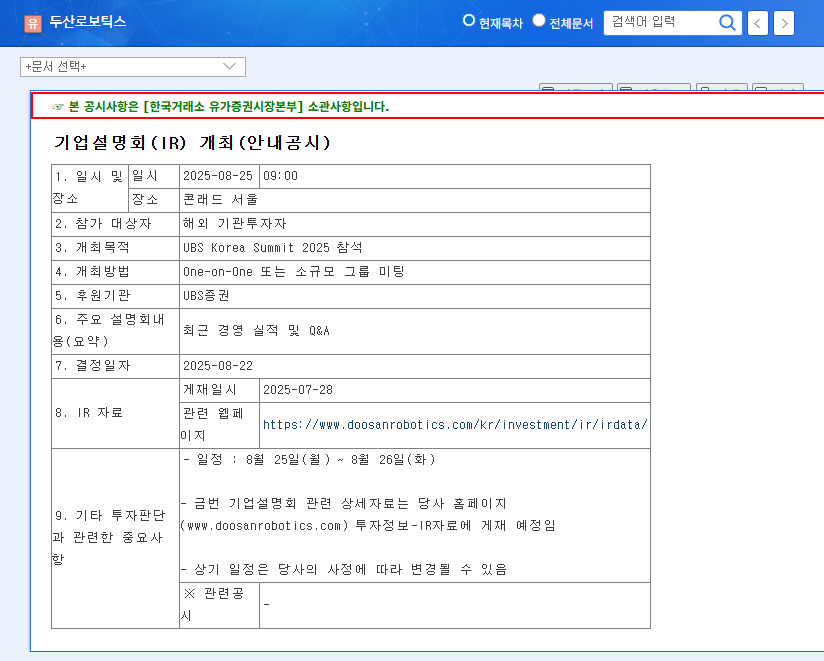
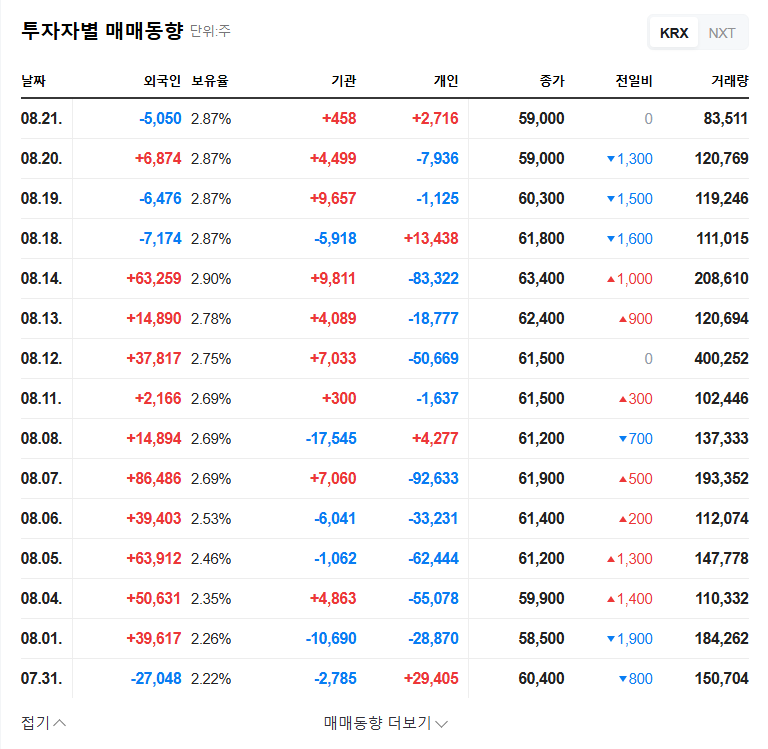
Tag: 454910

  • (454910) Doosan Robotics Inc. Q3 2025 IR Analysis: Stock Outlook & AI Strategy Deep Dive

    (454910) Doosan Robotics Inc. Q3 2025 IR Analysis: Stock Outlook & AI Strategy Deep Dive

    All eyes are on Doosan Robotics Inc., a prominent leader in the global collaborative robot market, as it approaches its pivotal Q3 2025 Investor Relations (IR) event. This briefing is more than a routine update; it represents a critical juncture for the company. Will this IR serve as the catalyst to overcome recent financial headwinds and solidify its future as an AI-driven powerhouse? Or will it magnify existing concerns about profitability and competition?

    This comprehensive analysis offers a deep dive into the upcoming event, dissecting company fundamentals, macroeconomic factors, and the potential impact on Doosan Robotics stock. We will explore how the Q3 earnings and management’s strategic vision will shape investor sentiment and guide you toward more informed robotics investment decisions.

    The Stakes of the Q3 2025 IR Event

    Doosan Robotics Inc. has scheduled its IR briefing for domestic institutional investors on November 19, 2025. This Non-Deal Roadshow will feature the announcement of its Q3 2025 performance results, followed by an essential Q&A session. The primary goal is to transparently communicate the company’s current business health and strategic outlook, as detailed in its Official Disclosure. For investors, this is a key opportunity to gauge the leadership’s confidence and clarity of vision.

    Financial Health: A Fundamental Diagnosis

    While Doosan Robotics Inc. is strategically positioned in the high-growth collaborative robot market, its recent financial performance presents a mixed picture, highlighting a significant challenge in achieving profitability.

    Deteriorating Revenue and Profitability Metrics

    The first half of 2025 revealed some concerning trends that investors will be watching closely in the Q3 report:

    • Significant Revenue Decrease: H1 2025 revenue stood at 9.812 billion KRW, a sharp 61.2% decline year-over-year, largely attributed to the global economic slowdown and key customer inventory adjustments.
    • Expanding Operating Losses: The operating loss widened to 27.757 billion KRW in H1 2025. This was driven by the combination of decreased revenue and rising Selling, General, and Administrative (SG&A) expenses.
    • Negative Earnings Per Share: The loss per share of -401 KRW in H1 2025 underscores the profitability challenges the company faces.

    A Silver Lining: Financial Soundness

    Despite the operational losses, the company’s balance sheet shows a key strength. With a debt-to-equity ratio maintained at an exceptionally low 5.02%, Doosan Robotics Inc. demonstrates robust financial health. This stability is a crucial asset that can support the company through volatile periods and provides a solid foundation for its long-term growth strategy.

    The core challenge for Doosan Robotics is clear: it must prove to investors that its exciting AI-driven vision can be translated into a sustainable and profitable business model.

    The Future Growth Driver: AI Robotics Strategy

    The company’s long-term value proposition hinges on its ambitious AI robotics strategy. Management is steering the company from a hardware-centric model to becoming an AI-based, End-to-End intelligent robot solution provider. This strategic shift is vital for differentiation in a competitive market. However, the absolute decrease in R&D expenditure, a consequence of falling sales, is a point of concern that management will need to address. Strategic investments, like the stake in ONExia, Inc., signal a commitment to this vision, but investors will be looking for a clearer roadmap to monetization.

    Market Landscape and Potential Scenarios

    The global collaborative robot market is expanding at a remarkable rate, providing a fertile ground for growth. However, competition from established players like Universal Robots and FANUC is intense. Doosan’s price competitiveness and high safety ratings are key advantages, but the market demands continuous innovation.

    Positive Scenario (The Bull Case)

    • Q3 earnings beat expectations, signaling a revenue recovery.
    • Management presents a concrete, data-backed roadmap for the AI strategy.
    • A clear plan for controlling SG&A expenses and improving margins is unveiled.

    Negative Scenario (The Bear Case)

    • Q3 results show continued revenue decline and widening losses.
    • The AI strategy remains vague without clear milestones or commercialization plans.
    • Concerns about the absolute decline in R&D spending are not adequately addressed.

    Actionable Insights for Investors

    Investors should look beyond the headline numbers of the Q3 report. The real insights will come from management’s narrative during the Q&A session. Pay close attention to their commentary on profitability improvements, progress in the AI and solution integration, and global market expansion strategies. Understanding the broader trends is also crucial. For context, you can read our detailed analysis of the global robotics industry and compare financial metrics with reports from authoritative sources like the Financial Times.

    Ultimately, this IR event will be a defining moment for Doosan Robotics stock. A convincing performance could restore investor confidence and set the stage for a rebound, while a disappointing one could prolong the uncertainty. Diligent analysis of the information presented will be key to making a sound investment decision.

    Disclaimer: This analysis is for informational purposes only and does not constitute investment advice. All investment decisions should be based on your own research and judgment.

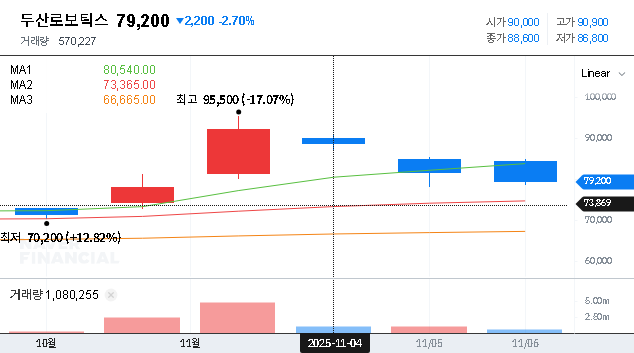
    (454910) Doosan Robotics Inc. Q3 2025 IR Analysis: Stock Outlook & AI Strategy Deep Dive 관련 이미지
  • (454910) Doosan Robotics Inc. Earnings Analysis (Q3 2025): A Deep Dive for Investors

    (454910) Doosan Robotics Inc. Earnings Analysis (Q3 2025): A Deep Dive for Investors

    The latest Doosan Robotics Inc. earnings report for Q3 2025 has landed, painting a complex picture for investors. As a key player in the burgeoning collaborative robot market, the company’s performance is a critical barometer for the industry’s health. While top-line revenue shows signs of recovery, persistent operating losses raise pivotal questions about the company’s path to profitability. Are these simply the ‘growing pains’ of an ambitious tech leader, or do they signal a deeper crisis?

    This comprehensive analysis dissects the Doosan Robotics Q3 2025 results, examining corporate fundamentals, macroeconomic headwinds, and the competitive landscape. We will provide a clear-eyed view of the challenges and opportunities ahead, offering actionable insights for anyone considering a robotics investment.

    Unpacking the Q3 2025 Earnings Report

    On November 6, 2025, Doosan Robotics Inc. released its provisional consolidated earnings, which can be viewed in the Official Disclosure on DART. The headline figures present a mixed narrative:

    • Revenue: 10.2 billion KRW. A notable increase from the previous quarter and on par with the prior year’s performance.
    • Operating Income: -15.3 billion KRW. The loss margin slightly improved from Q2, but remains a significant concern.
    • Net Income: -12.9 billion KRW.

    While the sequential revenue rebound offers a glimmer of hope, the substantial bottom-line losses underscore the urgent need for a sustainable profitability strategy. The market’s reaction will likely hinge on whether these figures are interpreted as a temporary setback or a systemic weakness in the company’s business model.

    The core challenge for Doosan Robotics isn’t just revenue growth; it’s converting that growth into profit. The Q3 2025 results clearly indicate that the path to profitability remains the company’s most critical journey.

    The Anatomy of ‘Growing Pains’: Why Profits Remain Elusive

    Several key factors contribute to the current financial state of Doosan Robotics Inc., blending strategic long-term investments with short-term operational pressures.

    1. Aggressive R&D Investment

    The robotics industry is fiercely competitive, and maintaining a technological edge is non-negotiable. Doosan’s high R&D spending (32% of sales in H1) is a direct investment in future growth, funding innovations in AI, machine vision, and software platforms. While this spending is essential for long-term dominance, it heavily pressures short-term profitability. Investors must view this as a necessary cost of competition in a high-tech field.

    2. Global Market Expansion Costs

    Establishing a foothold in key international markets is crucial for growth. Doosan’s strategy of setting up branches in the United States and Europe is a forward-thinking move to capture a larger share of the global collaborative robot market. However, this expansion comes with significant upfront costs in logistics, marketing, and personnel. The return on these investments will likely materialize over several quarters, not immediately.

    3. Inventory and Operational Efficiency

    A high inventory level and a low inventory turnover ratio are red flags noted in previous reports. This suggests a potential mismatch between production and sales, leading to increased carrying costs and capital being tied up in unsold goods. Improving inventory management is a critical operational lever the company must pull to enhance profitability. Efficient supply chain management is just as important as innovation for long-term success. For more on this topic, see our guide on evaluating tech company fundamentals.

    Market Outlook and Investment Strategy

    Despite the profitability hurdles, the external environment offers significant tailwinds. The global collaborative robot market is projected to grow at a staggering CAGR of 36%, according to industry reports from sources like MarketsandMarkets. This explosive growth provides a massive opportunity for established players like Doosan Robotics Inc.

    However, macroeconomic factors such as currency fluctuations, rising logistics costs, and shifting interest rate environments introduce volatility. Investors should weigh the immense market potential against these short-term risks.

    Investor Action Plan: A ‘Cautious Watch’ Approach

    Given the current landscape, a ‘Cautious Watch’ stance on Doosan Robotics stock is prudent. The short-term stock price may face downward pressure as the market digests these losses. Before committing capital, investors should look for tangible evidence of a turnaround. Key metrics to monitor include:

    • Profitability Improvements: Look for a steady reduction in operating losses and an improving gross profit margin. This is more critical than revenue growth alone.
    • Operational Efficiency: Monitor inventory turnover ratios and announcements regarding supply chain optimizations.
    • Overseas Performance: Watch for announcements of significant client wins or milestone revenue figures from the US and European markets.
    • Success of Solutions Business: Track the adoption rate of recurring revenue models, such as software subscriptions and integrated solutions like DR.Presso.

    In conclusion, the Doosan Robotics Inc. earnings for Q3 2025 highlight a company at a crossroads. It possesses the technology and market opportunity for phenomenal long-term growth, but it must prove it can build a profitable and sustainable business. Cautious observation and a focus on qualitative operational improvements are the most sensible strategies for investors today.

    (454910) Doosan Robotics Inc. Earnings Analysis (Q3 2025): A Deep Dive for Investors 관련 이미지
  • (454910) Doosan Robotics Q3 2025 IR: Investment Analysis & Stock Forecast

    (454910) Doosan Robotics Q3 2025 IR: Investment Analysis & Stock Forecast

    The upcoming Doosan Robotics Q3 2025 IR on November 6, 2025, is poised to be a pivotal moment for the company and its investors. Following a challenging first half of the year, stakeholders are eagerly awaiting signs of a turnaround. This comprehensive analysis delves into the recent Doosan Robotics financial results, explores the potential impact on the Doosan Robotics stock, and provides a forward-looking perspective for anyone considering an investment in this key player in the collaborative robots market.

    We will examine the pressures that led to the H1 downturn, unpack the company’s strategic growth drivers, and outline the key catalysts and risks that will shape its trajectory. This article offers a holistic investment framework to help you navigate the potential volatility and opportunities surrounding this critical event.

    With H1 revenue down 61% YoY, the Q3 Investor Relations conference is more than just a financial report; it’s a test of the company’s resilience and a window into its future growth strategy.

    Analyzing the H1 2025 Performance Headwinds

    Doosan Robotics (454910) encountered significant challenges in the first half of 2025. Revenue saw a sharp decline to KRW 9.812 billion, a staggering 61% year-over-year decrease. Simultaneously, operating losses widened considerably to KRW 27.757 billion, signaling severe pressure on profitability. This downturn is largely attributed to a global economic slowdown, which has caused many of Doosan’s key customers in manufacturing and logistics to delay capital expenditures and adjust their existing inventory levels.

    However, it’s crucial to note that despite these operational struggles, the company’s balance sheet remains exceptionally strong. With a debt-to-equity ratio of just 5.02%, Doosan Robotics maintains a stable financial foundation, giving it the flexibility to navigate the current storm and continue investing in its future. The official H1 performance can be reviewed in the company’s Official Disclosure (DART).

    Core Business and Strategic Growth Pillars

    Dominance in the Collaborative Robots Market

    Collaborative robots, or ‘cobots,’ remain the heart of Doosan’s business, accounting for approximately 66% of total revenue. While the domestic South Korean market is a stronghold, a significant 41.5% of sales come from international markets, demonstrating a robust and expanding global footprint. This international presence is critical for long-term diversification and growth. To maintain its edge, the company aggressively reinvests 32% of its revenue into Research & Development, a testament to its commitment to technological innovation and staying ahead in a competitive field. For more on the industry landscape, you can explore our deep dive into the collaborative robots market.

    Future Growth: Service Robots and Intelligent Solutions

    Looking ahead, Doosan Robotics is strategically pivoting to become an End-to-End intelligent robot solution provider. This evolution involves three key initiatives:

    • Targeting the Service Robot Market: Expanding beyond industrial applications into high-growth sectors like food & beverage, logistics, and healthcare.
    • Building Recurring Revenue: Developing software, maintenance, and solution-as-a-service (SaaS) models to create more predictable and stable income streams.
    • Strategic Acquisitions: Leveraging M&A, such as the equity acquisition of ONExia, Inc., to quickly acquire new technologies and market access, particularly in North America.

    What to Expect from the Doosan Robotics Q3 2025 IR

    The Q3 2025 earnings call is a critical checkpoint. Here’s a breakdown of potential catalysts and risks that could sway the Doosan Robotics stock price.

    Potential Positive Catalysts (The Bull Case)

    If the Q3 results show a significant improvement over H1—such as a slower rate of revenue decline, a narrowing of operating losses, or exceeding muted market expectations—it could trigger a positive stock reaction. Furthermore, if management presents a clear, actionable roadmap for its growth strategies with tangible milestones, it would significantly boost long-term investor confidence. News of new major partnerships or technological breakthroughs could also serve as a powerful catalyst.

    Potential Negative Risks (The Bear Case)

    Conversely, if Q3 results continue the negative trend or miss analyst consensus, it could lead to further downward pressure on the stock. A lack of clarity or concrete progress on the service robot and recurring revenue initiatives may raise doubts about the company’s ability to pivot effectively. External factors, such as a worsening macroeconomic outlook or increased competition, as noted by industry analysts at sources like the IFR, also remain a persistent risk.

    Investor Action Plan & Final Thoughts

    Given the circumstances, a measured approach to a Doosan Robotics investment is prudent.

    • Short-Term Strategy: Expect heightened volatility around the November 6th announcement. A wait-and-see, observational stance is advisable. Analyze the Q3 numbers and management’s commentary before making any moves.
    • Long-Term Strategy: The company’s strong R&D focus, solid financial base, and strategic expansion into service robots suggest significant long-term potential. Investors with a multi-year horizon might view any post-IR dips as a potential entry point for phased buying, contingent on a credible growth story from management.

    In conclusion, the Doosan Robotics Q3 2025 IR is a critical inflection point. While the H1 performance was undeniably weak, the company’s underlying strengths in technology and financial stability cannot be ignored. The key will be whether management can present a convincing narrative of recovery and future growth that persuades the market of its long-term value proposition.

    Disclaimer: This article is for informational purposes only and does not constitute financial advice. Investors should conduct their own research and consult with a professional before making any investment decisions.

    (454910) Doosan Robotics Q3 2025 IR: Investment Analysis & Stock Forecast 관련 이미지
    (454910) Doosan Robotics Q3 2025 IR: Investment Analysis & Stock Forecast 관련 이미지