Tag: 335890

  • (335890) VIOL Co., Ltd. Delisting (2025): The Ultimate Shareholder Guide

    (335890) VIOL Co., Ltd. Delisting (2025): The Ultimate Shareholder Guide

    The recent announcement regarding the VIOL Co., Ltd. delisting application from the Korea Exchange has sent ripples through the investment community. As a leader in the aesthetic medical device market, VIOL’s move to go private marks a pivotal moment for the company and, most importantly, its minority shareholders. This decision, initiated on November 6, 2025, requires careful consideration and an informed strategy from investors holding its stock.

    This comprehensive guide will break down every aspect of the VIOL Co., Ltd. delisting process. We will explore the timeline, the reasons behind the move, the specific protection measures for shareholders, and a step-by-step action plan to help you navigate this transition and protect your investment.

    Understanding the VIOL Co., Ltd. Delisting Timeline

    To fully grasp the situation, it’s essential to understand the sequence of events that led to this point. The process has been methodical, reflecting a clear strategic objective by the new majority ownership.

    • September 29, 2025: The Board of Directors officially approves the resolution to delist the company.
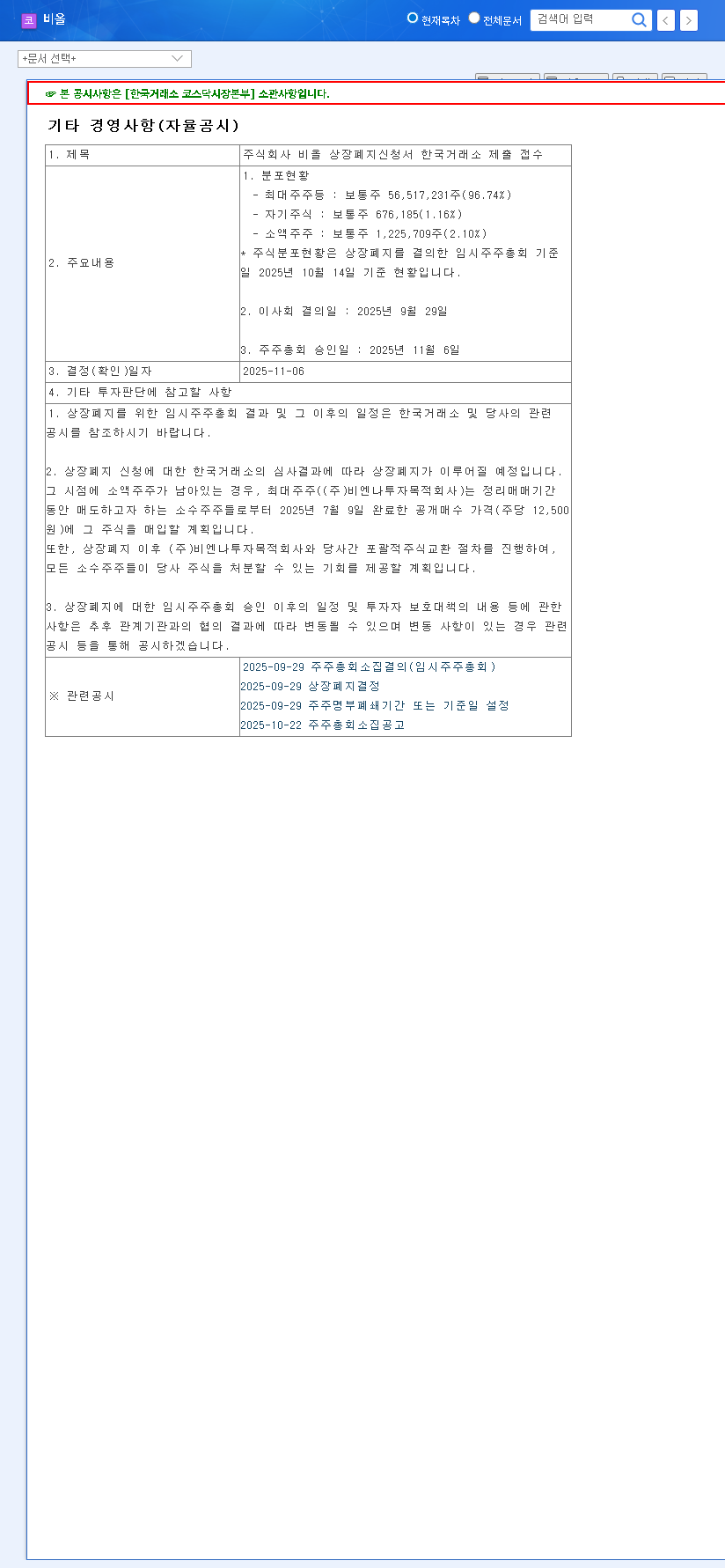
    • November 6, 2025: An extraordinary general meeting of shareholders is held, where the delisting plan receives the necessary approval.
    • November 6, 2025: Immediately following shareholder approval, VIOL Co., Ltd. formally submits its delisting application to the Korea Exchange. This move was documented in an Official Disclosure on the DART system.

    Why is VIOL Going Private?

    The primary driver behind the delisting is a strategic shift following a change in majority ownership. VIG Partners, a leading private equity firm, established Vienna Investment Purpose Company to acquire a controlling stake from the previous largest shareholder, DMS Co., Ltd. Their goal is to take VIOL private and incorporate it as a wholly-owned subsidiary.

    By going private, VIOL can achieve several strategic advantages:

    • Long-Term Focus: Freed from the pressure of quarterly earnings reports and public market scrutiny, management can concentrate on long-term growth strategies, research, and development.
    • Management Efficiency: Delisting reduces significant administrative and compliance costs associated with being a publicly traded company.
    • Strategic Flexibility: Private ownership allows for quicker, more decisive actions and investments without the need for extensive public shareholder consensus.

    With a minority shareholder ratio of just 2.10%, the path to privatization is significantly streamlined, allowing the new ownership to execute its vision for the company more effectively.

    A Detailed VIOL Shareholder Guide: Protection & Options

    The company has outlined a clear two-phase plan to protect the interests of its remaining minority shareholders. Understanding these options is critical to making an informed decision.

    Phase 1: Public Tender Offer

    During the grace period for trading (정리매매 기간) before the final delisting, VIOL will conduct a public tender offer. This is an official offer to purchase shares from minority shareholders at a fixed price.

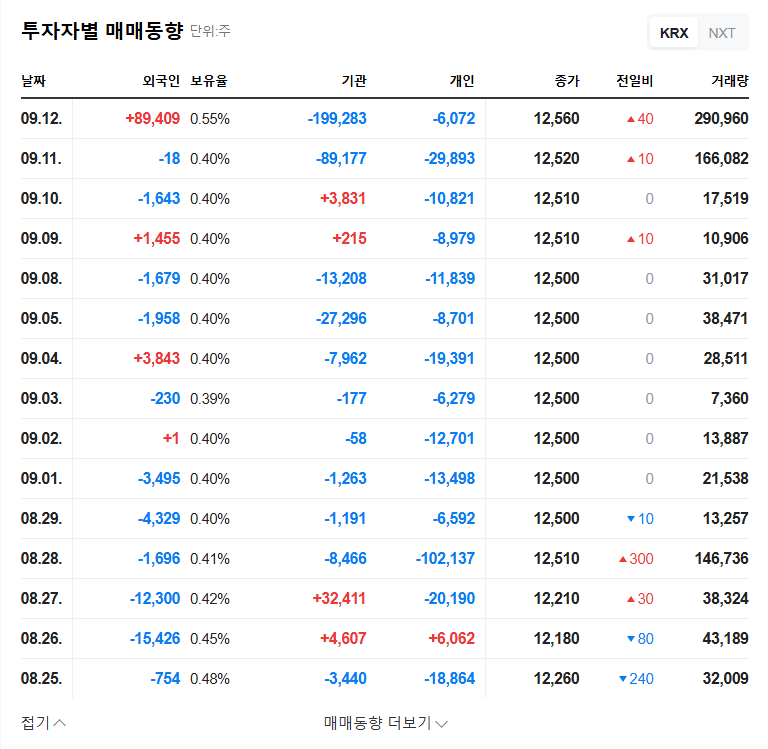
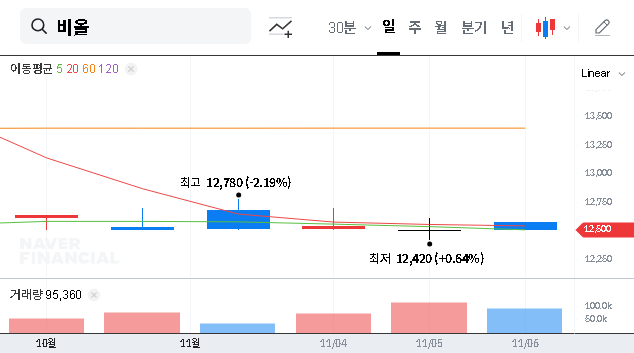
    • Offer Price: 12,500 KRW per common share.
    • Purpose: To provide a clear and immediate liquidity event for shareholders who wish to exit their position at a predetermined price before the stock becomes illiquid.

    Phase 2: Comprehensive Share Exchange

    For any shareholders who do not participate in the tender offer or sell on the open market during the grace period, a second mechanism will be available after the company is officially delisted.

    The comprehensive share exchange is a legal procedure that will convert all remaining minority shares into cash or shares of the parent company, effectively completing the process of making VIOL a wholly-owned subsidiary. The terms will be based on a fair valuation as prescribed by law, but it’s crucial to review the specifics when announced. For more details on these financial instruments, resources like Investopedia offer excellent explanations.

    Your Action Plan: What Should Shareholders Do?

    The VIOL Co., Ltd. delisting presents a critical juncture. Here is a recommended course of action:

    1. 1. Stay Informed: Actively monitor all official announcements from VIOL and the Korea Exchange. Pay close attention to the exact dates of the grace period for trading and the tender offer period. Missing these windows can complicate your exit strategy.
    2. 2. Evaluate the Offer: Assess whether the 12,500 KRW per share price is fair value for your investment. Consider the company’s financial performance (stable revenue growth but decreased operating profit), its position in the aesthetic medical device market, and its future potential as a private entity.
    3. 3. Decide Your Strategy: Based on your evaluation, choose one of three paths: sell during the grace period, accept the public tender offer, or hold your shares and participate in the post-delisting comprehensive share exchange. Each has different implications for timing and liquidity.
    4. 4. Seek Professional Advice: If you are uncertain, consulting with a financial advisor is highly recommended. They can provide personalized advice based on your portfolio and financial goals, ensuring you make the optimal decision for your circumstances.

    Ultimately, the decision to delist is a strategic one aimed at fostering long-term, sustainable growth for VIOL Co., Ltd. For minority shareholders, the key is to remain proactive, well-informed, and to make a deliberate choice that aligns with their investment objectives.
    (335890) VIOL Co., Ltd. Delisting (2025): The Ultimate Shareholder Guide 관련 이미지
  • (335890) BIOL Shareholder Stake Increases: A Deep Dive Analysis for Investors (335890)

    (335890) BIOL Shareholder Stake Increases: A Deep Dive Analysis for Investors (335890)

    A recent move by BIOL’s largest shareholder has sent ripples through the investment community, focusing attention on the company’s future. This detailed BIOL stock analysis explores the implications of Vienna Investment Co. increasing its BIOL shareholder stake. For savvy investors, understanding the nuances of this development is critical. We will dissect the official disclosure, analyze the strategic motivations, and provide a clear roadmap for what this means for BIOL’s stock price, management stability, and long-term value proposition.

    The Details: A Closer Look at the Increased Stake

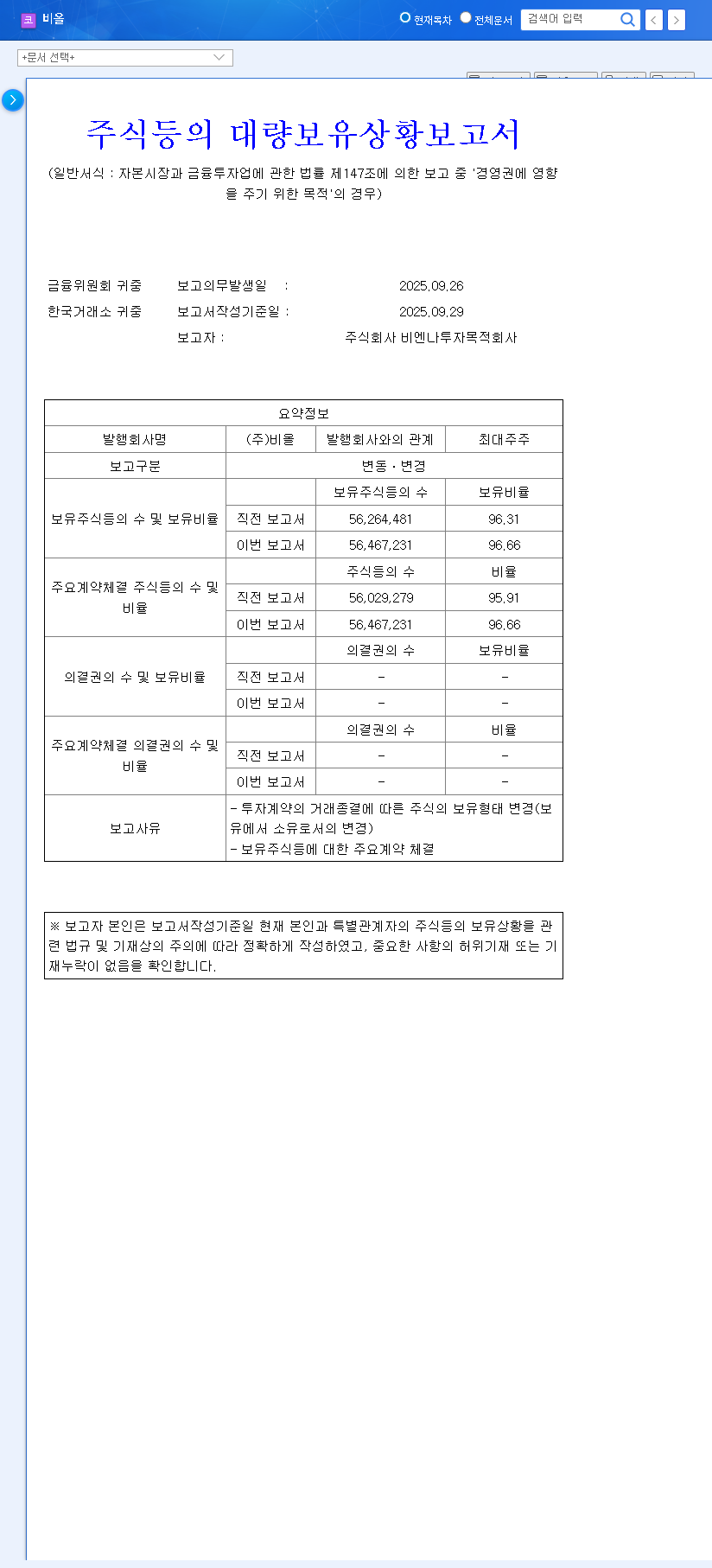
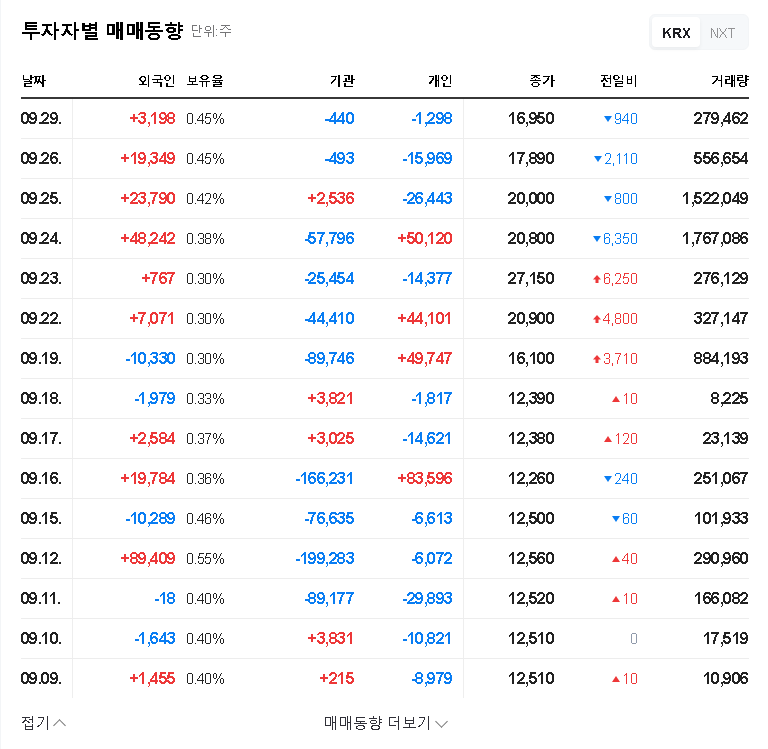
    On September 30, 2025, a significant large shareholding report was filed concerning BIOL (335890). According to the Official Disclosure, BIOL’s principal investor, Vienna Investment Co., increased its ownership from 96.31% to 96.66%. This 0.35 percentage point rise was achieved through the open market acquisition of 202,750 shares between September 15 and September 19, 2025. While the percentage seems small, it’s a definitive move signaling a consolidation of power and long-term commitment.

    The report cites the primary purpose as strengthening management influence. This was facilitated by a change in the shareholding structure (from holding to direct ownership) after finalizing a key investment contract. This isn’t just a financial transaction; it’s a strategic maneuver designed to fortify control and streamline future corporate strategy.

    Analyzing BIOL’s Financial Health & Strategic Position

    To understand the context of this move, we must evaluate BIOL’s current fundamentals. The first half of 2025 painted a mixed but intriguing picture for anyone conducting a thorough BIOL stock analysis.

    Financial Performance (H1 2025 Report)

    • Revenue Growth vs. Profitability Squeeze: Revenue saw a healthy 10.8% year-on-year increase. However, operating profit fell by 4.4%, compressing the margin from 5.40% to 4.73%. This suggests pressures from a global economic slowdown, heightened competition, and the upfront costs associated with R&D and new product launches.
    • Exceptional Financial Stability: The company boasts robust liquidity with KRW 98.55 billion in current assets. More impressively, total liabilities plummeted by 41.3%, drastically improving the debt-to-equity ratio from 10.40% to an excellent 5.53%. Consistently growing retained earnings further underscore its solid financial foundation.
    • Currency Headwinds: BIOL’s profitability is notably sensitive to fluctuations in the USD exchange rate, a key risk factor for investors to monitor.

    Business Competitiveness and Growth Vectors

    • Core Product Strength: Sales are anchored by a stable of aesthetic medical devices, including Micro-needle RF, Monopolar RF, and HIFU-based technologies.
    • Innovation Pipeline: Continuous investment in R&D is yielding new products like CELLINEW and DUOTITE, which are crucial for maintaining a technological edge.
    • Global Expansion: With a sales network in 60 countries and key NMPA (China) and Taiwanese market approvals, BIOL’s international growth potential remains a significant asset.

    “When a majority shareholder with over 96% ownership still buys on the open market, it’s the strongest possible vote of confidence. Vienna Investment Co. is signaling that they are all-in on BIOL’s long-term strategy, prioritizing stability and streamlined execution over short-term market noise.”

    Investor Implications: What the Increased Stake Means for You

    The increased BIOL shareholder stake is more than a line item on a report; it directly impacts BIOL investor relations and the stock’s future trajectory. Here’s how:

    Enhanced Management Stability & Confidence

    With an even tighter grip on control, Vienna Investment Co. can ensure swift, decisive action on mid-to-long-term strategies. This reduces the risk of internal conflicts and provides a stable foundation for executing ambitious growth plans, which is a major positive for investor confidence.

    Stock Price: Short-Term Catalyst vs. Long-Term Value

    In the short term, news of a majority shareholder increasing their stake is typically a bullish signal. The market often interprets this as insider confidence, which can provide a temporary lift to the stock price. However, for sustainable, long-term appreciation, the market will need to see this consolidated control translate into tangible results. The key question will be whether BIOL’s fundamentals—particularly profitability—improve. For more on this, see our deep dive into BIOL’s latest product pipeline.

    Investor Action Plan & Key Takeaways

    While this development is positive, a prudent investment decision requires a holistic view. Consider these points:

    • Value Management Stability: Acknowledge that the solidified control is a significant de-risking factor, creating a more predictable environment for the company’s long-term value creation.
    • Monitor the Fundamentals: The core focus must remain on performance. Watch for a reversal in the declining profitability trend. The success of global expansion and new product adoption will be the ultimate drivers of stock value.
    • Track External Factors: Keep an eye on macroeconomic trends, especially USD exchange rate movements and geopolitical risks, given BIOL’s sensitivity and global footprint.

    In conclusion, Vienna Investment Co.’s increased stake significantly enhances BIOL’s investment appeal by promising stability and focused leadership. However, this must be balanced against a critical evaluation of the company’s ability to execute its growth strategy and improve its financial performance.

    (335890) BIOL Shareholder Stake Increases: A Deep Dive Analysis for Investors (335890) 관련 이미지
    (335890) BIOL Shareholder Stake Increases: A Deep Dive Analysis for Investors (335890) 관련 이미지
  • BIOL(335890) Issued Investment Warning: Should You Invest Now? Key Analysis and Future Outlook


    1. BIOL(335890) Investment Warning: What Happened?

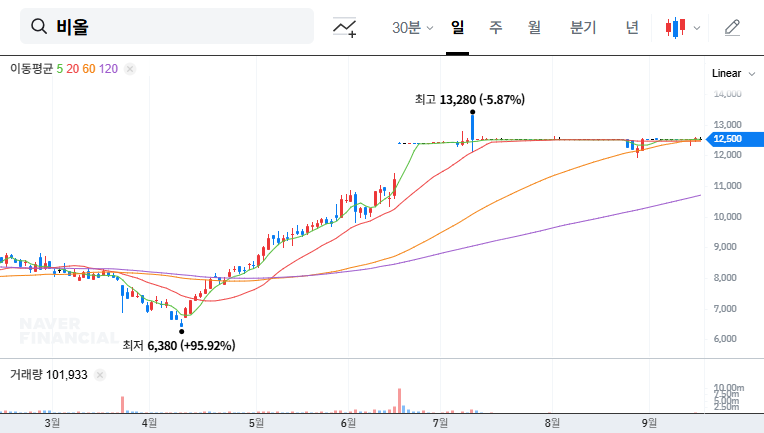
    BIOL was designated as an investment warning stock on September 23, 2025, due to a rapid surge in its stock price. This serves as a market warning signal regarding the recent overheating of the stock.

    2. Why the Investment Warning?

    BIOL’s performance in the first half of 2025 showed a significant decline in both sales and profits compared to the same period last year. Decreased technology transfer income and increased advertising expenses are identified as the primary causes. However, cash and short-term financial assets have increased, and there are positive factors such as new product launches and a change in the largest shareholder.

    3. The Investment Warning: What’s Next?

    The investment warning designation may lead to increased short-term stock price volatility and dampened investor sentiment. If the stock price continues to rise significantly, further measures such as investor alerts or trading suspensions may be implemented. However, if fundamental improvements support the company, there’s a possibility of continued upward momentum.

    4. Investor Action Plan

    • Short-term investors: Exercise caution due to potential increased price volatility. Closely monitor short-term price movements and market reactions.
    • Long-term investors: Focus on fundamental improvement trends, the effects of new product releases, and management strategies following the change in the largest shareholder, and develop investment strategies from a long-term perspective.


    FAQ

    Why was BIOL issued an investment warning?

    It was issued to prevent investment overheating due to a rapid surge in the stock price.

    Can the investment warning be lifted?

    Yes, it can be lifted when the stock price stabilizes and the reasons for the warning are resolved.

    What will happen to the stock price after the investment warning?

    Short-term volatility may increase, and trading may be suspended if the price continues to rise. However, if fundamentals improve, the upward trend may continue.


  • VIOL (335890) Investor Alert Issued! Should You Invest Now? Key Analysis and Future Outlook


    1. What Happened?: VIOL Investor Alert

    VIOL recently received an investor alert from the Korea Exchange due to a rapid surge in stock price and trading volume. This serves as a warning to investors about short-term overheating. In particular, following the November 2024 reports of a change in the largest shareholder and potential delisting, the stock’s volatility has increased, further amplifying investor concerns with the issuance of the alert.

    2. Why Did This Happen?: Fundamental and Market Environment Analysis

    VIOL has shown solid sales growth in the aesthetic medical device market, and its export-oriented business structure is positive. However, the decline in operating profit and net income compared to sales growth is a factor contributing to deteriorating profitability. This is due to increased selling, general and administrative expenses (such as advertising expenses) and financial expenses (foreign exchange losses). Fortunately, financial soundness has greatly improved due to a decrease in debt ratio and an increase in current assets, and its R&D capabilities are robust.

    Macroeconomically, the weak Korean Won could be positive for export profitability, but there are also concerns about rising import costs of raw materials. The expected interest rate cut is positive for easing financing costs, and the stabilization of logistics costs is also a positive factor.

    3. What’s Next?: Future Outlook

    VIOL is evaluated as a company with high growth potential, but in the short term, there is a possibility of investor sentiment contraction and increased stock price volatility. However, positive factors include the growth of the global aesthetic medical market, solid sales growth, improved financial soundness, and R&D capabilities.

    4. What Should Investors Do?: Investment Implications

    • Prepare for Short-Term Volatility: Be mindful of short-term volatility following the investor alert and maintain a long-term investment perspective based on fundamentals.
    • Check Profitability Improvement: Check the trend of SG&A management and financial expense stabilization in future earnings announcements.
    • Monitor the Largest Shareholder Change Issue: Continuously monitor the progress of related issues and refer to the company’s official announcements.
    • Consider Macroeconomic Variables: Consider the impact of interest rate and exchange rate fluctuations on VIOL’s profitability and stock price.

    VIOL has long-term growth potential, but there are short-term negative factors and uncertainties. Investors should fully understand this and make prudent investment decisions.


    Frequently Asked Questions (FAQ)

    Does the stock price always fall when an investor alert is issued?

    Not necessarily. An investor alert is a warning about a rapid surge in stock price, so the stock price may adjust in the short term, but it can rise in the long term if the company’s fundamentals are solid.

    When is the VIOL investor alert expected to be lifted?

    The timing of the lifting of the investor alert depends on the judgment of Korea Exchange and is difficult to predict. It is likely to be lifted when the stock price stabilizes and the trading volume decreases.

    Is it okay to invest in VIOL now?

    Investment decisions should be made at the investor’s own discretion. Please make a careful decision based on the information provided in this article and further analysis.


  • VIOL (335890) Stock Forecast: Majority Shareholder Increases Stake, Delisting Potential?


    VIOL (335890) Stock Forecast: Majority Shareholder Increases Stake, Delisting Potential? 대표 차트 이미지


    What Happened with VIOL?

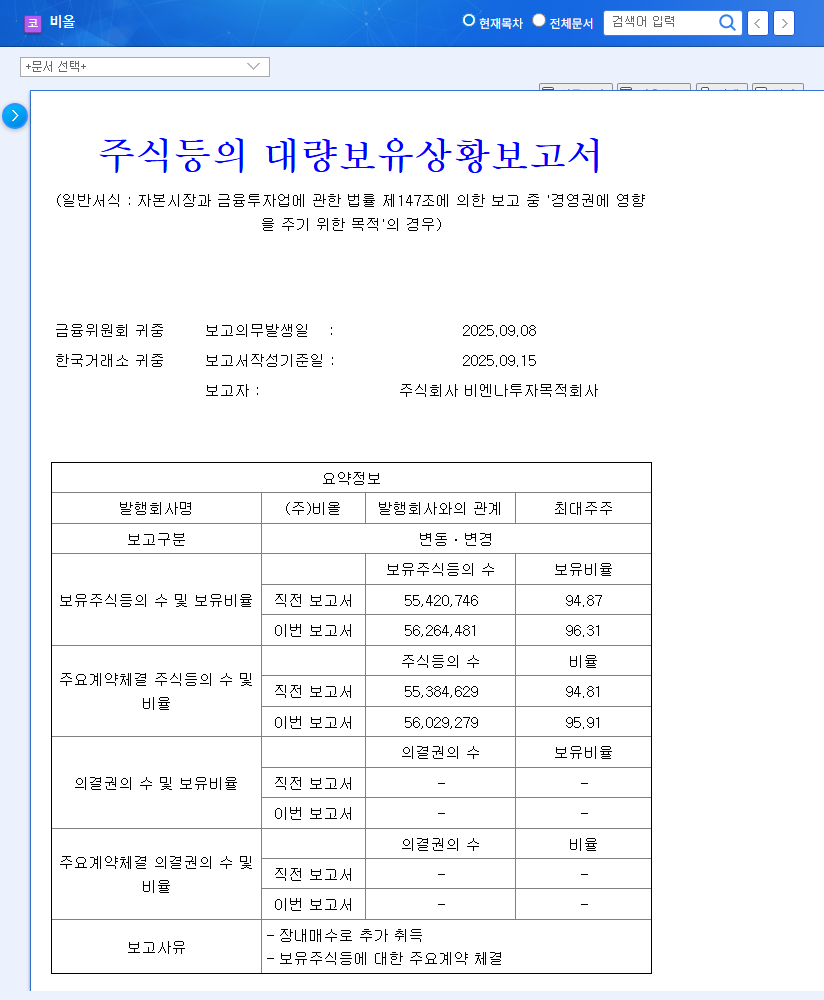
    VIOL’s majority shareholder, Vienna Investment Purpose Company, acquired an additional 252,595 shares through market purchases from September 8th to 12th, 2025, increasing their stake from 94.87% to 96.31%. This meets the delisting requirements, drawing significant market attention.

    Why is the Stake Increase Important?

    The increase in the majority shareholder’s stake signifies more than just strengthening management control. It has the following implications:

    • Management Stability: Establishes a stable management environment, empowering the pursuit of mid-to-long-term strategies.
    • Delisting Potential: A stake exceeding 96% fulfills the sufficient conditions for delisting. Converting to a privately held company can lead to increased management efficiency and reduced risk from short-term stock price volatility.
    • Potential for Investment Attraction/Financial Restructuring: The stake increase could be a strategic move for attracting further investment or restructuring finances.

    How are VIOL’s Fundamentals?

    As of the first half of 2025, VIOL demonstrates robust fundamentals. Overseas sales growth is particularly notable, and financial soundness remains very high. However, continuous monitoring of external factors like exchange rate fluctuations and rising raw material prices is necessary.

    What Should Investors Do?

    • Check Delisting Information: Carefully review public announcements regarding the delisting process, conditions, etc.
    • Maintain a Long-Term Perspective: Consider the potential for long-term growth based on solid fundamentals.
    • Monitor Macroeconomic Variables: Continuously monitor the impact of external variables such as exchange rates and raw material prices.


    Frequently Asked Questions

    How likely is VIOL to be delisted?

    The current stake exceeding 96% meets the delisting requirements, making it highly probable. However, the final decision and timing are undetermined, requiring close attention to related announcements.

    What happens to the shares if delisting occurs?

    If delisting is decided, there will be a designated period during which shareholders can sell their shares at the delisting price. After this period, trading will occur as unlisted shares.

    Should I invest in VIOL?

    While solid fundamentals and growth potential are positive, investment decisions should be made cautiously, considering the possibility of delisting and external variables.


    VIOL (335890) Stock Forecast: Majority Shareholder Increases Stake, Delisting Potential? 관련 이미지
    VIOL (335890) Stock Forecast: Majority Shareholder Increases Stake, Delisting Potential? 관련 이미지


  • BIOL (335890) Major Shareholder Increases Stake: Opportunity or Hidden Risk?

    BIOL (335890): Background and Implications of the Major Shareholder’s Stake Increase

    On August 18, 2025, BIOL’s major shareholder increased their stake from 94.24% to 94.87%, a 0.63%p increase, through on-market purchases and contracts related to shares. This stake increase, amidst the ongoing change of the largest shareholder to a special purpose company established by VIG Partners, suggests management stabilization and strong confidence in the company.

    Hidden Shadows: Declining Profitability and Potential Risks

    However, there are downsides to consider. BIOL’s semi-annual report for 2025 shows a trend of declining profitability despite revenue growth. Operating income and net income decreased by 4.4% and 24.2%, respectively, due to increased selling, general and administrative expenses, and financial expenses. Additionally, given the high proportion of exports, increasing exchange rate volatility and the possibility of a global economic recession can act as investment risks.

    Action Plan for Investors: Balancing Opportunities and Risks

    While the major shareholder’s stake increase offers the positive aspect of management stability, it’s crucial to consider the risks of declining profitability and changes in the external environment. Investors should look beyond short-term stock price fluctuations and closely monitor the company’s efforts to improve profitability and future plans related to the change of the largest shareholder.

    Will BIOL’s major shareholder stake increase positively impact the stock price?

    The increase in the major shareholder’s stake can be interpreted as a positive signal, demonstrating management stability and confidence in the company. However, factors such as declining profitability should also be considered, meaning the impact on the stock price could be either positive or negative.

    What is BIOL’s main business?

    BIOL is a medical device company specializing in radio frequency (RF) based microneedle RF skin beauty medical devices, HIFU based medical devices, and consumables.

    What are the key points to consider when investing in BIOL?

    Investors should carefully consider the continued trend of declining profitability, exchange rate volatility, and uncertainties related to the change of the largest shareholder.

  • BIOL (335890): Q2 Earnings Shock – What Should Investors Do?

    1. What Happened? Analyzing the Q2 Earnings Shock

    BIOL’s Q2 2025 earnings showed a significant decline compared to the previous quarter and the same period last year. Revenue dropped to ₩12.6 billion, a decrease of approximately 28.8% from the previous quarter (₩17.7 billion). Operating profit and net income also plummeted by more than half compared to the previous quarter, reaching ₩5 billion and ₩2.4 billion, respectively. This slowdown could exert downward pressure on the stock price in the short term.

    2. Why Did This Happen? Exploring the Causes of the Slowdown

    The report doesn’t specify the exact reasons for the earnings decline. Further analysis through upcoming disclosures and IR materials is crucial to understand the underlying causes and determine whether they are temporary or structural. Factors such as increased competition, rising raw material prices, and exchange rate fluctuations could have contributed.

    3. What’s Next? Future Outlook and Investment Strategies

    BIOL possesses several positive attributes, including robust fundamentals, global market growth, and technological competitiveness. The change in major shareholder could potentially enhance management efficiency in the long run. However, the Q2 earnings slowdown, exchange rate volatility, and intensifying competition represent investment risks. The future stock price will depend on the analysis of the Q2 slowdown, the outlook for the second half, the progress of the change in major shareholder and delisting process, and the company’s ability to manage exchange rate fluctuations.

    4. What Actions Should Investors Take?

    • Short-term investors: Closely monitor market reactions to the Q2 earnings slowdown and be cautious of increased volatility.
    • Mid-to-long-term investors: Focus on the fundamentals and growth potential, but conduct a thorough analysis of the reasons for the slowdown and the future outlook. Refer to the company’s IR materials and analyst reports to make informed investment decisions.

    Frequently Asked Questions

    Q: Why did BIOL’s Q2 earnings disappoint?

    A: The report doesn’t provide specific reasons, requiring further analysis. Factors like increased competition, fluctuating raw material prices, and exchange rate volatility could have played a role.

    Q: Is it a good idea to invest in BIOL?

    A: Considering BIOL’s sound fundamentals and growth potential, there’s long-term investment appeal. However, the Q2 earnings slowdown, the change in major shareholder, and the potential delisting pose risks, demanding careful investment decisions.

    Q: How likely is delisting?

    A: The change in major shareholder has raised the possibility of delisting, but it’s not confirmed. Investors should monitor related disclosures and news updates.

  • BIOL Stock Forecast: Management Shift – Investment Opportunity or Risk? (August 2025 Analysis)

    1. What Happened? : Vienna Investment Company Acquires 94.24% Stake in BIOL

    Vienna Investment Company increased its stake in BIOL from 92.70% to 94.24% by purchasing 913,072 shares between July 28th and August 1st, 2025. This is clearly interpreted as an attempt to strengthen management control.

    2. Why Did This Happen? : Aiming to Enhance Corporate Value Through Management Control

    Vienna Investment Company aims to implement BIOL’s long-term growth strategies more effectively through securing management control. Their goal is to increase corporate value through expanding R&D investments and accelerating overseas market expansion.

    3. What Does This Mean for BIOL’s Future? : Short-Term Uncertainty, Long-Term Growth Potential

    • Short-term Impact: Increased uncertainty due to management changes may lead to increased stock price volatility. Stock prices could rise or fall depending on investor sentiment.
    • Long-term Impact: After management stabilizes, the establishment and execution of long-term strategies will be possible. The successful launch of CELLINEW and expansion into overseas markets (Indonesia, Taiwan) are positive factors. However, there are also risks associated with potential changes in business strategy under new management.

    4. What Should Investors Do? : Careful Observation and Information Gathering Needed

    Investors should monitor BIOL’s Q2 earnings announcement and the future management situation. It’s crucial to develop an investment strategy from a long-term perspective rather than being swayed by short-term stock price fluctuations. Consider risk factors such as changes in the macroeconomic environment (interest rates, exchange rates, raw material prices) and intensifying competition.

    Q: What is the outlook for BIOL’s stock price?

    A: In the short term, stock price volatility may increase due to uncertainty surrounding the management changes. In the long term, a positive outlook is expected due to management stabilization and the pursuit of growth strategies, but variables such as changes in business strategy and market conditions must be considered.

    Q: What does Vienna Investment Company’s increased stake mean?

    A: It is interpreted as a move to strengthen management control, which can significantly impact BIOL’s management strategies and future direction.

    Q: What precautions should investors take?

    A: Investors should consider risk factors such as the possibility of management disputes, changes in business strategy under new management, and changes in the macroeconomic environment. Closely monitoring the Q2 earnings announcement and future management changes is crucial.