Tag: 089970

  • (089970) VM Inc. Stock Option Exercise: A Deep Dive for Investors (089970 Analysis)

    (089970) VM Inc. Stock Option Exercise: A Deep Dive for Investors (089970 Analysis)

    The recent VM Inc. stock option exercise has captured significant attention within the investment community. As a leading semiconductor equipment manufacturer, any corporate action from VM Inc. (브이엠) warrants a closer look, especially when it involves the issuance of new shares. This event, representing 1.23% of its total outstanding shares, comes at a critical time for the company, which is navigating sluggish performance and management uncertainty. This comprehensive guide will dissect the implications of this move, offering a detailed semiconductor stock analysis and outlining crucial strategies for current and potential investors.

    For anyone holding or considering an investment in VM Inc. stock (ticker: 089970), understanding the nuances of this development is paramount to making an informed decision.

    Breaking Down the VM Inc. Stock Option Exercise

    On December 3, 2025, VM Inc. announced the exercise of 320,000 stock options. The details of this corporate action were made public in the company’s Official Disclosure. In essence, a stock option exercise allows employees to purchase company shares at a predetermined, often favorable, price. This common practice serves as a powerful compensation tool, designed to motivate employees by aligning their financial interests with the company’s long-term success. While the number of shares—1.23% of the total—is not massive, its timing and context are what truly matter for investors.

    VM Inc. at a Glance: A Company of Contrasts

    To understand the impact of the stock option event, we must first analyze the company’s current operational and financial landscape. VM Inc. is a key player in the semiconductor ecosystem, specializing in advanced etching process equipment for 300mm wafers, with SK Hynix as a major client.

    Financial Fortitude vs. Performance Slump

    The company’s recent performance has been challenging. VM Inc. recorded operating losses for two consecutive years (2023, 2024), a direct result of the global semiconductor market downturn and subsequent reduction in capital expenditures by clients. In 2024, it posted an operating loss of KRW 8.6 billion on revenues of KRW 70.3 billion. However, despite these operational headwinds, the company’s financial health remains remarkably stable:

    • A low debt-to-equity ratio of 33.31% signals minimal leverage risk.
    • A strong equity ratio of 75.01% demonstrates a solid balance sheet.
    • Substantial cash reserves of KRW 91.9 billion ensure excellent liquidity to weather the downturn and fund future growth.

    This financial stability is crucial, as it allows VM Inc. to continue its significant investment in R&D for next-generation equipment, positioning itself for the inevitable market recovery.

    Navigating Macroeconomic Headwinds

    The broader economic environment presents further challenges. While emerging technologies like AI and autonomous driving promise long-term demand for semiconductors, the industry remains highly sensitive to macroeconomic shifts. As noted by market analysts at reputable financial news sources, factors like currency volatility (KRW/USD, KRW/EUR) and rising interest rates can significantly impact VM Inc.’s costs and profitability, creating a complex risk profile for investors.

    Investor Impact: Reading Between the Lines

    The VM Inc. stock option exercise carries both positive and potentially negative signals for the market.

    The Bull Case: A Signal of Confidence?

    On the positive side, the exercise boosts employee morale and incentivizes performance, which can lead to innovation and operational excellence. It aligns the team’s goals with shareholder value. For the market, it can create short-term positive momentum as it signals a degree of internal confidence and precedes a potential new share issuance.

    The Bear Case: A Distraction from Core Issues

    Conversely, the timing is critical. Executing options during a performance slump suggests the primary driver is employee compensation rather than a signal of an imminent turnaround. While the risk of share price dilution from the 1.23% stake is minimal, the event does nothing to solve the company’s fundamental challenges: lackluster profitability and an ongoing management dispute with its largest shareholder. These core issues remain the primary drag on VM Inc. stock.

    While the stock option exercise is a notable event, its overall impact is likely limited given the company’s current financial struggles and management uncertainties. Therefore, our investment opinion remains ‘Neutral‘.

    Investment Thesis and Action Plan for VM Inc. Stock

    This investor guide concludes that a wait-and-see approach is most prudent. The company’s strong technological base and solid financials are compelling, but they are currently overshadowed by significant risks.

    Key Catalysts to Monitor:

    • Performance Turnaround: The single most important factor is a return to profitability, driven by the mass production of next-generation equipment. Watch for contract wins and earnings reports.
    • Management Stability: Any resolution or escalation of the dispute with the largest shareholder will have a significant impact on corporate strategy and stock valuation.
    • Semiconductor Market Recovery: Monitor industry-wide capital expenditure trends. For more on this, see our full semiconductor industry outlook.

    Ultimately, the VM Inc. stock option exercise is a minor event in the larger narrative. Investors should focus on the fundamental drivers that will determine the company’s long-term value.
    (089970) VM Inc. Stock Option Exercise: A Deep Dive for Investors (089970 Analysis) 관련 이미지
  • (089970) In-Depth VM Inc. Financial Analysis: Beyond the SK Hynix Contract

    (089970) In-Depth VM Inc. Financial Analysis: Beyond the SK Hynix Contract

    In the volatile semiconductor industry, news of a major contract can send ripples of optimism through the market. This is precisely the case for VM Inc. (089970), which recently announced a significant deal to supply semiconductor manufacturing equipment to industry titan SK Hynix. This development provides a much-needed boost, seemingly validating VM Inc.’s technology in a competitive landscape.

    However, this celebratory news is juxtaposed against a backdrop of deteriorating financial health. This comprehensive VM Inc. financial analysis aims to look beyond the headlines. We will dissect the SK Hynix contract, scrutinize the company’s precarious financial statements, and evaluate the macroeconomic environment to provide a clear-eyed investment strategy. Is this deal a true turning point, or merely a temporary reprieve?

    The Landmark SK Hynix Contract: A Glimmer of Hope?

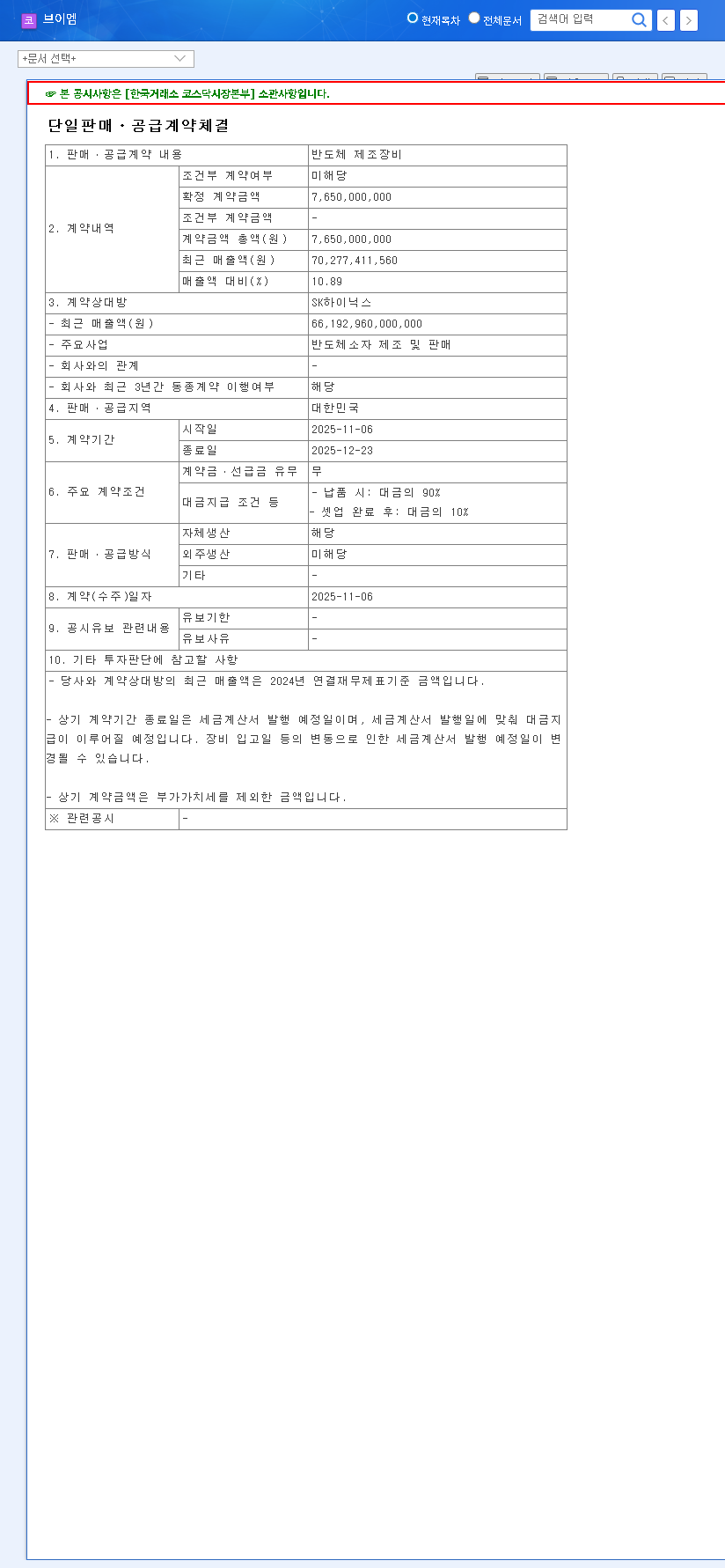
    On November 6, 2025, VM Inc. disclosed a pivotal agreement with SK Hynix. The details of this single sales and supply contract are crucial for understanding its immediate impact.

    • Contract Value: A substantial 7.6 billion KRW, which represents 10.89% of VM Inc.’s 2022 annual revenue.
    • Contract Period: A very short term, running from November 6, 2025, to December 23, 2025.
    • Product: High-value semiconductor manufacturing equipment, a core component of its business.

    This deal is a significant event, not just for its monetary value but for its strategic implications. You can view the Official Disclosure on DART for verification.

    While the SK Hynix contract provides a critical revenue injection and powerful market validation, investors must weigh this against VM Inc.’s deep-seated financial vulnerabilities to form a balanced view.

    The Bull Case: Why the SK Hynix Deal Matters

    The positive implications of this deal extend far beyond the immediate balance sheet entry. For a company like VM Inc., this is a major strategic win.

    Validation of Technology and Competitiveness

    Securing a contract with a global semiconductor powerhouse like SK Hynix is the ultimate endorsement. It signals to the entire market that VM Inc.’s semiconductor equipment meets the highest standards of quality and performance. This ‘halo effect’ can be instrumental in attracting other major clients, building a more robust sales pipeline, and enhancing its competitive standing.

    Enhanced Corporate Transparency

    Recent amendments to business reports, including supplements regarding minority shareholder rights, suggest a management team that is becoming more responsive. This commitment to transparency and communication can reduce legal risks and build crucial trust with investors, which is essential for long-term stability.

    The Bear Case: A Deep Dive into VM Inc.’s Financial Risks

    Despite the positive news, the core of our VM Inc. financial analysis reveals several red flags that cannot be ignored. The company’s financial foundation appears worryingly weak.

    Persistent Decline in Performance

    • Plummeting Revenue: Annual revenue dropped from ~11.4 billion KRW in 2022 to a projected 4.6 billion KRW in 2025.
    • Profitability Crisis: Operating profit is expected to turn negative in 2025, and net income has been in deficit since 2022, with losses widening.

    Worsening Financial Health

    The company’s balance sheet shows increasing strain:

    • Rising Debt-to-Equity Ratio: This metric climbed from 92% in 2022 to 114% in 2024, indicating higher reliance on debt. For context, you can learn more about what this ratio means for investors.
    • Liquidity Concerns: The Current Ratio, a measure of short-term solvency, collapsed from a healthy 340% in 2022 to a dangerous 58% in 2024, raising questions about its ability to meet short-term obligations.

    Investment Strategy: Navigating VM Inc. Stock

    A prudent investment strategy for the VM Inc. stock requires a dual focus on short-term catalysts and long-term fundamental recovery.

    Short-Term Outlook

    The SK Hynix contract will positively impact Q4 2025 revenue. However, its effect will be limited. The key to sustaining any positive stock momentum is evidence of follow-on orders. Without a steady stream of new contracts, this will be seen as a one-off event.

    Long-Term Investor Checklist

    For a genuine, sustainable turnaround, investors should monitor the following:

    • Consistent Order Flow: Look for a pattern of new orders beyond the SK Hynix deal.
    • Financial Restructuring: Watch for concrete plans to reduce debt and improve liquidity.
    • Profit Margin Improvement: Track gross and operating margins to see if efficiency is improving.
    • Industry Trends: Follow the broader global semiconductor market analysis, as an industry-wide recovery would provide a significant tailwind.

    Conclusion: A Crossroads for VM Inc.

    VM Inc. finds itself at a critical juncture. The SK Hynix contract is a powerful testament to its technological capabilities and provides a vital lifeline. However, it does not erase the serious financial challenges related to declining revenue, poor profitability, and a weak balance sheet. For investors, this is a classic high-risk, high-reward scenario. Prudent decision-making requires a comprehensive view that values the company’s long-term recovery efforts over short-term news events.

    Frequently Asked Questions

    Q1: What kind of company is VM Inc.?

    VM Inc. (089970) is a company that manufactures and supplies semiconductor manufacturing equipment. It has recently gained attention for signing a major supply contract with SK Hynix.

    Q2: How will the SK Hynix contract impact VM Inc.’s finances?

    The contract will boost Q4 2025 revenue. However, its value is about 10.9% of 2022 revenue and the contract period is short, so its direct impact on overall financial health may be limited without follow-up orders.

    Q3: What are the main risks of investing in VM Inc. stock?

    The primary risks are the company’s history of declining revenue, consistent net losses, a high debt-to-equity ratio, and poor short-term liquidity, as highlighted in our VM Inc. financial analysis.

    (089970) In-Depth VM Inc. Financial Analysis: Beyond the SK Hynix Contract 관련 이미지
  • (089970) VM Inc. Stock Analysis: Is KB Asset Management’s 5% Stake a Major Buy Signal?

    (089970) VM Inc. Stock Analysis: Is KB Asset Management’s 5% Stake a Major Buy Signal?

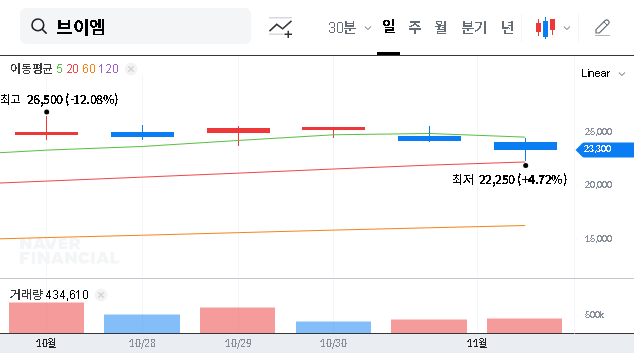
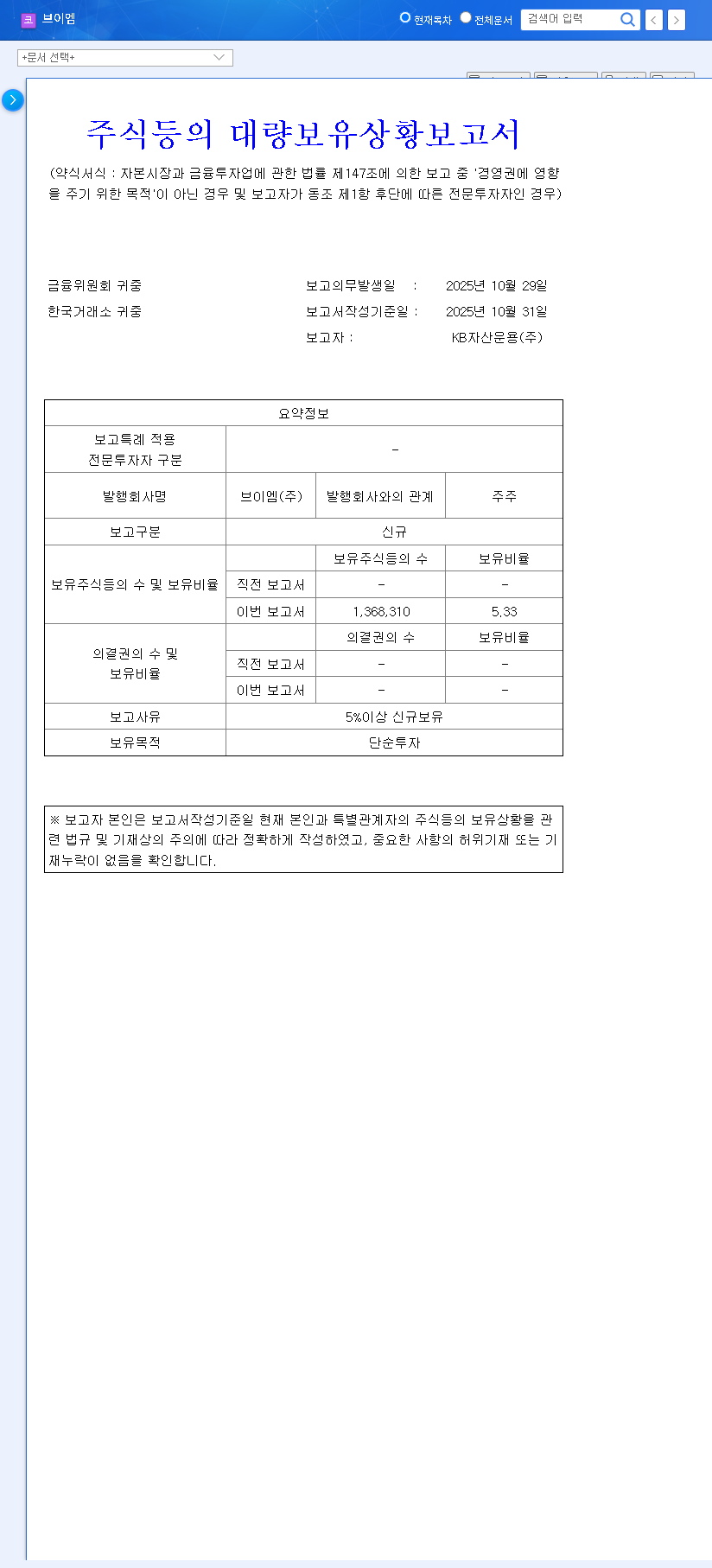
    The market is buzzing with a significant development for VM Inc. stock (KOSDAQ: 089970). Major institutional player KB Asset Management has officially disclosed a new 5.33% stake in the company. While the stated purpose is ‘simple investment,’ the strategic entry of a heavyweight investor into a company with a market capitalization of ₩561.4 billion is a signal that demands close attention from every serious investor. This move could be a pivotal moment for the company’s trajectory.

    How will this major equity investment by KB Asset Management impact the VM Inc. stock price? What are the underlying fundamentals driving this interest, and what perspective should investors adopt now? This comprehensive VM Inc. stock analysis explores the investment background, corporate health, market dynamics, and future outlook to help you make a well-informed decision.

    The Catalyst: KB Asset Management’s Strategic Acquisition

    On November 3, 2025, the investment community took note as KB Asset Management formally announced its acquisition of a 5.33% stake in VM Inc. The details of this transaction were made public through an official filing (Source), confirming the move was for ‘simple investment’ purposes. However, in the world of finance, such a significant purchase by a respected institution is rarely ‘simple’. It often signifies a deep-seated belief in the company’s undervalued potential and can act as a powerful positive momentum for future stock price movements.

    An institutional investment of this scale serves as a vote of confidence, signaling to the broader market that VM Inc. may be poised for a significant re-evaluation. It places the company squarely on the radar of other large-scale investors.

    In-Depth VM Inc. Stock Analysis: Fundamentals & Outlook

    Clearing the Path: Enhanced Governance and Transparency

    One of the key factors likely contributing to this KOSDAQ investment is VM Inc.’s recent progress in resolving past uncertainties. A corrected business report in December 2024 confirmed that previous legal disputes and issues surrounding minority shareholder rights were formally dismissed. This crucial development significantly enhances corporate transparency and removes a major overhang that may have deterred investors. With governance risks mitigated, a more stable foundation for re-evaluating the company’s intrinsic value is now in place.

    The Financial Picture: Growth vs. Profitability Puzzle

    A closer look at VM Inc.’s financial indicators reveals a company at a crossroads, presenting both immense potential and pressing challenges. This duality is likely what KB Asset Management identified as an opportunity.

    • Explosive Revenue Growth: The company’s top-line growth is undeniable. Revenue surged by an incredible 170% in 2024 compared to the previous year, signaling strong market demand and successful business expansion within the competitive semiconductor sector.
    • Profitability Headwinds: Despite this sales boom, both operating profit and net profit saw a decline. Key metrics like Return on Equity (ROE) and net profit margins also fell, indicating that the cost of achieving this growth has been high. This profitability gap is now the most critical challenge for management to address.
    • Solid Financial Health: Encouragingly, the company’s balance sheet remains robust. While the debt-to-equity ratio increased from 23.53% to a still-low 33.31%, it remains well within a stable and manageable range, suggesting that financial risks are not a primary concern.

    Market Implications & Strategic Considerations

    The Bull Case: A Stamp of Approval

    The investment by KB Asset Management is a powerful validator. It boosts market confidence and could attract a new wave of investors who follow institutional money. This can trigger a positive feedback loop, leading to a re-rating of the VM Inc. stock price as the market begins to price in a more optimistic future, especially with the global semiconductor industry showing signs of recovery, a trend confirmed by industry leaders like Gartner’s latest market reports.

    The Bear Case: Risks to Monitor

    The ‘simple investment’ label is a double-edged sword. It means KB Asset Management has no obligation to hold the stock long-term and could exit its position to lock in profits, potentially creating downward pressure and volatility. Furthermore, macroeconomic risks—such as a slowdown in global demand, persistent high interest rates, and raw material price fluctuations—could continue to squeeze VM Inc.’s margins. The company’s ability to translate its impressive sales into sustainable profit is paramount for long-term investment appeal. For more on this, see our guide on how to analyze semiconductor stocks.

    Investor Outlook & Actionable Strategy

    The acquisition is a net positive signal, but prudent investors should maintain a balanced view. The future of the VM Inc. stock (089970) will likely be determined by three key pillars:

    1. Institutional Activity: Closely monitor any changes to KB Asset Management’s holdings. An increase would be highly bullish, while a gradual sell-down would be a warning sign.

    2. Profitability Milestones: Scrutinize upcoming quarterly earnings reports. Look for signs of improving operating margins and net profit, which would prove their growth is becoming sustainable.

    3. Industry Momentum: Keep an eye on the broader semiconductor market. Continued strength in sectors like AI and automotive will provide a strong tailwind for VM Inc.

    In conclusion, this is a time for cautious optimism and diligent monitoring. The institutional nod is a powerful catalyst, but the company’s own performance in converting revenue into profit will ultimately dictate the long-term success of this KOSDAQ investment.

    (089970) VM Inc. Stock Analysis: Is KB Asset Management's 5% Stake a Major Buy Signal? 관련 이미지
  • VM Co. Ltd. Change in Major Shareholder: Investment Opportunity or Red Flag?


    VM Co. Ltd. Change in Major Shareholder: Investment Opportunity or Red Flag? 대표 차트 이미지


    VM Co. Ltd.’s Change in Major Shareholder: What Happened?

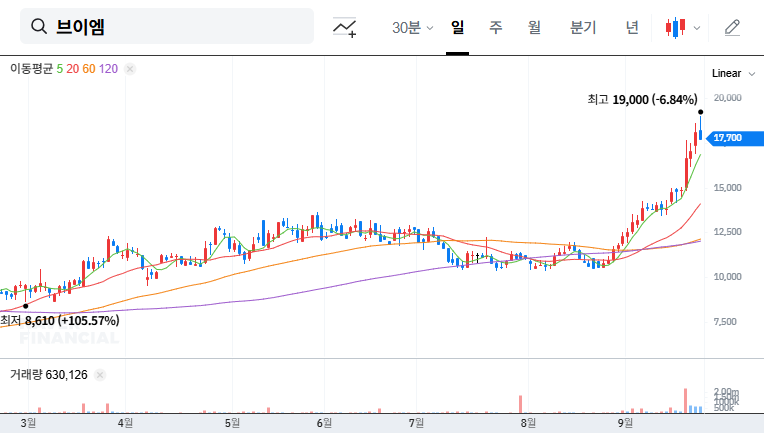
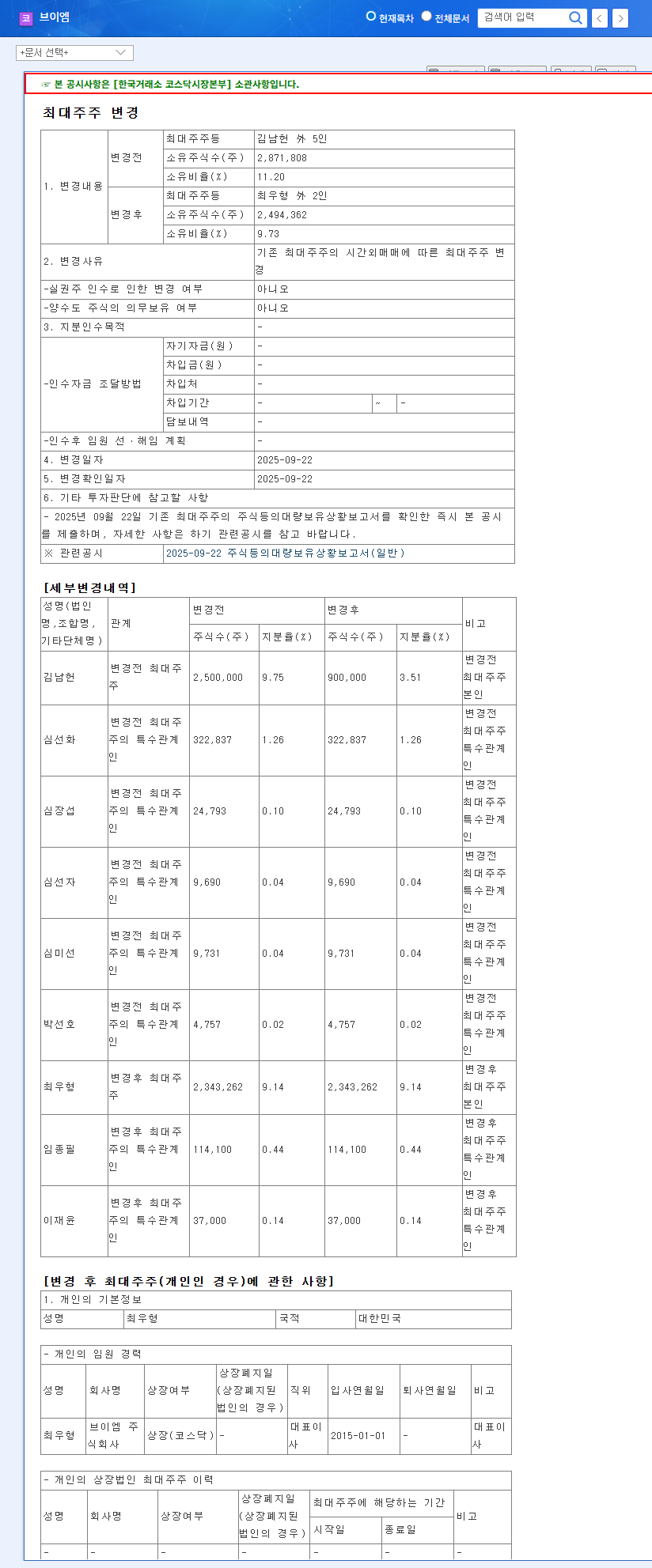
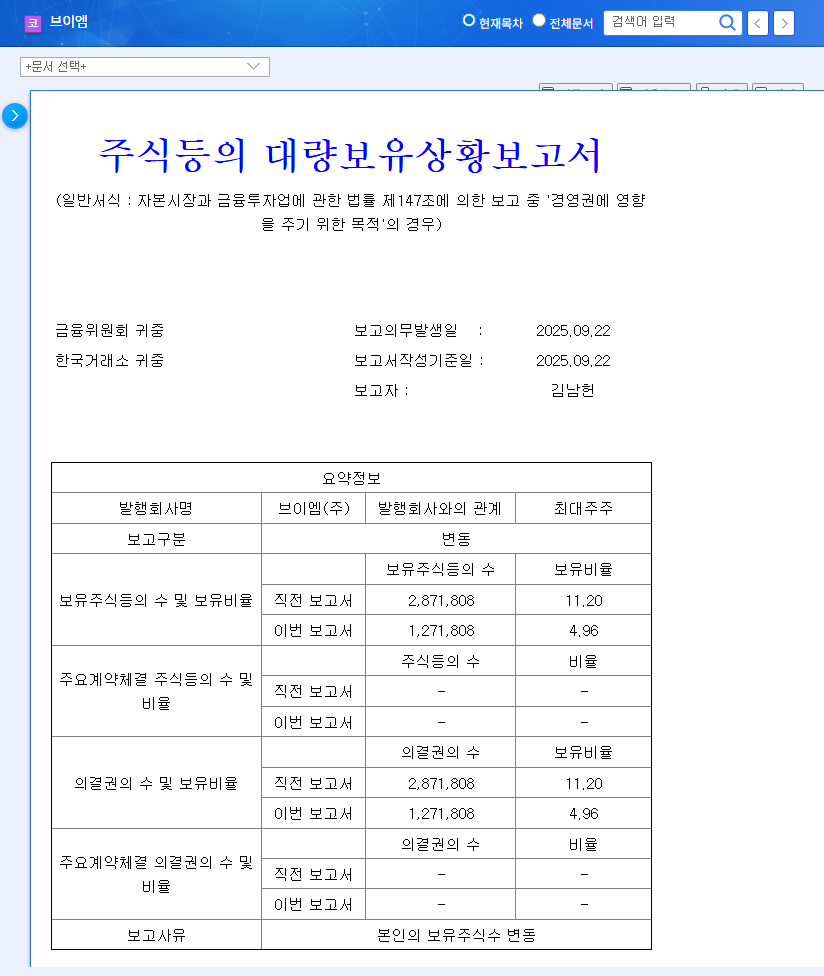
    On September 22, 2025, VM Co. Ltd. announced a change in its major shareholder from Kim Nam-heon et al. to Choi Woo-hyung et al. This resulted from after-hours trading and signifies a change in management control, a crucial event for the company.

    Winds of Change: Analyzing Positive Factors and Potential Risks

    VM Co. Ltd. recently enhanced its management transparency through corrections in its business reports over the past two years and partially resolved uncertainties related to past lawsuits. The company achieved a turnaround in 2024, shifting from a large operating loss in 2022 to profitability, along with a surge in sales. Active R&D investment is also a positive sign for securing future growth engines.

    However, the change in major shareholder introduces new management uncertainties. The key question is whether the new major shareholder’s management capabilities and vision can support VM Co. Ltd.’s growth. External factors like exchange rate and interest rate fluctuations also need close monitoring.

    Key Checkpoints for Investors

    • Analyze the New Major Shareholder: Carefully review their management performance, business expertise, and vision and execution plan for VM Co. Ltd.
    • Check Financial Performance: Evaluate the possibility of maintaining profitability and continuous improvement in profitability.
    • Risk Management: Understand the company’s strategies for dealing with exchange rate and interest rate volatility.
    • Be Mindful of Stock Volatility: The change in major shareholder can cause short-term stock price fluctuations.
    • Monitor Former Major Shareholder Trends: Observe the potential for changes in the former major shareholder’s stake.

    Conclusion: A Cautious Approach Is Necessary

    VM Co. Ltd. has growth potential, but the uncertainty surrounding the change in major shareholder must be considered. It is essential to make prudent investment decisions based on a comprehensive analysis of market conditions and management changes.


    Frequently Asked Questions

    How does a change in major shareholder affect the stock price?

    A change in major shareholder suggests a potential shift in management strategy and can increase stock price volatility in the short term. Depending on the market’s assessment of the new management, the stock price can fluctuate significantly.

    Is VM Co. Ltd.’s fundamentals solid?

    Although the company has recently achieved a turnaround and significant sales growth, securing financial soundness remains a crucial task. Future performance changes should be closely monitored, considering the capabilities of the new management.

    What should investors be cautious about?

    Investors should make prudent investment decisions after considering the new major shareholder’s management capabilities, business vision, market environment changes, and stock price volatility.


    VM Co. Ltd. Change in Major Shareholder: Investment Opportunity or Red Flag? 관련 이미지
    VM Co. Ltd. Change in Major Shareholder: Investment Opportunity or Red Flag? 관련 이미지


  • VMware (089970) Stock Forecast: Is Kim Namheon’s Massive Sale an Opportunity or a Crisis? September 2025 Analysis

    VMware (089970) Stock Forecast: Is Kim Namheon's Massive Sale an Opportunity or a Crisis? September 2025 Analysis 대표 차트 이미지

    1. What Happened?

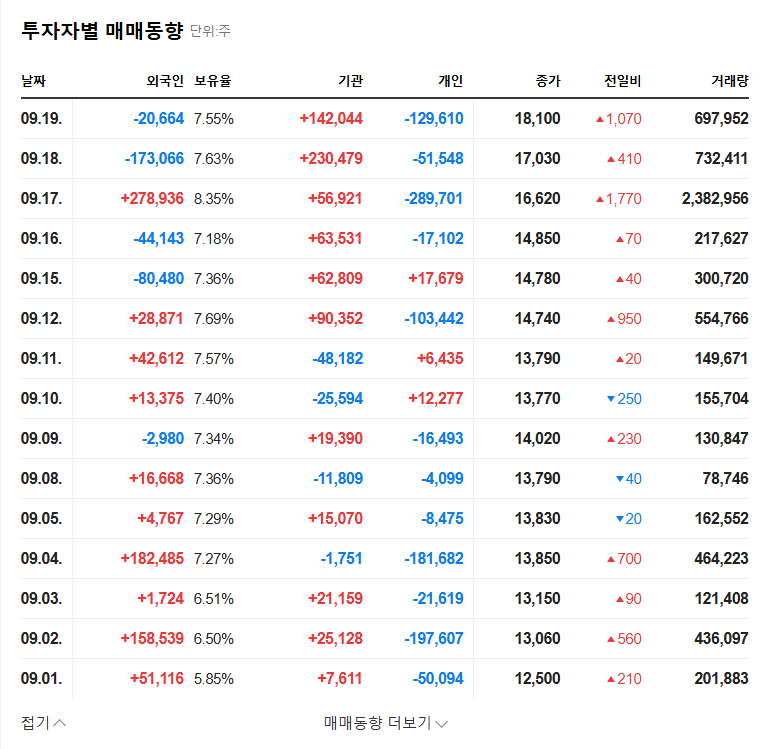
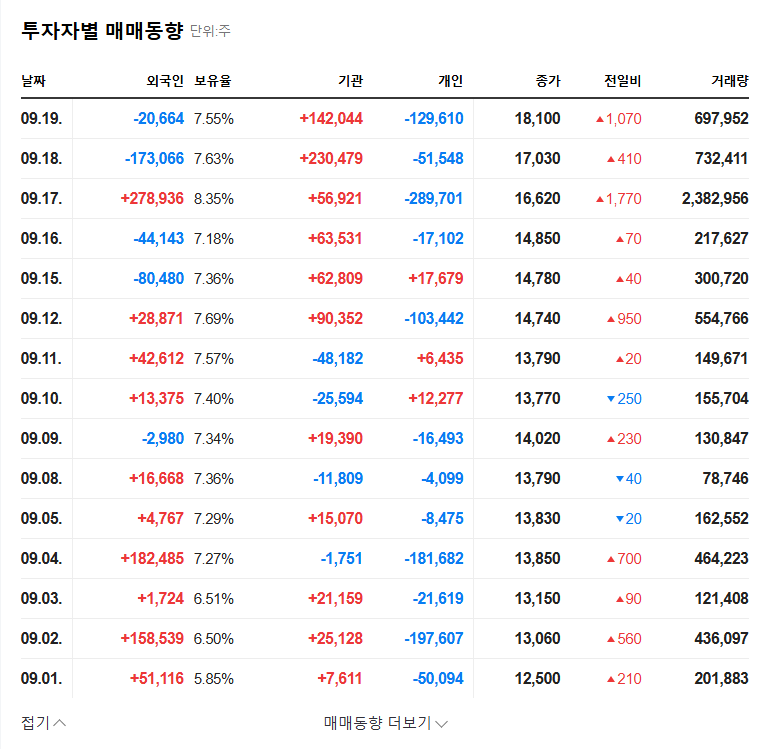
    On September 22, 2025, Kim Namheon, a major shareholder of VMware, sold 1,600,000 shares, representing 6.24% of his 11.20% stake, through an after-hours block trade. This reduced his stake to 4.96%.

    2. Why the Sell-off?

    While the official reason for the sale was reported as achieving ‘general investment’ objectives, this substantial sell-off by a major shareholder, especially a former majority holder like Kim Namheon, raises various speculations among investors. It could be simple profit-taking, internal corporate matters, or a change in personal investment strategy. Past litigation history with the former majority shareholder also adds to market unease.

    3. What’s VMware’s Current Situation?

    VMware has shown consistent revenue growth since 2022 and is expected to turn profitable in 2024. The company is also actively investing in R&D to secure future growth engines. However, the relatively high debt ratio requires attention.

    • Revenue: KRW 48.6B (2022) → KRW 74.1B (2023) → KRW 107.8B (2024 projected)
    • Operating Income: KRW -16.1B (2022) → KRW -2.0B (2023) → KRW 2.4B (2024 projected)
    • Net Profit Margin: 2.16% (2023) → 4.90% (2024 projected) → 7.38% (2025 projected)
    • Debt Ratio: 223% (2023) → 267% (2024 projected)

    4. What’s Next? Investment Strategies

    Kim Namheon’s massive sale may negatively impact the stock price in the short term. However, considering VMware’s solid fundamentals, this could present a buying opportunity. Consider the following investment strategies:

    • Monitor Fundamentals: Continuously check key indicators like sales, operating profit, and new orders.
    • Observe Major Shareholder Activities: Further stake changes may indicate potential management changes.
    • Utilize Short-term Volatility: Look for buying opportunities during price dips.
    • Monitor Macroeconomic Conditions: Keep an eye on interest rates, exchange rates, and overall semiconductor industry trends.

    Caution: Investment decisions should always be made carefully and at your own discretion. This analysis is not investment advice, and all investment responsibility lies with the individual investor.

    Will Kim Namheon’s stake sale only have negative consequences for VMware’s future?

    While there may be short-term downward pressure on the stock price, considering VMware’s strong fundamentals and growth potential, it could be an opportunity in the long run. Of course, investments should be made cautiously, and continuous monitoring is necessary.

    Is VMware’s financial status stable?

    While the revenue growth and expected return to profitability are positive, the relatively high debt ratio warrants attention. It is recommended to carefully review financial statements and consult with experts before investing.

    Is it a good idea to buy VMware stock now?

    Investment decisions should be made at your own discretion and responsibility. This analysis is not investment advice, and thorough information gathering and analysis are necessary before investing.

    VMware (089970) Stock Forecast: Is Kim Namheon's Massive Sale an Opportunity or a Crisis? September 2025 Analysis 관련 이미지
    VMware (089970) Stock Forecast: Is Kim Namheon's Massive Sale an Opportunity or a Crisis? September 2025 Analysis 관련 이미지
  • VMware (089970) Signs KRW 9 Billion Contract with SK hynix China: What’s Next for Stock Price?


    VMware (089970) Signs KRW 9 Billion Contract with SK hynix China: What's Next for Stock Price? 대표 차트 이미지


    VMware’s KRW 9 Billion Deal: What Happened?

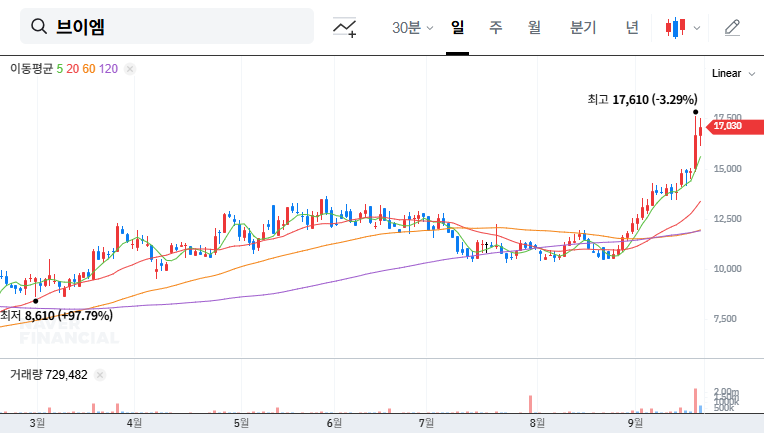
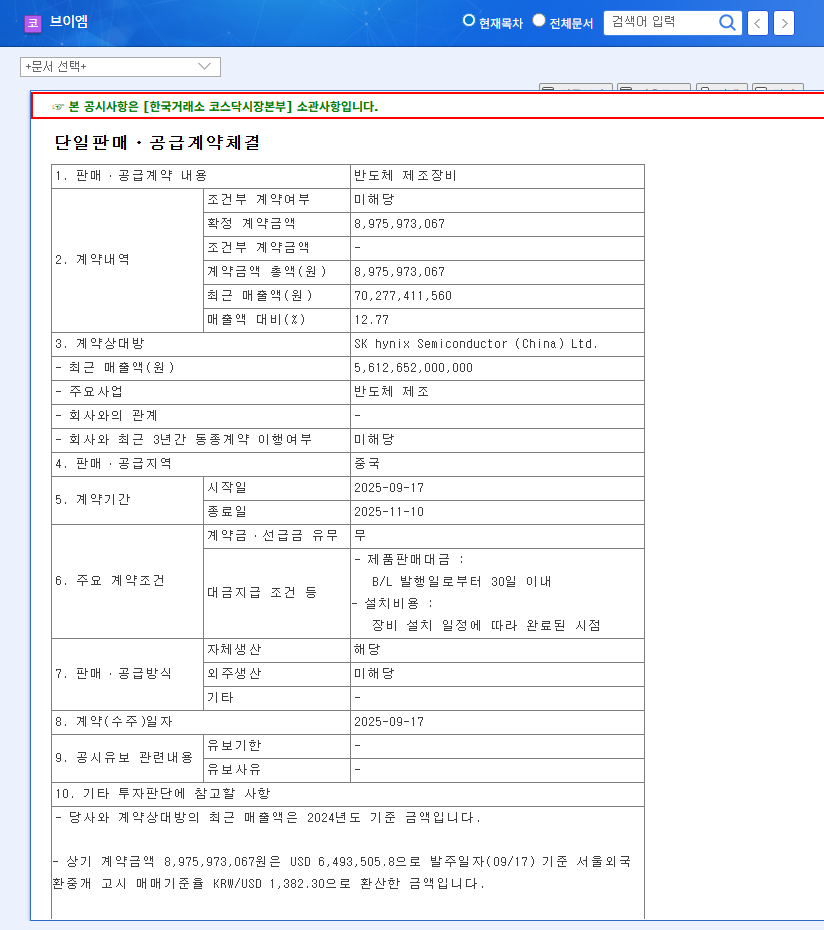
    On September 17, 2025, VMware inked a KRW 9 billion contract with SK hynix Semiconductor (China) Ltd. to supply semiconductor manufacturing equipment. The contract spans from September 17, 2025, to November 10, 2025, roughly one month. This represents a substantial 12.77% of VMware’s projected revenue for 2024.

    Contract Implications and Stock Price Analysis: Why Does It Matter?

    This contract presents both positive aspects and potential considerations for VMware.

    • Positive Aspects: Increased revenue, improved profitability, strengthened global market presence, short-term financial performance boost
    • Potential Considerations: Market expectations, fluctuations in the KRW/CNY exchange rate, global macroeconomic environment, intensified competition in the semiconductor market

    Securing a contract with a global player like SK hynix can be viewed as a validation of VMware’s technological capabilities. However, investment decisions should be made considering the current macroeconomic climate and competitive landscape.

    Investment Strategies: What Should Investors Do?

    In the short term, investors might anticipate a positive stock price momentum following the contract announcement. However, the possibility of profit-taking should also be considered. For the mid-to-long term, investment strategies should be formulated by analyzing VMware’s potential for securing additional contracts and its new business ventures. Continuous monitoring of external factors such as global economic indicators, semiconductor industry trends, and exchange rate volatility is crucial.


    Frequently Asked Questions

    Will this contract positively impact VMware’s stock price?

    A positive short-term impact can be anticipated, but the stock price can fluctuate depending on various factors such as market conditions and investor sentiment. The long-term impact will depend on VMware’s future performance and growth strategies.

    What are the key investment considerations?

    Investors should consider external factors such as changes in the macroeconomic environment, exchange rate fluctuations, and increased competition. It’s also essential to consider the difference between market expectations and actual performance. Remember that all investments carry inherent risks.

    What is the outlook for VMware?

    While this contract is a positive sign, the future remains uncertain. Continuous monitoring of VMware’s strategies for strengthening competitiveness and achieving sustainable growth, as well as overall market conditions, is necessary.


    VMware (089970) Signs KRW 9 Billion Contract with SK hynix China: What's Next for Stock Price? 관련 이미지
    VMware (089970) Signs KRW 9 Billion Contract with SK hynix China: What's Next for Stock Price? 관련 이미지


  • VMware (089970) Shock: Q2 Revenue Hits Zero, Urgent Investor Check Required

    1. What Happened to VMware (089970)?

    VMware reported zero revenue for Q2 2025 in its semi-annual report released on August 28, 2025. This is an unbelievable figure compared to the KRW 103.9 billion revenue recorded in the first quarter.

    2. Why Zero Revenue?

    The report doesn’t specify the exact reason for the zero revenue. Several possibilities exist, such as suspension of business operations, revenue recognition errors, customer order cancellations, production disruptions, or massive delivery delays. Further information disclosure is needed to determine the precise cause.

    3. What are the Implications of Zero Revenue?

    • Deteriorating Fundamentals: Zero revenue translates directly into massive operating losses, which can worsen financial soundness and lead to a liquidity crisis.
    • Weakening Investor Sentiment: Loss of market confidence will negatively impact not only the stock price but also the long-term corporate value.
    • Uncertain Future Outlook: The Q2 earnings shock is likely to negatively affect the outlook for the second half of the year.

    4. What Should Investors Do?

    • Sell or Hold: Investors should exercise caution until further information is disclosed. Selling or holding is recommended.
    • Check for Updates: Closely review the company’s official announcements and IR materials to assess the possibility of future business normalization.
    Why did VMware’s Q2 revenue hit zero?

    While there’s no official announcement, possibilities include suspension of operations, revenue recognition errors, order cancellations, or production issues.

    What actions should investors take?

    Maintain a sell or hold position and pay close attention to the company’s official announcements until further details emerge.

    What is the outlook for VMware?

    The Q2 results paint a bleak picture for VMware’s future. The outlook remains highly uncertain and depends on further information and the company’s response.

  • VM Signs ₩9 Billion Semiconductor Equipment Deal with SK Hynix: What’s Next?

    VM and SK Hynix Ink ₩9 Billion Semiconductor Equipment Deal

    VM announced on August 25, 2025, that it has secured a ₩9 billion contract to supply semiconductor manufacturing equipment to SK Hynix. The contract period runs from August 22, 2025, to October 31, 2025, spanning approximately two months.

    Implications of the Deal: Short-Term Gains and Long-Term Growth

    This contract is projected to significantly contribute to VM’s short-term revenue and profitability. The deal, equivalent to 12.81% of annual revenue, is expected to bolster the company’s financial stability. Furthermore, collaborating with a leading domestic semiconductor company like SK Hynix validates VM’s technological capabilities and credibility. This positive momentum is anticipated to generate further orders and enhance market competitiveness. Considering the growth trajectory of the semiconductor market and SK Hynix’s investment expansion, VM’s medium to long-term growth potential appears promising.

    Investment Considerations: Potential Risks Amidst Positive Outlook

    While this contract provides positive momentum for VM, investors should also be mindful of potential risk factors. The semiconductor industry is susceptible to economic fluctuations and faces intense competition. Moreover, given VM’s past financial challenges, sustained profitability and financial soundness remain crucial objectives. Investors should carefully consider these factors before making investment decisions.

    • Key Investment Points:
    • Expected short-term performance improvement due to the large-scale contract with SK Hynix
    • Medium to long-term growth potential driven by the expanding semiconductor equipment market
    • Volatility of the semiconductor industry and VM’s financial recovery trajectory

    Frequently Asked Questions

    How will this contract impact VM’s stock price?

    This contract is likely to have a positive short-term impact on the stock price. However, the stock price can fluctuate depending on various factors, including market conditions and the company’s performance.

    What is VM’s primary business?

    VM develops and manufactures semiconductor manufacturing equipment. Its main products include semiconductor etching equipment.

    What is the outlook for VM?

    Considering the growth of the semiconductor market and the strengthened partnership with SK Hynix, the medium to long-term growth outlook for VM is positive. However, it is essential to continuously monitor the volatility of the semiconductor industry and VM’s financial recovery.

  • VM Secures KRW 18 Billion Contract with SK Hynix: A Turning Point?

    1. What Happened?

    VM announced on August 20, 2025, that it secured a KRW 18 billion contract to supply semiconductor manufacturing equipment to SK Hynix. The contract period extends until November 30, 2025.

    2. Why is it Important?

    This contract is significant, accounting for 25.54% of VM’s 2024 revenue. For VM, which has been recording continuous operating losses, this deal could be a crucial catalyst for financial improvement. The ongoing business with key client SK Hynix validates VM’s technological capabilities and trustworthiness, increasing the likelihood of future orders.

    3. What’s Next?

    The contract is expected to positively impact VM’s stock price in the short term. The anticipation of improved 2025 earnings is likely to attract investor interest. However, this is contingent on securing profitability. Effective cost management and improved production efficiency are essential to translate the contract into actual profit. Furthermore, it’s crucial to observe whether this leads to continued orders rather than being a one-off deal. The overall semiconductor industry outlook and macroeconomic conditions should also be carefully monitored.

    4. What Should Investors Do?

    • Short-term Investors: Consider investment strategies that capitalize on the stock’s momentum, but prioritize verifying profitability. Continuous monitoring of chart analysis, news, and disclosures is crucial.
    • Long-term Investors: This contract can be interpreted as a positive signal for VM’s fundamental improvement. However, investment decisions should be made after comprehensive consideration of continued order potential, financial soundness, and macroeconomic variables.
    Q: How will this contract affect VM’s stock price?

    A: It’s expected to have a positive impact in the short term. However, actual profit improvement is key, and the mid-to-long-term impact will depend on the semiconductor industry’s performance and macroeconomic conditions.

    Q: What is the outlook for VM’s future earnings?

    A: This contract raises expectations for improved earnings in 2025. However, profitability is crucial, and earnings may fluctuate depending on cost management and production efficiency.

    Q: What precautions should investors take when investing in VM?

    A: Closely monitor profit trends, potential for follow-up orders, and changes in the macroeconomic environment. Also, consider potential risks such as past shareholder disputes.

  • VMware (089970) Treasury Stock Disposal: Growth Engine or Investor Concern? In-depth Analysis!

    Treasury Stock Disposal: What Happened?

    VMware plans to raise 17.3 billion KRW by disposing of 1,645,411 treasury shares (6.83% of total outstanding shares). These funds will be used for factory construction for the Yongin cluster relocation, mid-to-long-term R&D facility expansion, and production capacity enhancements.

    Why the Disposal?

    Following a weak Q1 performance, VMware needs to secure future growth engines. The Yongin cluster relocation aims to improve production efficiency, while R&D expansion will accelerate new technology development. The success of new equipment development (Leo WS, Da Vinci WH, Mona Lisa WH, APES) will be key for long-term growth. VMware is also pursuing customer diversification to reduce its reliance on SK Hynix.

    What are the Potential Impacts?

    Short-Term Impacts:

    • Stock Price: Potential for short-term decline, but limited impact expected due to the relatively small disposal size and positive investment purpose.
    • Liquidity: 17.3 billion KRW inflow expected to improve short-term liquidity.
    • Investor Sentiment: Potentially negative in the short-term, but could be offset by expectations for long-term growth.

    Long-Term Impacts:

    • Growth Drivers: Increased production efficiency and new technology development should boost mid-to-long-term growth potential.
    • Profitability: Improved productivity and new business ventures expected to enhance profitability. Success of customer diversification strategy is crucial.
    • Financial Health: Short-term decrease in debt-to-equity ratio expected, but limited long-term impact. Continuous monitoring of financial burden related to convertible preferred stock is necessary.

    Investor Action Plan

    Investors should focus on VMware’s long-term growth potential rather than short-term stock fluctuations. Consider factors such as the success of the factory relocation and R&D expansion, the performance of the customer diversification strategy, and macroeconomic factors (US/Europe interest rate hikes, raw material prices and exchange rate fluctuations, and domestic economic conditions) when developing an investment strategy.

    FAQ

    Why does treasury stock disposal negatively affect stock prices?

    Selling treasury stock can be interpreted by the market as a sign of uncertainty about the company’s future prospects or financial difficulties.

    How will VMware use the funds from the treasury stock disposal?

    The funds will be used for factory construction related to the relocation to the Yongin cluster, as well as mid-to-long-term R&D facility expansion and production capacity enhancements.

    What should investors consider?

    Investors should focus on the long-term growth potential rather than short-term stock fluctuations and consider the success of the factory relocation and R&D expansion, customer diversification strategy performance, and macroeconomic factors.