Tag: 071320

  • (071320) KOREA DISTRICT HEATING CORPORATION Stock: Q3 Earnings Surprise Analysis & 2025 Forecast

    (071320) KOREA DISTRICT HEATING CORPORATION Stock: Q3 Earnings Surprise Analysis & 2025 Forecast

    On November 7, 2025, KOREA DISTRICT HEATING CORPORATION (KDHC, KRX: 071320) delivered a landmark ‘earnings surprise’ that shattered market forecasts and sent a clear signal to investors. With operating profits soaring an astonishing 627.6% above estimates, the critical question for anyone evaluating KOREA DISTRICT HEATING CORPORATION stock is whether this is a fleeting moment of success or the dawn of a sustained growth period. This comprehensive analysis will dissect the Q3 2025 results, explore the underlying fundamentals, and provide a strategic outlook for potential investors.

    We will delve into the strengths powering this performance, the significant risks that still loom, and the macroeconomic factors that could shape the future of KDHC. Join us for an in-depth look at the company’s trajectory and what it means for your investment portfolio.

    KDHC’s Stunning Q3 2025 Earnings by the Numbers

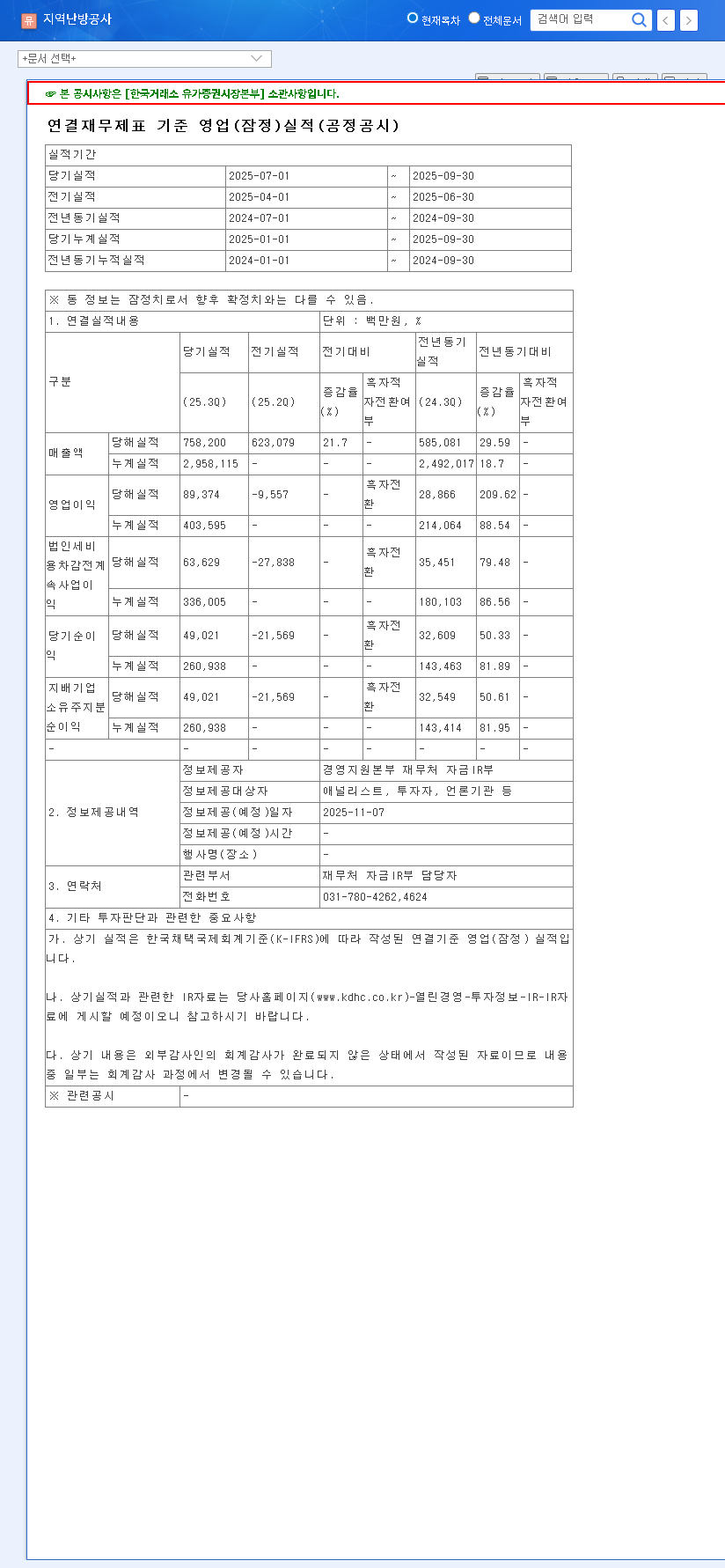
    The provisional earnings announced by KDHC for the third quarter of 2025, based on consolidated financial statements, were nothing short of spectacular. The company didn’t just beat expectations; it left them in the dust, showcasing robust top-line growth and explosive profitability. The full details can be found in the Official Disclosure on DART, but the key highlights are:

    • Revenue: KRW 758.2 billion, a 38.1% increase over the estimate of KRW 549.1 billion.
    • Operating Profit: KRW 89.4 billion, a massive 627.6% surge compared to the KRW 12.3 billion estimate.
    • Net Profit: KRW 49.0 billion, an incredible 581.1% higher than the KRW 7.2 billion forecast.

    This ‘earnings surprise’ significantly boosts investor confidence and provides powerful short-term momentum for the KOREA DISTRICT HEATING CORPORATION stock. The remarkable growth in operating and net profit suggests improved operational efficiency and favorable market conditions during the quarter.

    Fundamental Analysis: The Bull Case vs. The Bear Case

    To truly understand the investment thesis, we must look beyond a single quarter. KDHC possesses foundational strengths but also faces considerable structural challenges that any prudent investor must weigh.

    Strengths: Why KDHC Could Thrive

    • Dominant Market Position: As a key player in the district heating business, KDHC enjoys a stable, utility-like business model supplying essential energy, which provides a reliable revenue floor.
    • Future Growth Drivers: The company is not standing still. It is actively investing in high-potential areas like renewable energy and the innovative use of waste heat for powering data centers, tapping into modern industrial needs.
    • Stellar Creditworthiness: With ratings like AA3 from Moody’s and AAA domestically, KDHC can secure financing at favorable rates, a crucial advantage for a capital-intensive business.
    • ESG Commitment: A strong focus on ESG (Environmental, Social, and Governance) management is increasingly important for attracting institutional capital and enhancing long-term corporate value. You can learn more in our guide to ESG investing.

    The core dilemma for KDHC investors is balancing this quarter’s spectacular performance against persistent structural risks like high debt and commodity price exposure. The future value hinges on management’s ability to navigate these challenges.

    Risks: What Could Derail Growth

    • High Debt-to-Equity Ratio: A debt ratio of 236.5% is a significant concern. This high leverage makes the company vulnerable to interest rate hikes and increases financial expenses, which stood at KRW 56.9 billion.
    • Raw Material Volatility: The company’s profitability is highly sensitive to fluctuations in raw material prices, particularly Liquefied Natural Gas (LNG). With LNG accounting for over 80% of purchases, global energy market shifts, as tracked by sources like Reuters Energy, can drastically impact margins.
    • Investment Burden: While necessary for growth, large-scale investments in facility upgrades and new businesses (totaling KRW 262.2 billion) can strain financial resources in the short to medium term.
    • Regulatory and Legal Risks: Navigating carbon neutrality goals and climate change regulations could lead to increased compliance costs. Furthermore, ongoing litigation presents a potential financial risk depending on the outcomes.

    Outlook & Investment Strategy for KDHC Stock

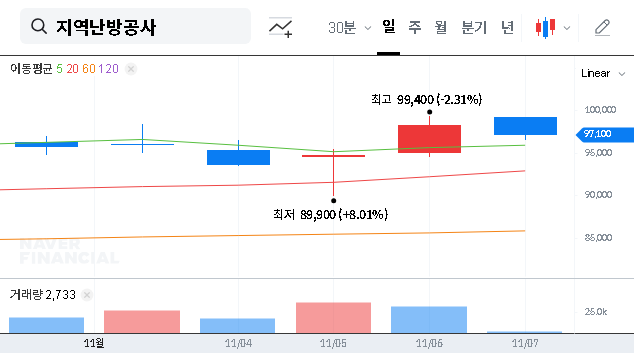
    The powerful KDHC earnings report for Q3 is expected to act as a significant catalyst. In the short term, the positive news flow and improved sentiment will likely attract buying interest from institutional and foreign investors, potentially driving the stock price higher. Analyst ratings and price targets will almost certainly see upward revisions.

    However, the long-term re-evaluation of KOREA DISTRICT HEATING CORPORATION stock depends entirely on the company’s ability to prove this performance is sustainable. Investors should monitor subsequent quarters for continued momentum while keeping a close eye on management’s strategies for debt reduction and margin protection against commodity swings.

    Final Verdict & Action Plan

    Given the exceptional results and the immediate positive momentum, we are issuing a ‘Positive’ investment opinion at this time. However, this comes with a strong recommendation for active monitoring.

    • For Short-Term Traders: Consider leveraging the positive sentiment following the earnings release. A phased buying approach on any pullbacks could be a viable strategy to capture the upward momentum.
    • For Long-Term Investors: Look for tangible progress in de-risking the balance sheet. Key metrics to watch in future reports include the debt-to-equity ratio, operating margins in both the heat and electricity segments, and concrete returns from new business ventures.
    • Monitor Macro Indicators: Keep a close watch on LNG prices, the KRW/USD exchange rate, and national energy policy shifts, as these external factors will continue to have a profound impact on KDHC’s profitability.

    This analysis is based on publicly available information. All investment decisions should be made based on your own research and risk tolerance.
    (071320) KOREA DISTRICT HEATING CORPORATION Stock: Q3 Earnings Surprise Analysis & 2025 Forecast 관련 이미지
  • (071320) KOREA DISTRICT HEATING CORPORATION Investment Analysis (2026): Stock, Risks & Capital Rumor

    (071320) KOREA DISTRICT HEATING CORPORATION Investment Analysis (2026): Stock, Risks & Capital Rumor

    A successful KOREA DISTRICT HEATING CORPORATION investment strategy requires looking beyond headlines. A recent disclosure has resurfaced a nearly decade-old rumor about a capital increase, prompting many investors to question its relevance today. This analysis will delve into the specifics of this re-disclosure, conduct a thorough review of KDHC’s current fundamentals, and provide a clear framework for evaluating the company’s stock value and potential risks moving into 2026.

    We’ll move past the noise of the old rumor to focus on what truly matters: financial health, growth drivers, and strategic challenges. This will equip you with the knowledge to make an informed decision about KDHC as a potential addition to your portfolio.

    Deconstructing the 2016 Capital Increase Rumor

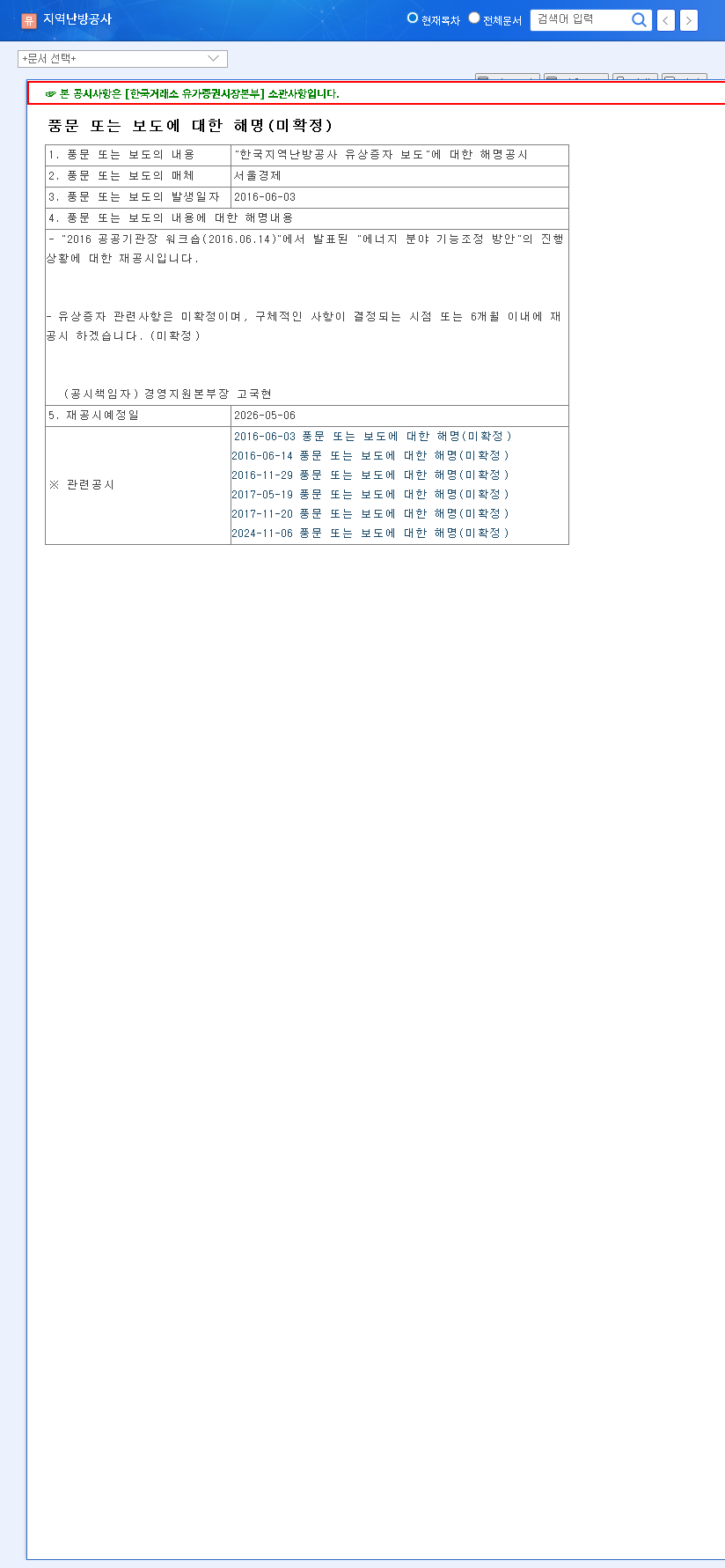
    On November 7, 2025, KOREA DISTRICT HEATING CORPORATION (KDHC) issued a notice regarding a ‘re-disclosure’ scheduled for May 6, 2026. This pertains to a clarification of a capital increase rumor first reported by the Seoul Economic Daily back on June 3, 2016. The core of the matter is not the rumor itself, but the regulatory requirement to officially address and close the book on such long-standing, unconfirmed reports. The Official Disclosure provides the procedural details.

    While this re-disclosure may create short-term market chatter, its direct impact on KDHC’s current valuation is expected to be minimal. The market is far more sensitive to present financial performance and future guidance than to the ghost of a nine-year-old rumor. The real value for investors is using this event as a catalyst to re-evaluate the company’s core financial health.

    KDHC Stock Analysis: A Tale of Strengths and Weaknesses

    To understand any potential KOREA DISTRICT HEATING CORPORATION investment, we must weigh the positive catalysts against the significant structural risks. Based on recent financial reports, a clear picture emerges.

    Positive Fundamentals & Growth Drivers

    • Favorable Energy Prices: The stabilization and decline of global Liquefied Natural Gas (LNG) prices is a major boon for KDHC. As a cogeneration power provider, LNG is a primary input cost, and lower prices directly translate to wider profit margins and improved bottom-line performance.
    • ESG and New Business Ventures: KDHC is actively pursuing future growth. The establishment of an ESG committee signals a commitment to sustainability, which is crucial for attracting modern institutional capital. Tangible projects, like the Goyang Changneung district heating initiative, represent new revenue streams essential for long-term expansion. You can learn more about ESG investment trends here.
    • Shareholder-Friendly Policies: By implementing electronic voting and maintaining a stable dividend policy, KDHC is enhancing corporate governance and building trust with investors. These measures can lead to a more stable shareholder base and potentially reduced stock price volatility.

    Significant Risks and Headwinds

    • High Debt Ratio (236.5%): This is the most significant risk factor. A high debt-to-equity ratio, as explained by financial authorities like Investopedia, makes a company highly vulnerable to rising interest rates. Increased borrowing costs can severely erode profitability. The need to refinance maturing bonds in 2025 and beyond will be a critical test of KDHC’s financial stability.
    • Revenue & R&D Concerns: A noticeable decline in revenue from the electricity segment puts pressure on overall profitability. Compounding this, a reduction in R&D spending as a percentage of revenue raises questions about the company’s ability to innovate and maintain a competitive edge in the evolving energy sector.
    • External Volatility: As an energy company, KDHC is exposed to macroeconomic forces beyond its control. Fluctuations in international oil prices, currency exchange rates, and ongoing litigation risks create a layer of uncertainty that investors must price in.

    A Strategic Checklist for KDHC Investors

    Prudent investors should treat the KDHC capital increase rumor as background noise. The focus should remain squarely on the company’s fundamental performance and strategic execution. Here are the key areas to monitor:

    • Debt Management Strategy: Pay close attention to quarterly reports for any changes in interest expenses and management’s plans for refinancing upcoming debt obligations. Their ability to manage this in the current rate environment is paramount.
    • New Project Execution: Track the progress and profitability of new initiatives like the Goyang Changneung project. Are these projects meeting deadlines and contributing positively to revenue?
    • Energy Policy and Market Adaptation: The energy market is in constant flux. Monitor how KDHC adapts to government policy shifts and competitive pressures within the broader Korean energy sector.
    • The May 2026 Disclosure: While the direct impact may be low, observe the specific language of the re-disclosure and the market’s reaction. It will be the final chapter in this long-running story and could reflect on management’s transparency.

    Disclaimer: This article is for informational purposes only and does not constitute investment advice. All investment decisions should be made based on personal research and judgment.

    (071320) KOREA DISTRICT HEATING CORPORATION Investment Analysis (2026): Stock, Risks & Capital Rumor 관련 이미지
  • (071320) KOREA DISTRICT HEATING CORPORATION (071320) Q3 2025: Investor’s Guide to Earnings & Strategy

    (071320) KOREA DISTRICT HEATING CORPORATION (071320) Q3 2025: Investor’s Guide to Earnings & Strategy

    The upcoming Q3 2025 earnings report for KOREA DISTRICT HEATING CORPORATION (KDHC), ticker 071320, represents a critical juncture for investors. Scheduled for November 7, 2025, this Investor Relations (IR) presentation is far more than a routine financial update. It is a comprehensive look into the company’s operational health, strategic direction, and resilience in a volatile energy market. For stakeholders, this event will provide vital clues about KDHC’s ability to navigate high debt, manage large-scale investments, and capitalize on its core strengths. This in-depth analysis will break down the fundamental factors, potential market reactions, and a strategic roadmap for evaluating your KDHC investment strategy.

    This IR is a pivotal moment to assess the balance between KDHC’s stable, foundational heating business and the challenges plaguing its electricity segment, all set against a complex macroeconomic backdrop.

    Event Details: The Q3 2025 Investor Briefing

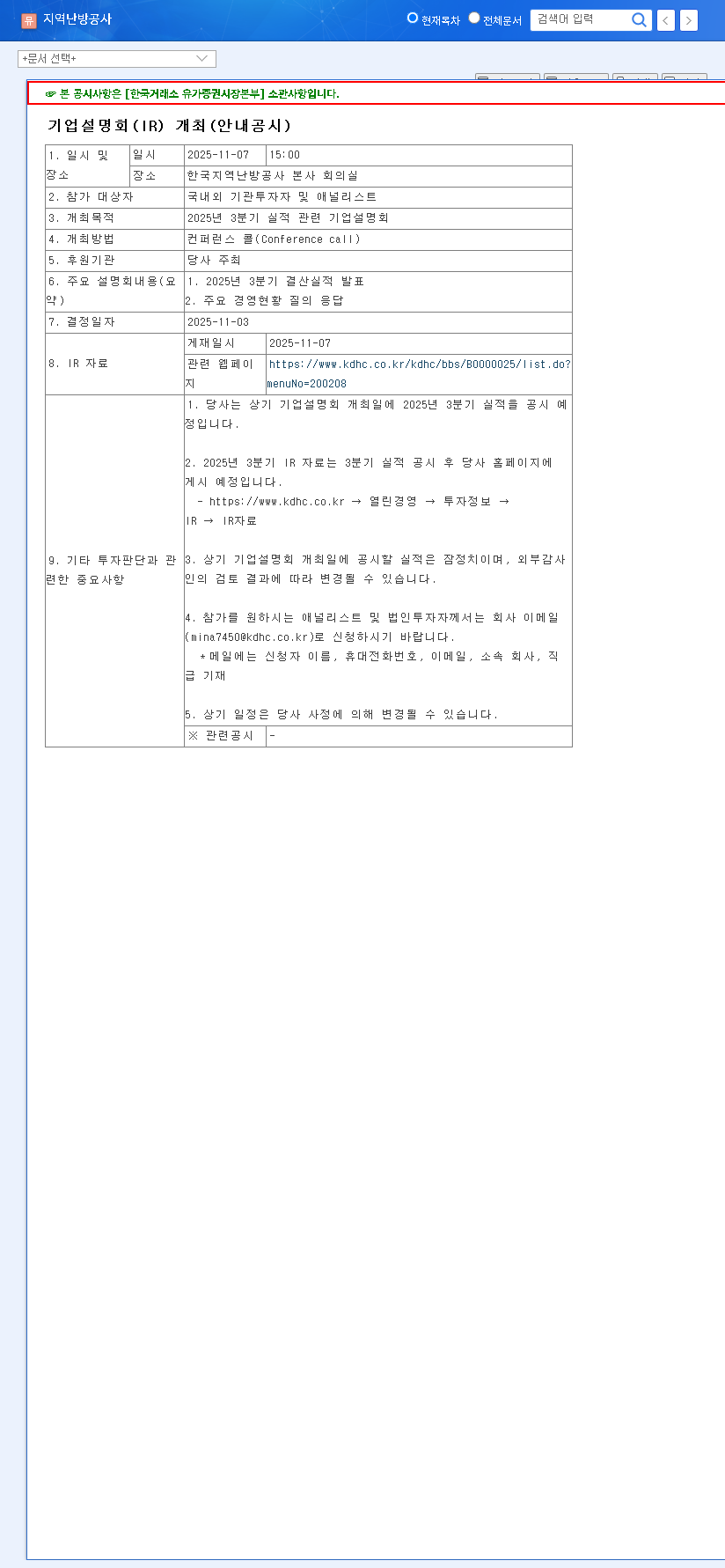
    KOREA DISTRICT HEATING CORPORATION has officially scheduled its corporate IR for November 7, 2025, at 3:00 PM (KST). The session will feature a detailed presentation of the third-quarter financial results, followed by a crucial Q&A session with management. As a public enterprise with a significant market presence, KDHC aims to use this platform to enhance transparency and directly address investor concerns. The full details can be found in the Official Disclosure (DART).

    Fundamental Analysis: The Bull vs. Bear Case for KDHC

    Understanding the company’s core strengths and weaknesses is essential before analyzing the 071320 earnings report. The investment thesis for KDHC is a tale of two sectors, balanced by strategic growth initiatives and weighed down by financial and market risks.

    Positive Factors: Stability and Future Growth

    • Rock-Solid Heat Sector Revenue: The demand for district heating is largely inelastic, providing a stable and predictable revenue stream that forms the company’s financial bedrock. This consistent cash flow is a significant defensive characteristic.
    • Strategic Growth Investments: KDHC is not standing still. Major projects, including the Suwon Combined Heat and Power Plant replacement and the Goyang Changneung District Energy initiative, are poised to become long-term growth engines, diversifying the business and aligning with modern ESG standards.
    • Favorable Cost Environment: A global downward trend in Liquefied Natural Gas (LNG) prices serves as a significant tailwind, easing the burden of raw material costs and potentially boosting margins if the trend continues.

    Negative Factors & Risks: The Challenges Ahead

    • High Debt Ratio: A debt-to-equity ratio of 236.57% (as of H1 2025) is a major red flag. In a rising interest rate environment, this high leverage can significantly increase interest expenses and squeeze profitability.
    • Underperforming Electricity Sector: Intense competition and declining wholesale electricity prices have eroded the profitability of this segment. Investors will be keenly watching for any signs of a turnaround or a strategic pivot.
    • New Project Investment Burden: While promising for the future, these large-scale projects require massive capital outlays, introducing execution risk and further straining the balance sheet in the short to medium term.
    • Macroeconomic Headwinds: The performance of KOREA DISTRICT HEATING CORPORATION is directly tied to global markets. A strengthening USD against the KRW increases import costs for LNG, while rising interest rates amplify debt service costs.

    Investor Takeaways & Strategic Checklist

    The KDHC Q3 2025 IR is an opportunity to pressure-test the company’s narrative. A positive outcome hinges on management’s ability to present a convincing plan. If Q3 earnings meet or beat expectations and the company provides a clear, confident outlook on its new projects and cost controls, the stock could see significant positive momentum. Conversely, a miss on earnings or vague commentary on risks could amplify investor concerns and lead to downward pressure.

    Prudent investors should prepare by focusing on the following:

    • Scrutinize Segment Performance: Look for specific data on the profitability drivers and detractors in both the heat and electricity sectors. Is the electricity division stabilizing?
    • Evaluate Project Milestones: Seek concrete updates on the progress, budget adherence, and expected ROI for the Suwon and Goyang Changneung projects.
    • Listen to the Macro Outlook: Pay close attention to management’s commentary on hedging strategies against currency fluctuations and their plans for managing debt in a shifting interest rate landscape.
    • Assess Market Reaction: Monitor trading volume and price action following the IR to gauge institutional sentiment and adjust your investment strategy accordingly.

    Ultimately, the outlook for KOREA DISTRICT HEATING CORPORATION stock will depend on its ability to execute its growth strategy while navigating significant financial headwinds. For further context on energy market trends, investors can consult authoritative sources like the International Energy Agency (IEA). To learn more about portfolio diversification, consider reading our guide on building a resilient investment portfolio.

    (071320) KOREA DISTRICT HEATING CORPORATION (071320) Q3 2025: Investor's Guide to Earnings & Strategy 관련 이미지