Tag: 034830

  • (034830) KOREIT & LH Anchor REIT: A ₩50B Deal Analysis for Investors (2025)

    (034830) KOREIT & LH Anchor REIT: A ₩50B Deal Analysis for Investors (2025)

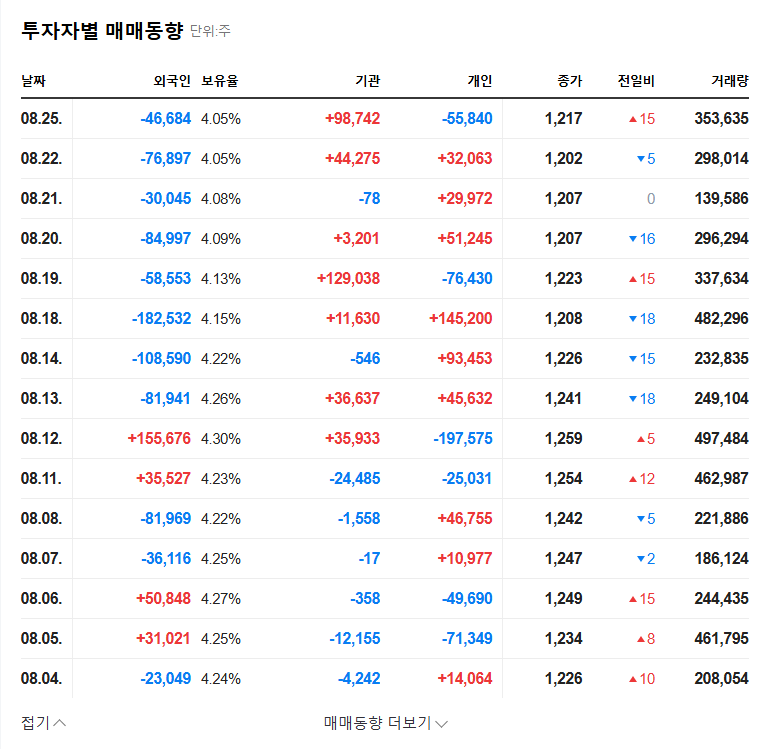
    In a significant development for the South Korean real estate market, Korea Real Estate Investment & Trust Co., Ltd (KOREIT) has been named the preferred bidder to manage a massive government-backed project. On October 24, 2025, KOREIT secured the Asset Management Company (AMC) role for the Korea Land and Housing Corporation’s (LH) “PF Modernization Catalyst Development Anchor REIT.” This pivotal win is more than just a new contract; it signals a strategic shift for KOREIT, involving a substantial ₩50 billion investment commitment and deep alignment with national policy.

    This in-depth analysis unpacks the implications of the KOREIT LH Anchor REIT deal. We will explore whether this is a golden opportunity for growth or a short-term risk for the company. For investors conducting a KOREIT stock analysis, understanding the nuances of this project is critical.

    The Landmark Deal: KOREIT and the LH Anchor REIT

    What Exactly Happened?

    KOREIT’s selection as the AMC for this large-scale public Real Estate Investment Trust (REIT) is a major endorsement of its capabilities. The deal involves two key commitments:

    • Management Role: KOREIT will be responsible for managing the assets within the Anchor REIT, a crucial role that leverages its expertise in real estate and asset management.
    • Financial Commitment: The company has pledged a significant ₩50 billion investment, representing approximately 5.2% of its total equity. This investment will be made via a ‘Capital Call’ method, meaning funds will be provided as needed by the project rather than all at once. This detail was confirmed in the company’s public filing (Source: Official Disclosure).

    Fundamental Analysis: KOREIT’s Strengths and Weaknesses

    Core Strengths & Growth Engines

    Despite market headwinds, KOREIT maintains a solid foundation. Its core real estate trust business continues to provide a stable and growing revenue base. Furthermore, its subsidiary, KOREIT Asset Management, is showing promising signs, with increasing Assets Under Management (AUM) and narrowing deficits. The company has also actively improved its financial health, evidenced by a falling debt-to-equity ratio.

    Current Challenges and Considerations

    It’s not all smooth sailing. Recent half-year reports indicate a decline in both operating revenue and profit, largely due to a challenging market and the persistent burden of high interest rates on borrowing costs. The competitive landscape in the asset management sector also presents a hurdle to improving profitability. This LH Anchor REIT partnership is therefore crucial, as it could provide a powerful new revenue stream to offset these challenges.

    The partnership with LH is a strategic masterstroke, aligning Korea Real Estate Investment & Trust with national policy. This enhances credibility and opens doors to future public-sector projects, potentially creating a long-term competitive advantage.

    Impact Assessment: Opportunities vs. Risks

    The Upside: Long-Term Growth and Credibility

    • Enhanced Capabilities: Successfully managing a high-profile public REIT will significantly boost KOREIT’s AMC reputation and portfolio.
    • Policy Alignment: Participation aligns KOREIT with the government’s goal to revitalize the REIT market, positioning it favorably for future public projects.
    • Improved Market Trust: A successful partnership with a state-run entity like LH enhances corporate credibility and investor confidence.
    • Future Revenue: The project promises a stable, long-term revenue stream, diversifying income away from more volatile business lines.

    The Downside: Financial Burden and Execution Risk

    • Liquidity Pressure: The ₩50 billion commitment is substantial and could create a short-term financial strain, even with the Capital Call method.
    • Project Risk: Large-scale developments are subject to market shifts, construction delays, and policy changes. Any setbacks could lead to investment losses.
    • Integration Challenges: The new business must create synergy with KOREIT’s existing trust and asset management operations, not conflict with them.

    Investor Action Plan & Recommendation

    Overall Opinion: Cautiously Optimistic (Hold)

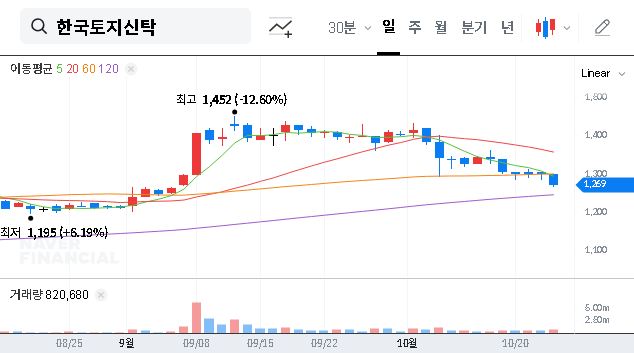
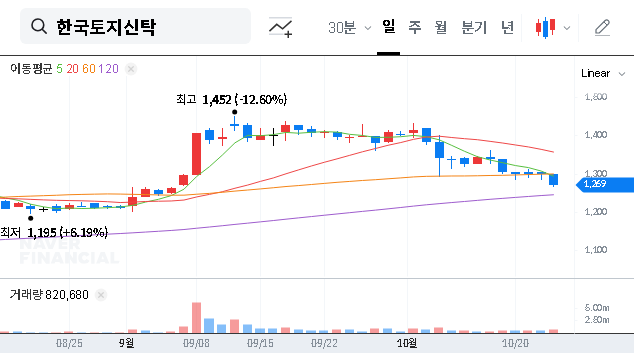
    The selection of Korea Real Estate Investment & Trust Co., Ltd for the LH Anchor REIT is a net positive for its long-term trajectory. It provides a clear path to strengthening its AMC division, diversifying its portfolio, and locking in a new, stable revenue source. This deal has the potential to be a significant catalyst for future value appreciation.

    However, the short-term risks—namely the financial burden and execution complexities—cannot be ignored. Therefore, a ‘Hold’ recommendation is prudent. Investors should closely monitor the project’s progress, KOREIT’s management of the capital commitment, and the evolving relationship with LH. Learning more about the broader trends can be helpful for those interested in investing in the South Korean property market.

    While short-term stock price volatility is possible, the strategic focus should be on the company’s long-term vision. An upgrade to our investment opinion would be considered once the project begins to show tangible positive results and synergistic effects on KOREIT’s overall business performance. For now, patience and diligent monitoring are the best strategies for any real estate investment portfolio that includes KOREIT.
    (034830) KOREIT & LH Anchor REIT: A ₩50B Deal Analysis for Investors (2025) 관련 이미지
  • (034830) KOREIT EB Issuance: A Deep Dive for Investors on Shareholder Dilution & Growth

    (034830) KOREIT EB Issuance: A Deep Dive for Investors on Shareholder Dilution & Growth

    The recent news surrounding the potential KOREIT EB issuance of ₩50 billion has sent ripples through the investment community. For current and prospective shareholders of Korea Real Estate Investment & Trust Co., Ltd (KOREIT), this development presents a critical juncture. Is this a strategic move to fuel future growth, or a red flag signaling potential shareholder dilution? This comprehensive analysis will dissect the situation, providing clarity and a strategic action plan for investors navigating this uncertainty.

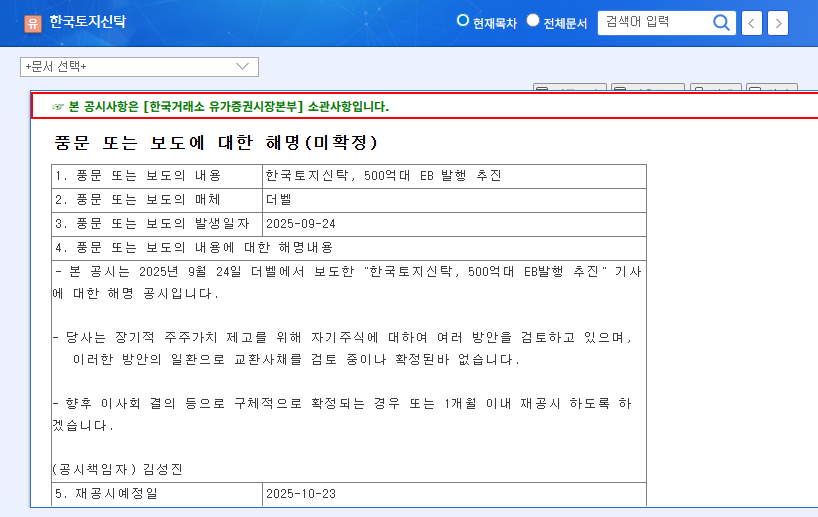
    At the heart of the matter lies KOREIT’s official statement: they are ‘comprehensively reviewing self-stock management plans, including EB issuance, but nothing has been decided yet.’ This ambiguity requires careful examination.

    Unpacking the KOREIT EB Issuance Announcement

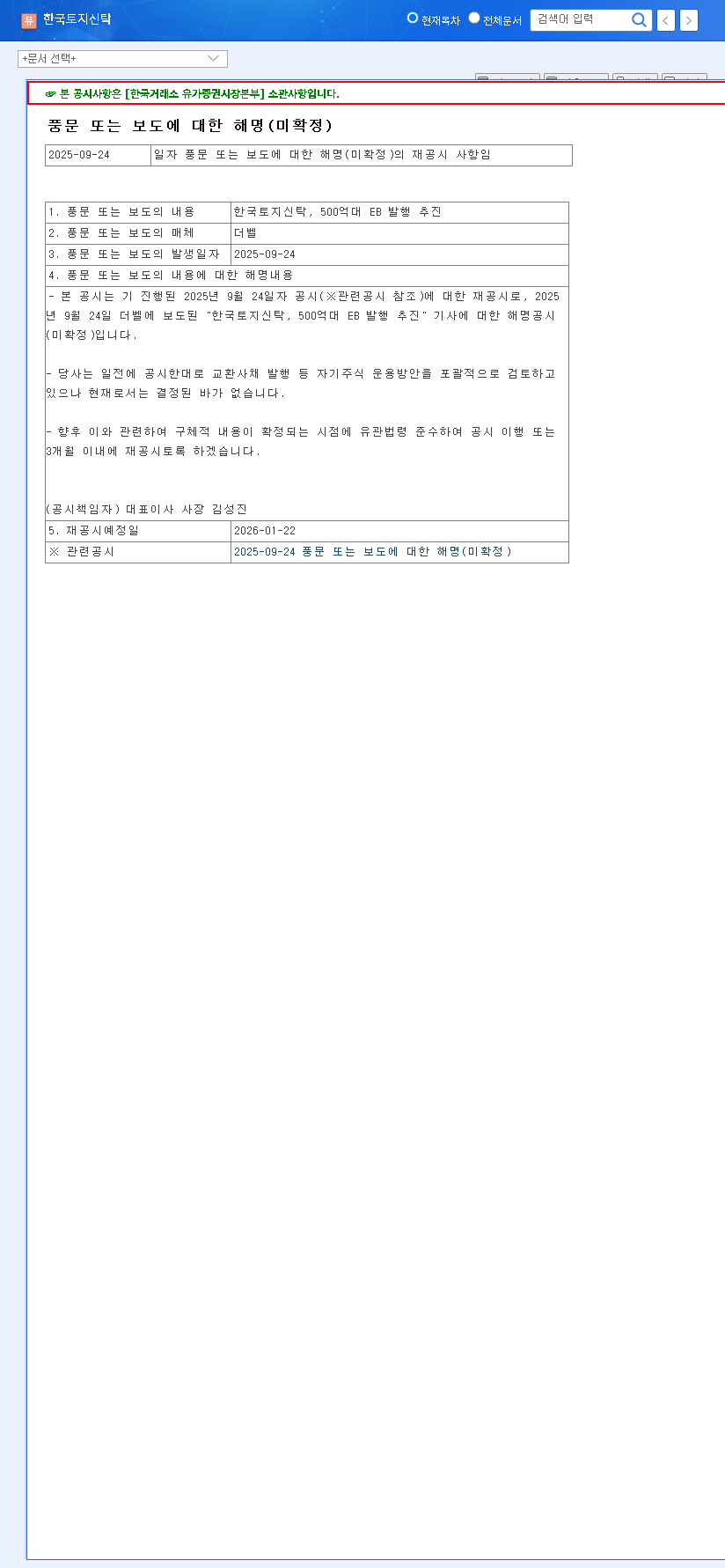
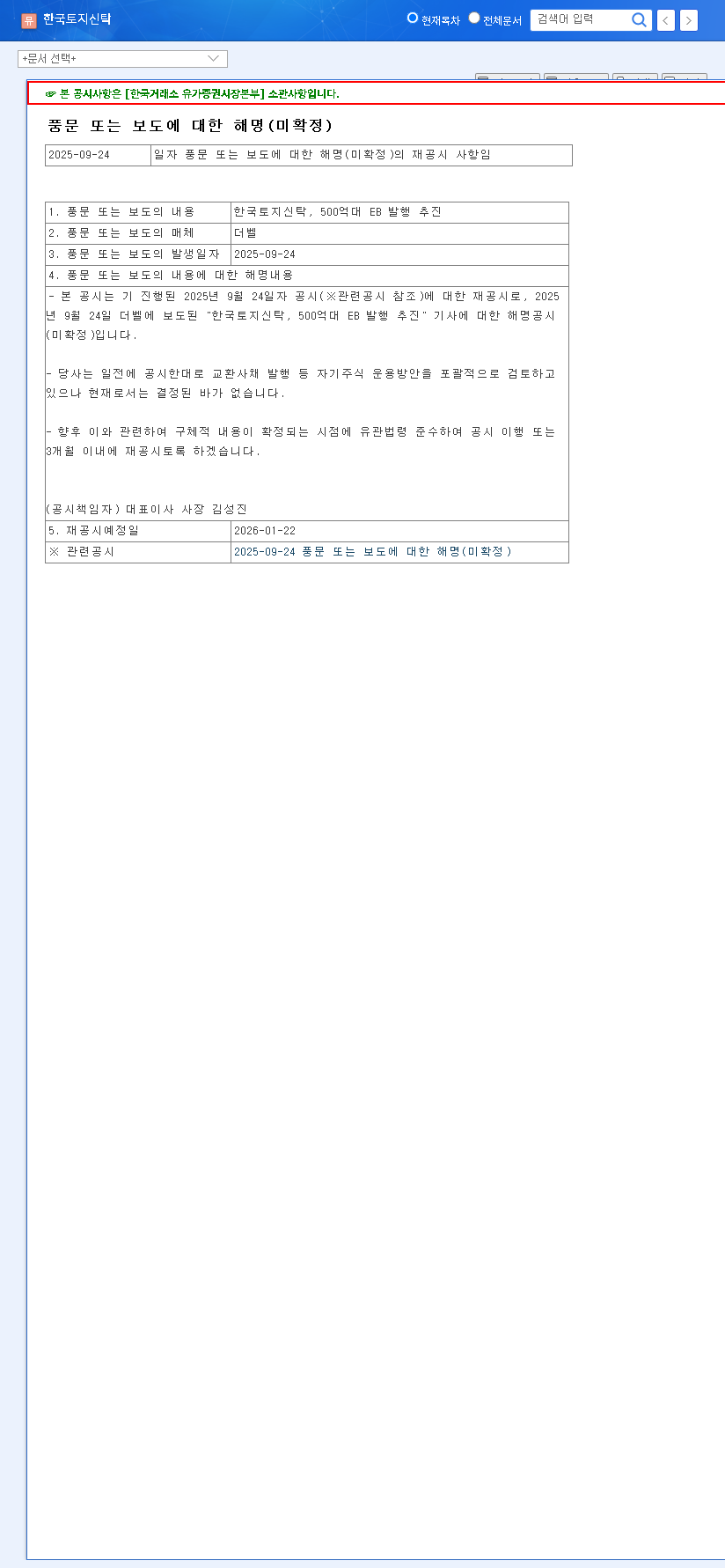
    On September 24, 2025, reports emerged suggesting KOREIT was actively pursuing a significant ₩50 billion Exchangeable Bond (EB) issuance. In a swift response to manage market speculation, the company issued a clarifying statement. According to their official disclosure, the matter is under review, with a promise for a more definitive update on or before January 22, 2026. You can view the filing directly from the source here: Official Disclosure.

    But what exactly is an Exchangeable Bond? Unlike a standard bond that pays interest and returns principal at maturity, an EB gives the bondholder the right to exchange their bonds for shares of the issuing company’s stock at a predetermined price. This hybrid nature makes it a complex financial instrument with both potential upsides and significant downsides for existing shareholders.

    The Two Sides of the Coin: Opportunity vs. Threat

    An EB issuance is a double-edged sword. The impact on KOREIT stock and its investors depends entirely on how the capital is raised and, more importantly, how it is deployed.

    The Bear Case: Shareholder Dilution and Financial Strain

    The primary concern for any shareholder is shareholder dilution. When bondholders convert their EBs into stock, the total number of outstanding shares increases. This means each existing share now represents a smaller percentage of the company, potentially reducing its value and earnings per share (EPS). For a ₩50 billion issuance, depending on the conversion price, this could introduce a significant number of new shares into the market, creating downward pressure on the stock price.

    • Increased Debt Load: At its core, an EB is debt until it is converted. This increases the company’s financial leverage and interest expense obligations, which could negatively impact profitability.
    • Market Uncertainty: The ‘undecided’ status creates information asymmetry, which can lead to market volatility as investors speculate on the outcome.

    The Bull Case: A Catalyst for Strategic Growth

    Conversely, if managed wisely, this capital injection could be precisely what Korea Real Estate Investment & Trust needs to unlock its next phase of growth. The key is value-accretive investment. If the ₩50 billion is used for strategic initiatives, the long-term benefits could far outweigh the short-term dilution risk.

    • Business Expansion: The funds could be used to acquire new, high-yield properties, fund development projects, or enter new real estate sectors.
    • Improved Financial Structure: EBs often carry lower interest rates than traditional bank loans. KOREIT could use the funds to refinance more expensive debt, thereby lowering its interest burden and improving cash flow.
    • Strategic M&A: The capital could position KOREIT to acquire a competitor or a complementary business, creating synergies and increasing market share.

    Investor Action Plan: Navigating the Next Steps

    With uncertainty prevailing until the January 2026 re-disclosure, a cautious and informed approach is paramount. Here is a step-by-step guide for investors.

    • Monitor Official Channels: Keep a close eye on KOREIT’s investor relations page and official regulatory filings for the promised update. Avoid acting on rumors or speculation.
    • Analyze the Terms (If Announced): If the KOREIT EB issuance proceeds, scrutinize the details. The conversion price is critical—a high premium over the current stock price is less dilutive than a price set at or near the current market value. Also, examine the maturity date and interest rate.
    • Reinforce Fundamental Analysis: Use this time to re-evaluate KOREIT’s underlying financial health. Analyze their debt-to-equity ratio, cash flow, property portfolio performance, and management strategy. For more details on this process, see our guide to fundamental analysis of REITs. To learn more about hybrid securities like EBs, authoritative sources like Investopedia provide excellent explanations.

    Ultimately, the decision by KOREIT’s management will reveal their confidence in the company’s future prospects. A well-structured EB issuance aimed at high-return projects could be a powerful signal of future growth, while a poorly justified one could raise serious concerns. Vigilance and due diligence are your best assets.

    (034830) KOREIT EB Issuance: A Deep Dive for Investors on Shareholder Dilution & Growth 관련 이미지
  • (034830) Korea Real Estate Investment & Trust & the LH REITs AMC Deal: An Investor’s Deep Dive

    (034830) Korea Real Estate Investment & Trust & the LH REITs AMC Deal: An Investor’s Deep Dive

    Recent market chatter has centered on a potentially transformative deal involving Korea Real Estate Investment & Trust and a major government-led initiative. Media reports named the company as a preferred bidder for the LH (Korea Land and Housing Corporation) Development Anchor REITs AMC, a move that could significantly reshape its future. However, an official clarification stating that “nothing is confirmed” has left investors seeking clarity.

    This in-depth analysis unpacks the entire situation, from the initial reports to the potential financial implications. We will explore what the LH Development Anchor REITs AMC business entails and provide a balanced view of the opportunities and risks for Korea Real Estate Investment & Trust, helping you make more informed decisions.

    The News vs. The Reality: What’s Confirmed?

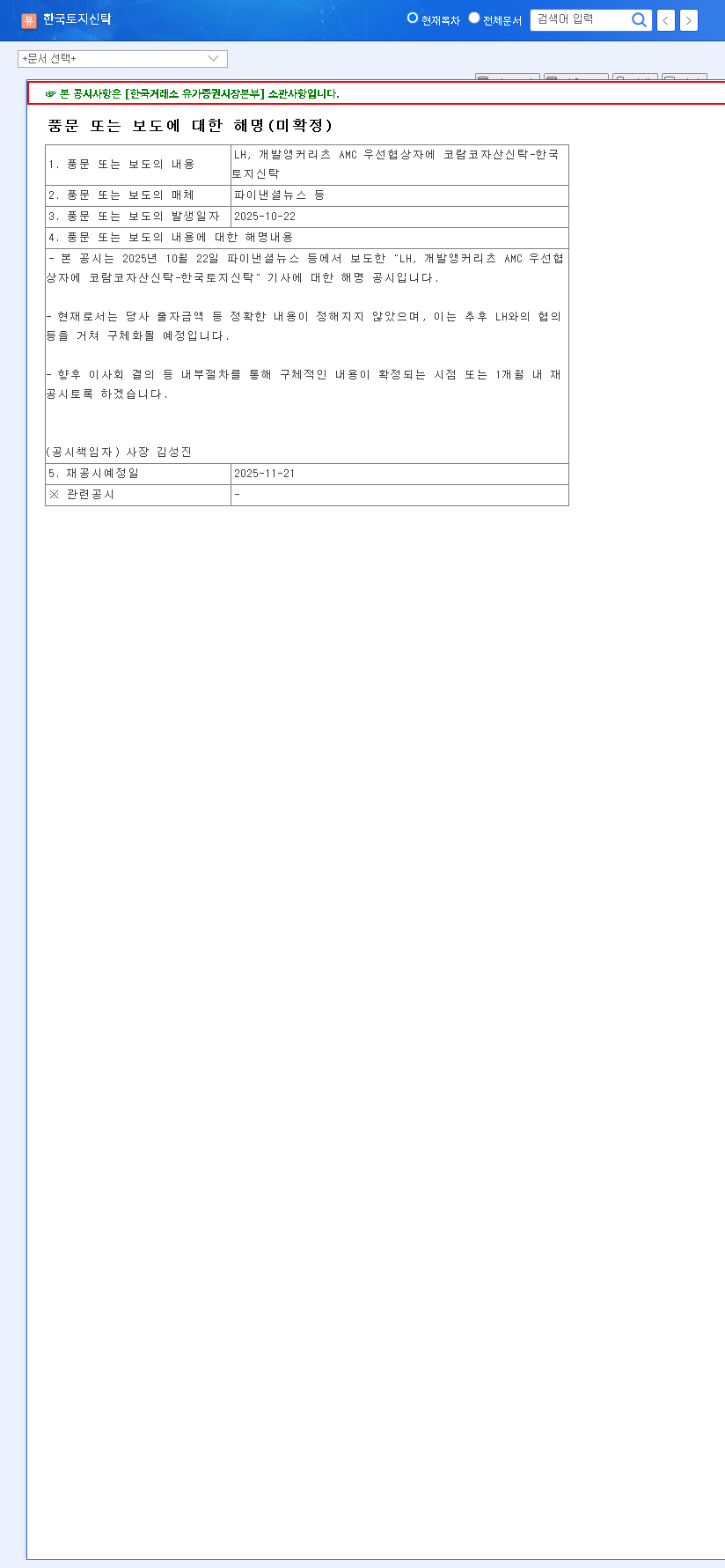
    On October 22, 2025, financial news outlets reported that Korea Real Estate Investment & Trust, along with Koramco Asset Trust, was selected as a preferred bidder for the LH Development Anchor REITs AMC. This news suggested a major step into large-scale public real estate development projects, a lucrative and stable sector.

    In a swift response, the company issued a formal clarification to manage market expectations. The disclosure, titled “Explanation regarding rumors or press reports (Unconfirmed),” clarified the official position. According to the Official Disclosure (Source), key details regarding investment amounts and project specifics remain undecided and are subject to future negotiations with LH. A follow-up re-disclosure is promised within one month, or as soon as details are confirmed.

    Why the LH Development Anchor REITs AMC is a Game-Changer

    To understand the excitement, it’s crucial to grasp the significance of this opportunity. An Asset Management Company (AMC) for a development anchor REIT is not merely a passive asset manager. It is the operational brain behind large-scale real estate development, involved from planning and financing to execution and profit generation. Success in securing this role for Korea Real Estate Investment & Trust would be a monumental achievement.

    “Partnering with a state-backed entity like LH offers unparalleled stability and access to a pipeline of strategic development projects, effectively de-risking long-term growth for the chosen asset manager.”

    Key Strategic Advantages

    • Access to Prime Projects: Participation guarantees a significant role in major public real estate developments, providing a stable, long-term revenue stream from management fees and development profits.
    • Portfolio Diversification: It allows Korea Real Estate Investment & Trust to expand beyond its traditional trust operations into the dynamic real estate asset management space, hedging against market cycles. Learn more about diversifying in our guide to Korean REITs investment.
    • Enhanced Market Credibility: A successful partnership with LH significantly boosts the company’s reputation, strengthening its position to win other large-scale public and private sector contracts in the future.
    • Synergistic Partnership: Collaborating with Koramco Asset Trust, another industry leader, could create powerful synergies by combining complementary strengths in finance, development, and asset management.

    A Balanced Analysis: Potential Upsides vs. Downsides

    The Bull Case (Potential Positives)

    If the KREIT LH deal is finalized on favorable terms, the upside is substantial. It would establish a major new growth engine, leading to predictable fee income and a share in development profits. The enhanced corporate image and solidified market position could attract further institutional investment and improve the company’s valuation multiples over the long term.

    The Bear Case (Potential Risks)

    The primary risk is the current uncertainty. Negotiations could result in less favorable terms, a smaller-than-expected investment role, or even fall through completely. Furthermore, large-scale development requires significant capital. A substantial capital injection could place a temporary strain on the company’s balance sheet. As noted by sources like the Financial Times, real estate development is subject to macroeconomic risks, including interest rate fluctuations and regulatory changes, which must be expertly managed.

    Investor Strategy: What to Watch For

    A prudent approach is essential. The market will be closely watching for the re-disclosure, scheduled for before November 21, 2025. This document will be the single most important catalyst for the stock in the near term.

    Key Metrics in the Upcoming Disclosure:

    • Investment Scale: The exact capital commitment required from Korea Real Estate Investment & Trust.
    • Profit Structure: How fees and development profits will be shared among the partners.
    • Project Scope: The size, timeline, and nature of the real estate projects involved.
    • Governance: The roles and responsibilities of each partner in the consortium.

    Ultimately, investors should adopt a long-term perspective. Evaluate whether this strategic move aligns with the company’s core competencies and can genuinely enhance its intrinsic value beyond the short-term stock price volatility. Investment decisions should always be based on thorough due diligence and your own personal risk tolerance.

    (034830) Korea Real Estate Investment & Trust & the LH REITs AMC Deal: An Investor's Deep Dive 관련 이미지
  • Korea Land Trust’s ₩50B EB Issuance: What Investors Need to Know

    Korea Land Trust's ₩50B EB Issuance: What Investors Need to Know 대표 차트 이미지

    1. What Happened?

    On September 24, 2025, news broke that Korea Land Trust is exploring the issuance of ₩50 billion in EBs. The company stated that this is being considered as part of a broader strategy to enhance shareholder value, potentially involving treasury stock, but that nothing has been finalized.

    2. Why Issue EBs?

    Korea Land Trust operates a diverse portfolio of businesses, including real estate trust, urban redevelopment, and REITs. The funds raised through the EB issuance are expected to be used for improving the company’s financial structure and securing investment resources for future growth. The link to potential treasury stock strategies also signals a commitment to enhancing shareholder value.

    3. Opportunities and Risks of the EB Issuance

    • Opportunities: Improved financial structure, secured investment resources, potential for increased shareholder value.
    • Risks: Potential for share dilution (upon conversion), increased interest expense burden.

    4. Macroeconomic Considerations

    Current market conditions show increased volatility in interest rates, exchange rates, and the real estate market. This volatility could impact Korea Land Trust’s business and financial performance, and also influence the interest rate on the EBs.

    5. What Should Investors Do?

    • Confirm finalization and terms of the EB issuance (amount, interest rate, maturity, conversion terms, etc.).
    • Analyze the impact of the EB issuance on the company’s financial structure and shareholder value.
    • Monitor changes in macroeconomic indicators, such as interest rates, exchange rates, and real estate market trends.
    • Continuously observe Korea Land Trust’s financial soundness and earnings performance.

    FAQ

    Has Korea Land Trust confirmed the EB issuance?

    No, the issuance is currently under review and will be publicly announced upon confirmation.

    How will the funds from the EB issuance be used?

    The funds will be utilized to strengthen the company’s financial structure and secure investment resources for future growth. Treasury stock strategies are also under consideration.

    How will the EB issuance affect the stock price?

    While it could positively impact the company’s financials and shareholder value, there are risks, including potential share dilution and increased interest expenses.

    Korea Land Trust's ₩50B EB Issuance: What Investors Need to Know 관련 이미지
  • Korea Land Trust (034830) IR Analysis: Q2 2025 Earnings and Investment Strategies


    Korea Land Trust (034830) IR Analysis: Q2 2025 Earnings and Investment Strategies 대표 차트 이미지


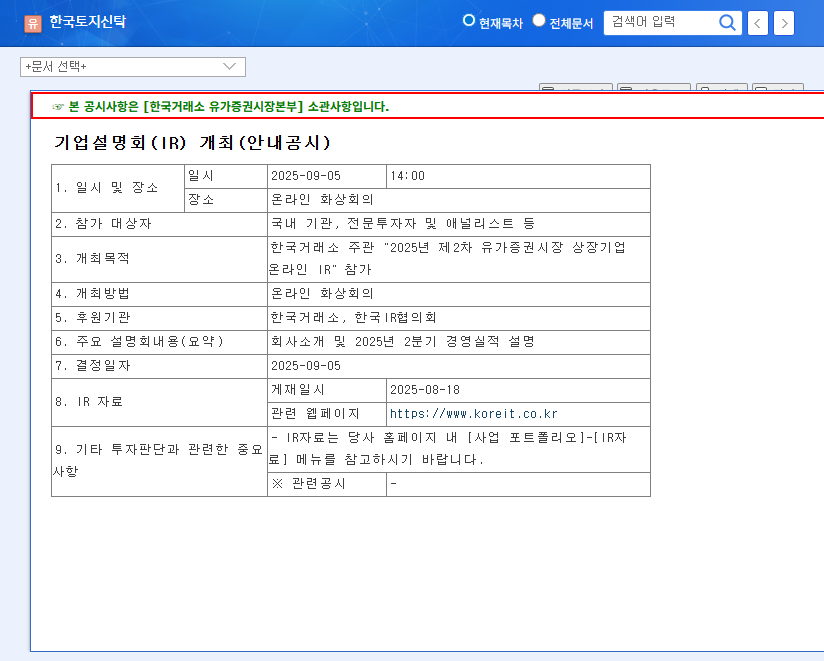
    Korea Land Trust Q2 2025 Earnings: Key Takeaways

    On September 5, 2025, Korea Land Trust released its Q2 2025 financial results. Market attention was focused on the performance following a slight return to profitability in Q1 and the progress of key businesses like urban redevelopment and REITs.

    Reasons for Performance and Recovery Strategies

    The recent downturn in the real estate market and changes in the interest rate environment have negatively impacted Korea Land Trust’s performance. Key profit and loss items, such as trust fees, interest income on trust accounts, and gains on securities valuation and disposal, are trending downwards. However, the company is pursuing diversification strategies, including reducing its reliance on loan-based trust and expanding its focus on urban redevelopment and REITs.

    Key Checkpoints for Investors

    • Q2 Earnings: Whether the trend of returning to profit is sustained and future outlook.
    • Portfolio Diversification: Performance and growth potential of urban redevelopment and REIT businesses.
    • Risk Management: Strategies for responding to macroeconomic variables such as interest rates and exchange rate fluctuations.
    • ESG Management: Efforts to strengthen ESG management for sustainable growth.

    Investment Strategy: Should You Invest in Korea Land Trust Now?

    It’s crucial to carefully analyze the IR presentation and make investment decisions based on a comprehensive consideration of market conditions and macroeconomic indicators. Pay close attention to the growth potential of the urban redevelopment and REITs businesses and Korea Land Trust’s risk management capabilities.


    FAQ

    What are the main businesses of Korea Land Trust?

    Korea Land Trust primarily provides comprehensive real estate financial services, focusing on real estate trust business. In addition to loan-based land trust, they operate a diversified business portfolio, including urban redevelopment and REITs.

    How has Korea Land Trust been performing recently?

    Recent performance has been somewhat sluggish due to the downturn in the real estate market, but the company returned to a slight profit in Q1 2025. You can find details on Q2 performance and future outlook in the IR materials.

    What are the key investment points for Korea Land Trust?

    Key investment points include the growth potential of urban redevelopment and REITs businesses, a stable financial structure, and proactive ESG management efforts.


    Korea Land Trust (034830) IR Analysis: Q2 2025 Earnings and Investment Strategies 관련 이미지
    Korea Land Trust (034830) IR Analysis: Q2 2025 Earnings and Investment Strategies 관련 이미지


  • Korea Land Trust Q2 2025 Earnings Analysis: Key Takeaways from the Investor Relations Call

    Korea Land Trust Q2 2025 Earnings Analysis: Key Takeaways from the Investor Relations Call 대표 차트 이미지

    1. What Happened? Korea Land Trust Holds Q2 Earnings Call

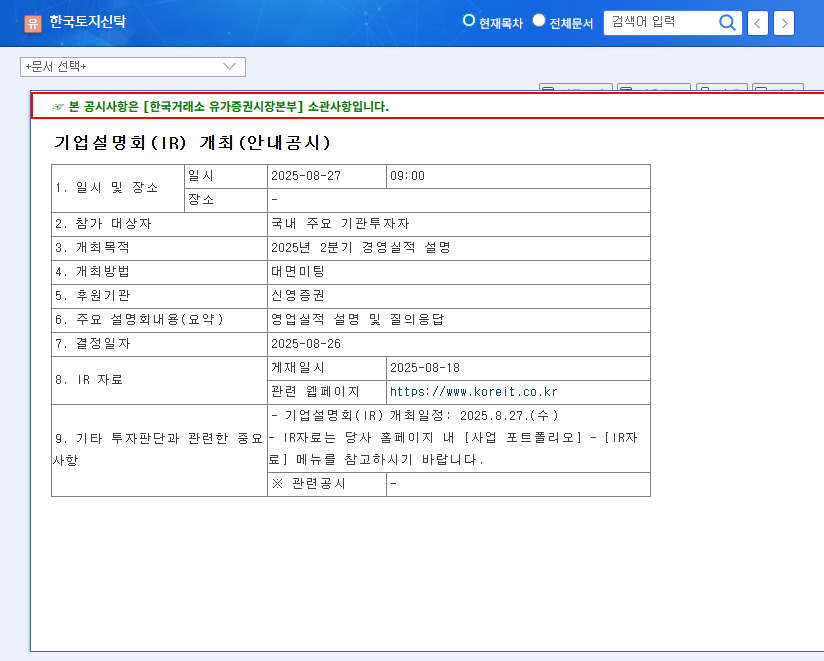
    Korea Land Trust held its Q2 2025 earnings call on August 27, 2025. The company shared its financial results and answered questions from investors.

    2. Why Does It Matter? Navigating the Real Estate Downturn

    With rising interest rates and a prolonged real estate market downturn, Korea Land Trust has faced challenges, including operating losses in 2024. This IR call was a crucial opportunity to assess the company’s fundamentals, future growth strategies, and address market concerns.

    3. Key Takeaways and Their Implications

    • Positive Factors:
      • Strong foundation with KRW 432 trillion in trust assets and maintained financial soundness.
      • Securing new growth engines through expansion of urban redevelopment and REITs businesses.
    • Negative Factors:
      • Continued decline in profitability due to rising interest rates and the real estate market slump.
      • Potential lack of clear solutions presented for the deteriorating market conditions.

    4. What Should Investors Do? Review the IR and Monitor Performance

    Investors should carefully review the IR materials and continuously monitor the company’s responsiveness and the success of its new business ventures. Pay close attention to the growth potential of urban redevelopment and REITs, as well as the company’s strategies for navigating the changing market dynamics.

    Frequently Asked Questions

    How did Korea Land Trust perform in Q2 2025?

    While specific figures should be referenced from the IR materials, it appears that profitability continues to decline due to the impact of rising interest rates and the real estate market downturn.

    What is the outlook for Korea Land Trust?

    The growth potential of new businesses, such as urban redevelopment and REITs, is positive, but challenges are expected if the real estate market slump continues. Ongoing monitoring of the company’s strategies and market conditions is essential.

    What are the key investment considerations?

    Due to the high volatility of earnings based on macroeconomic indicators, investors should pay close attention to changes in market conditions, such as interest rates and the real estate market. Continuous monitoring of the success of new business ventures is also crucial.

    Korea Land Trust Q2 2025 Earnings Analysis: Key Takeaways from the Investor Relations Call 관련 이미지
    Korea Land Trust Q2 2025 Earnings Analysis: Key Takeaways from the Investor Relations Call 관련 이미지