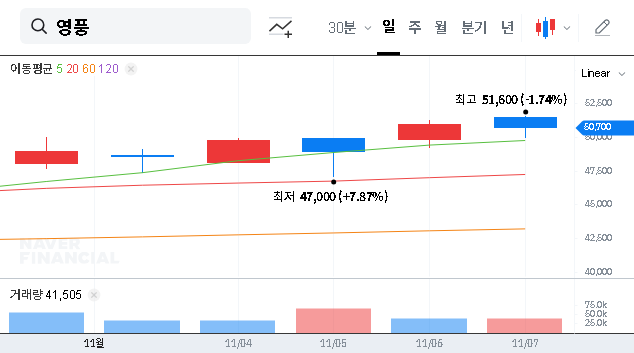
Tag: 000670

  • (000670) YOUNGPOONG Seokpo Smelter Halt: A ₩1 Trillion Stock Analysis for Investors

    (000670) YOUNGPOONG Seokpo Smelter Halt: A ₩1 Trillion Stock Analysis for Investors

    The recent announcement regarding the YOUNGPOONG Seokpo Smelter has sent ripples through the investment community. For anyone holding or considering shares in YOUNGPOONG CORPORATION (영풍), the 10-day suspension of operations is a critical development. This is not merely a logistical pause; it’s a significant event with a projected revenue disruption of nearly 1 trillion Korean Won, striking at the heart of the company’s financial stability. This comprehensive analysis will dissect the situation, evaluate the impact on YOUNGPOONG’s stock and fundamentals, and provide a clear action plan for investors navigating this uncertainty.

    We will move beyond the headlines to offer a deep, data-driven perspective on what this operations halt means for both the short-term stock price and the long-term viability of one of Korea’s major industrial players.

    The Core Issue: A Staggering Production Halt

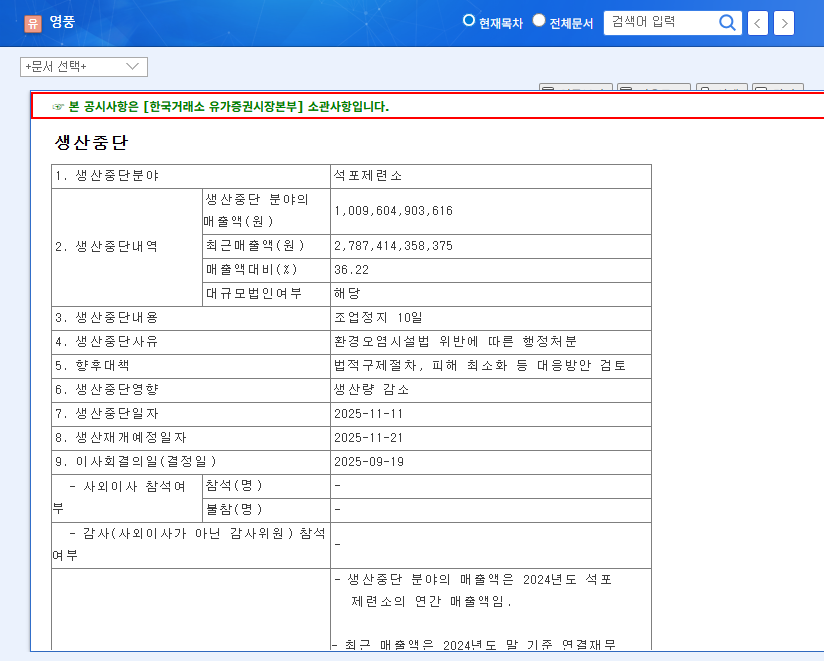
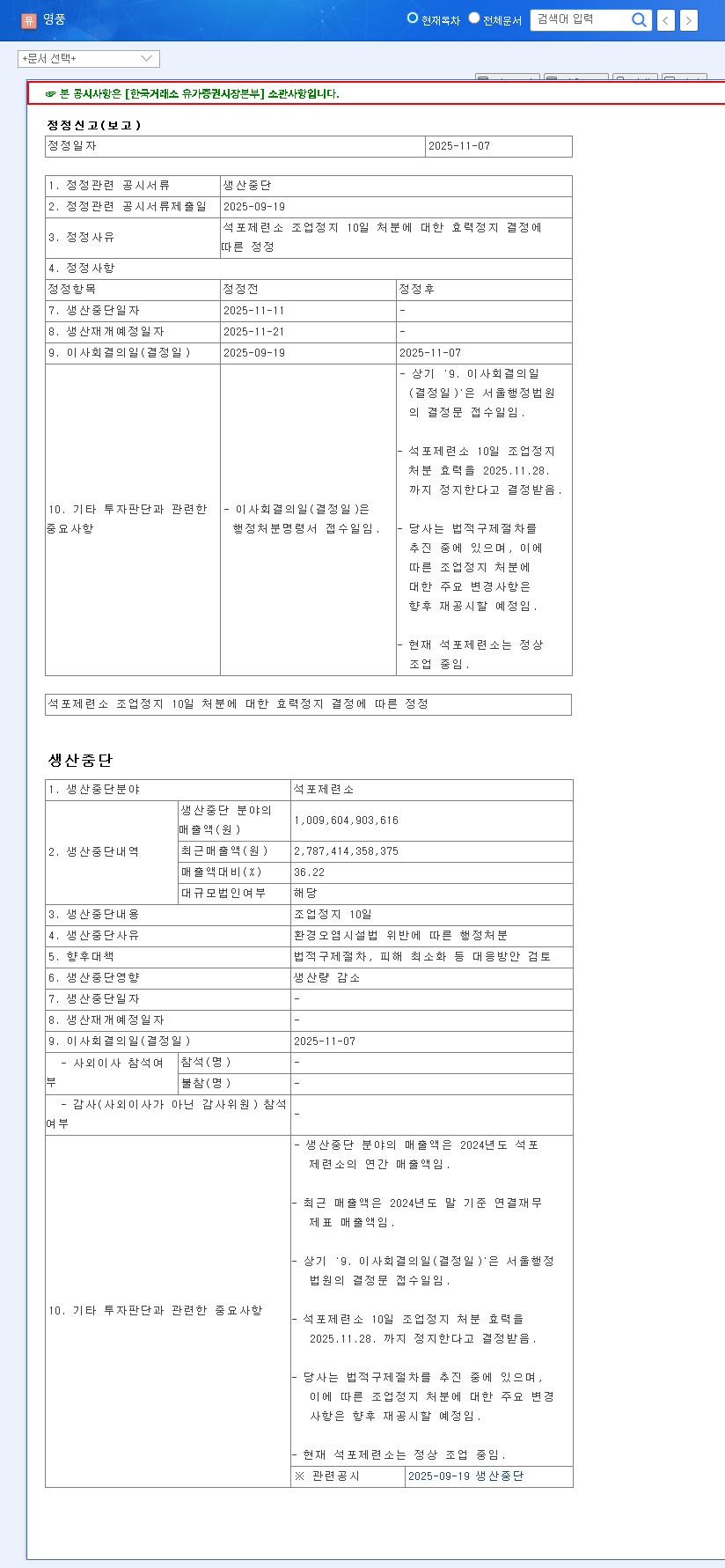
    On November 7, 2025, YOUNGPOONG CORPORATION formally announced a 10-day suspension of all production at its core Seokpo Smelter facility. According to the company’s public filing, this halt is projected to slash revenues by an estimated ₩1,009.6 billion. To put this in perspective, this figure represents a massive 36.22% of the company’s total revenue from the previous reporting period. The direct and severe impact on the company’s top line cannot be overstated. Investors can view the Official Disclosure (DART) for primary source information.

    This is a pivotal moment for YOUNGPOONG. While the company has other thriving divisions, the sheer scale of the Seokpo Smelter’s revenue contribution makes this operational halt a significant threat to its immediate financial performance and investor confidence.

    Dissecting YOUNGPOONG’s Financial Health (Pre-Incident Analysis)

    To understand the true impact of this shutdown, we must first have a clear picture of YOUNGPOONG’s fundamentals based on its 2025 H1 report. The company presents a mixed but intriguing financial landscape.

    Key Financial Metrics

    • Revenue Decline: Consolidated revenue stood at ₩1.17 trillion, a notable decrease year-on-year, primarily dragged down by poor performance in the smelting division.
    • Operating Loss: An operating loss of ₩150.48 billion was recorded, a slight improvement but still indicative of significant operational challenges and rising environmental compliance costs.
    • Net Profit Turnaround: Surprisingly, the company posted a net profit of ₩264.27 billion, driven by returns from financial instruments and equity investments, not core operations.
    • Strong Financial Health: The debt-to-equity ratio improved to a very healthy 31.38%, suggesting a solid balance sheet that can weather short-term storms.

    Performance by Business Division

    YOUNGPOONG is not a monolith. Its diversified business model is a key factor in this analysis.

    • Smelting Division: This division has been the primary concern. Even with a 4% rise in international zinc prices, the production utilization rate was a dismal 34.94% due to ongoing operational issues. The current halt will drive this figure even lower.
    • Electronic Components: The star performer, this division recorded revenue of ₩871.2 billion, showcasing robust growth and technological leadership with exports making up over 64% of its sales.
    • Semiconductor Division: Led by its subsidiary Signetics, this segment is a growing force, with revenues of ₩51.59 billion and strong potential.

    The Financial Impact of the YOUNGPOONG Seokpo Smelter Shutdown

    The 10-day operations halt will have immediate and severe negative consequences on YOUNGPOONG’s fundamentals. The loss of over a third of its revenue in a short period will directly translate into a sharp decline in Q4 performance, likely wiping out any gains and deepening the operating loss. This creates a cascade of potential issues:

    • Profitability Crisis: The smelting division’s woes will be significantly amplified, making it nearly impossible for the profitable electronics and semiconductor divisions to offset the losses.
    • Cash Flow Strain: While the company’s strong balance sheet provides a cushion, a sudden revenue stop of this magnitude will strain short-term cash flow and could impact planned capital expenditures.
    • Reputational and Regulatory Risk: This halt, likely linked to the company’s history of environmental issues and pending lawsuits, damages corporate credibility. It signals deeper operational problems that could lead to further regulatory scrutiny and fines, as noted by market analysts at sources like Bloomberg.

    Strategic Outlook and Investor Action Plan

    The short-term outlook is undoubtedly negative. The market is likely to price in the revenue loss, leading to downward pressure on YOUNGPOONG’s stock. However, savvy investors should look at the mid-to-long-term picture.

    Key Questions for the Future

    The company’s recovery hinges on several factors:

    • Speed of Resolution: How quickly can management resolve the underlying cause and resume operations safely and in full compliance?
    • Growth of Other Divisions: Can the high-performing electronics and semiconductor divisions continue their growth trajectory to eventually lessen the reliance on the volatile smelting business? For more on this, see our Analysis of Korea’s Tech Sector.
    • Commitment to ESG: Will this crisis force a genuine, long-term investment in environmental, social, and governance (ESG) standards to prevent future incidents?

    Recommendations for Investors

    For Current Shareholders: Avoid panic selling. The company’s strong balance sheet provides a safety net. Monitor company communications closely for clarity on the resumption of operations and plans to address the root cause.

    For Potential Investors: This situation may present a long-term value opportunity if the stock price overcorrects. However, entry should only be considered after the company provides a transparent and credible plan for stabilizing the Seokpo Smelter and strengthening its environmental compliance. The performance of the non-smelting divisions remains a significant long-term bull case.

    In conclusion, the YOUNGPOONG Seokpo Smelter operations halt is a major setback that will dominate the company’s performance in the coming months. The key to its future value lies in management’s ability to turn this crisis into a catalyst for fundamental operational and environmental reform.
    (000670) YOUNGPOONG Seokpo Smelter Halt: A ₩1 Trillion Stock Analysis for Investors 관련 이미지
  • (000670) YOUNGPOONG (000670) Shareholding Change: Analysis, Stock Price Impact & Investment Strategy

    (000670) YOUNGPOONG (000670) Shareholding Change: Analysis, Stock Price Impact & Investment Strategy

    A significant YOUNGPOONG shareholding change has sent ripples through the investment community, signaling potential shifts in management control and creating uncertainty for the company’s future stock price. For investors in YOUNGPOONG CORPORATION (000670), understanding the nuances of this development is not just important—it’s critical. This comprehensive analysis will dissect the official disclosure, explore the underlying motivations, and provide a clear, actionable YOUNGPOONG investment strategy to navigate the path forward.

    The recent ‘Report on Large Shareholding Status’ is more than a procedural filing; it’s a window into the inner workings of the company, revealing a complex interplay of a stock split, insider sales, and dissolved partnerships. We will break down what these changes mean for the company’s stability and your portfolio.

    Decoding the Official Disclosure: A Major Shareholding Shift

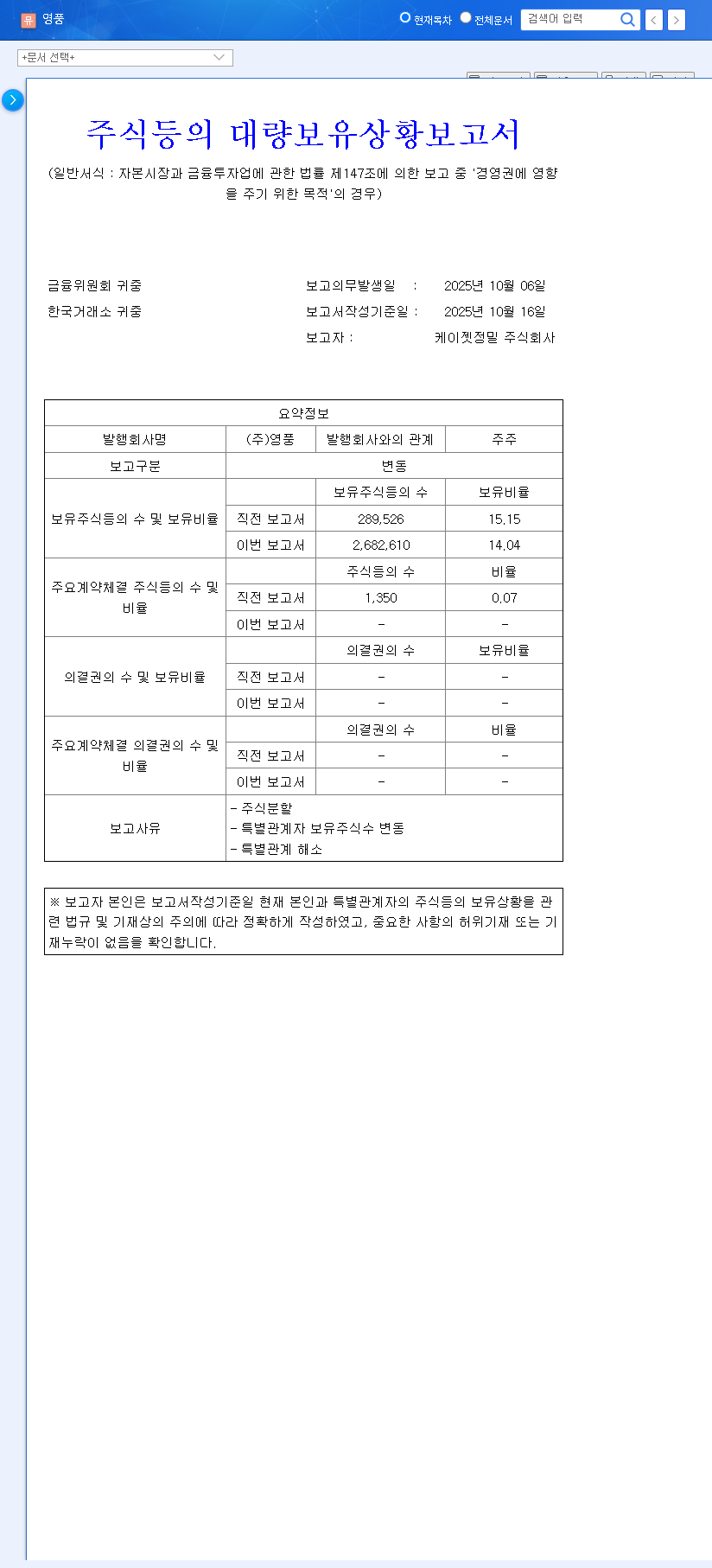
    On October 16, 2025, YOUNGPOONG CORPORATION filed a disclosure that warrants close inspection. The report, filed by K-Jet Precision, whose stated purpose of holding is ‘Influence over Management Rights,’ revealed a notable decrease in their consolidated stake. You can view the full filing here: Official Disclosure (Source: DART).

    Key Details of the Change

    • Reporting Entity: K-Jet Precision and related parties.
    • Previous Stake: 15.15%
    • Current Stake: 14.04%
    • Net Change: A decrease of 1.11%.
    • Notable Action: Key individual Choi Chang-gul sold 6,100 shares on the open market.

    The filing cites three primary reasons for this shift: a recent stock split, changes in shares held by related entities, and the dissolution of a special relationship. This combination of factors points to a significant realignment within the company’s key shareholder group, directly impacting the management control risk profile of YOUNGPOONG.

    Impact on YOUNGPOONG Stock Price: Bull vs. Bear Case

    How will the market digest this news? The implications for the YOUNGPOONG stock price are multifaceted, presenting both potential upsides and significant risks.

    The Bull Case (Potential Positives)

    Optimists may focus on the stock split, which increases the number of outstanding shares and lowers the per-share price. This typically improves liquidity and makes the stock more accessible to retail investors, potentially boosting demand. Furthermore, the dissolution of a ‘special relationship’ could be interpreted as a move toward a more transparent and simplified ownership structure, which the market often views favorably in the long run.

    The Bear Case (Potential Negatives)

    The bearish perspective, however, carries significant weight. The 1.11% stake reduction comes from a block whose stated goal is management influence. This reduction, coupled with open-market sales by a key figure like Choi Chang-gul, is a classic red flag. It suggests a potential loss of confidence or a strategic retreat, which can create a power vacuum and fuel speculation about management instability. Such uncertainty is a primary driver of stock price volatility and can lead to a sell-off as investors price in the heightened risk.

    While a stock split offers a cosmetic boost, the underlying signal from an insider sale and a reduced influential stake often speaks louder. The market’s immediate reaction will likely hinge on concerns over future management stability.

    A Strategic YOUNGPOONG Investment Strategy for Investors

    Given the uncertainty surrounding the YOUNGPOONG shareholding change, a prudent and analytical approach is required. Hasty decisions are ill-advised. Instead, focus on gathering more intelligence with the following action plan:

    • Analyze Corporate Fundamentals: Look beyond this single event. Scrutinize YOUNGPOONG’s latest financial statements. Is revenue growing? Are profit margins stable? A strong fundamental backdrop can help a company weather periods of management uncertainty. Check data from authoritative sources like Bloomberg for a comprehensive financial overview.
    • Monitor Insider and Institutional Activity: Choi Chang-gul’s sale is one data point. Continue to monitor for any further sales or purchases by insiders and large institutions. A pattern of selling is a much stronger signal than a one-off transaction.
    • Review Analyst Reports: Check recent reports from brokerage firms for their take on this 000670 analysis. Analysts may have insights into the relationships between the key players that are not publicly available.
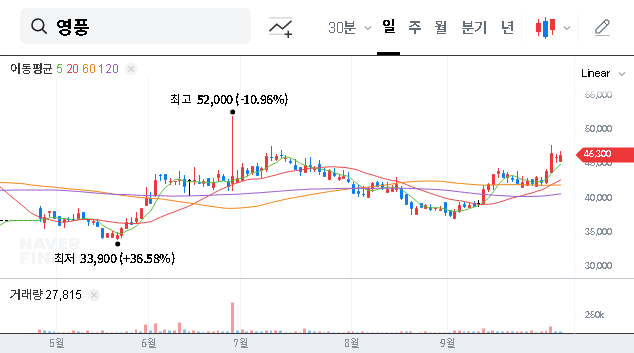
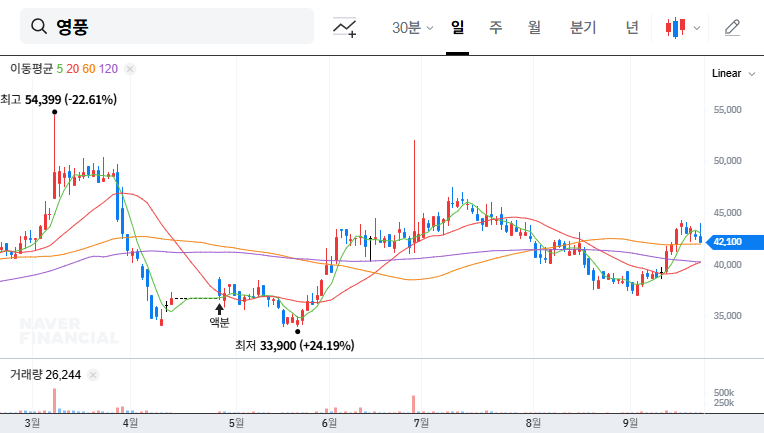
    • Assess Technical Indicators: Pay close attention to the stock chart. Look for signs of support or resistance levels breaking, and monitor trading volume. Unusually high volume on down days can signal institutional selling. If you are new to this, learn more about key technical analysis patterns.

    Frequently Asked Questions (FAQ)

    Q1: What was the exact impact of the recent YOUNGPOONG shareholding change?

    The total stake of K-Jet Precision and its related parties decreased by 1.11%, from 15.15% to 14.04%. This is significant because this entity’s stated goal is influencing management, so a reduction suggests a shift in their strategic position.

    Q2: Why is Choi Chang-gul’s stock sale a concern for investors?

    The sale of 6,100 shares by a key individual involved with an influential shareholder group can be interpreted as a negative signal. It may indicate his personal lack of confidence in the company’s short-term prospects or be part of a larger strategic exit, raising questions about future stability.

    Q3: How should this event shape my YOUNGPOONG investment strategy?

    This event introduces a high degree of uncertainty. A cautious approach is best. Investors should prioritize further research into the company’s fundamentals and monitor market sentiment and insider activity before making any new investment decisions. The key is to wait for more clarity on the management control situation.

    (000670) YOUNGPOONG (000670) Shareholding Change: Analysis, Stock Price Impact & Investment Strategy 관련 이미지
  • (000670) Youngpoong Seokpo Smelter: ₩1.5T Revenue Crisis After Suspension – Investor Analysis

    (000670) Youngpoong Seokpo Smelter: ₩1.5T Revenue Crisis After Suspension – Investor Analysis

    The Youngpoong Seokpo Smelter, the cornerstone of Youngpoong Co., Ltd.’s business, has been hit with a critical 10-day business suspension order due to repeated environmental law violations. This isn’t just a minor setback; it’s a seismic event projected to erase approximately ₩1.5 trillion from the company’s revenue stream, representing nearly 40% of its annual total. For investors and market watchers, this development raises urgent questions about the company’s operational integrity, financial stability, and long-term viability. This comprehensive analysis will explore the deep-seated issues behind the suspension and what it means for the future of Youngpoong.

    The Suspension Order: A Critical Blow

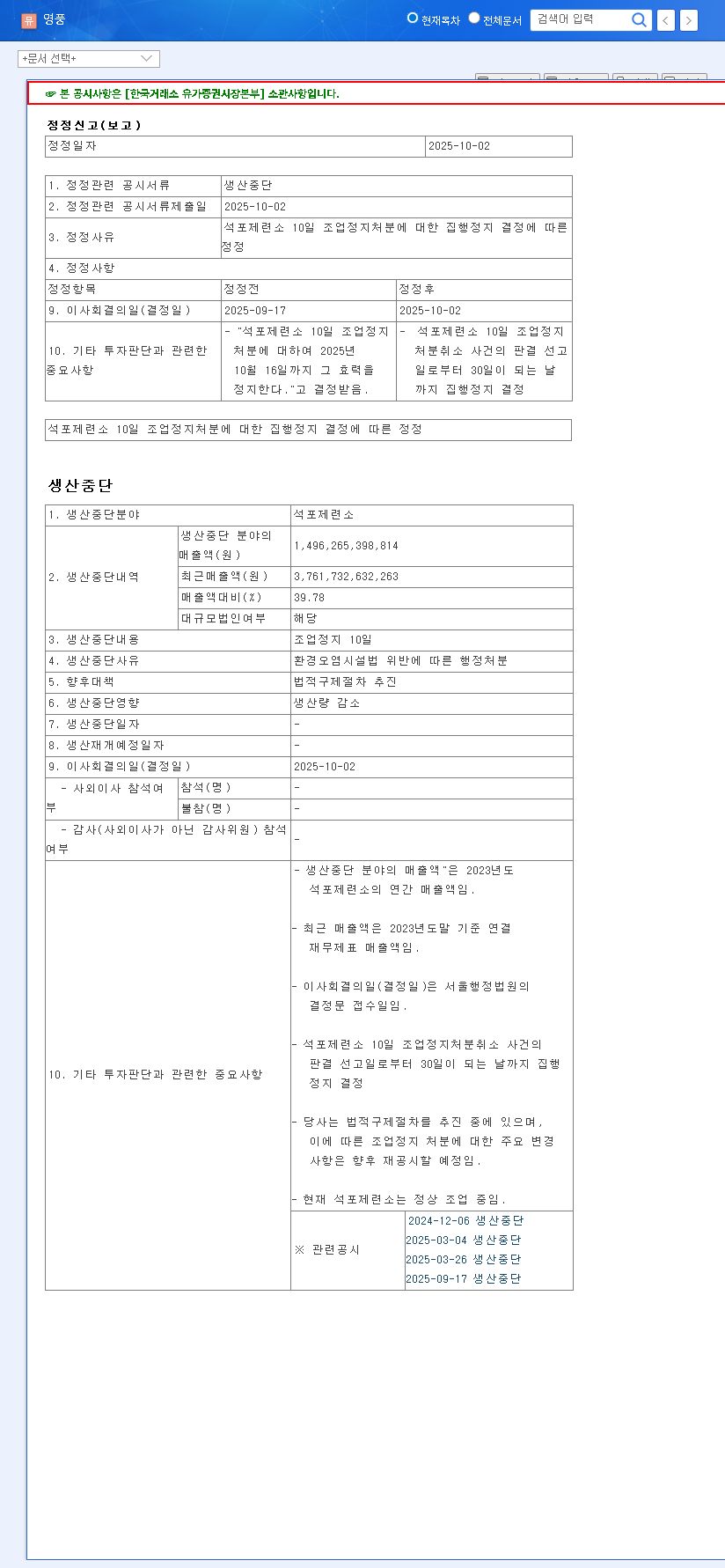
    On October 2, 2025, Youngpoong Co., Ltd. formally announced the suspension order for its key facility. The reasons cited were numerous violations of critical environmental regulations, including the Water Environment Conservation Act and the Soil Environment Conservation Act. According to the Official Disclosure filed with the Financial Supervisory Service, this is the second such order in 2025, highlighting a deeply concerning pattern of non-compliance.

    The financial ramifications are staggering. A revenue suspension of ₩1,496.3 billion is not just a line item; it’s a direct threat to the company’s profitability, liquidity, and market standing for the entire fiscal year.

    Analyzing the Widespread Financial Fallout

    The impact of the Youngpoong business suspension extends far beyond the immediate 10-day period. It triggers a cascade of negative financial events that could cripple the company’s fundamentals.

    1. Severe Damage to Core Operations

    The smelting division is Youngpoong’s primary revenue engine. Halting production, even for a short period, has long-term consequences:

    • Profitability Collapse: The massive revenue loss combined with ongoing fixed costs (labor, maintenance) will likely push the company back into a deficit, erasing the profits made in the first half of 2025.
    • Supply Chain Disruption: A halt at a major smelter can disrupt the global supply chain for zinc and other metals, potentially leading to loss of contracts and market share to more reliable competitors.
    • Increased Financial Burdens: Beyond the lost revenue, the company faces escalating costs for environmental remediation, potential government fines, and litigation expenses.

    2. Weakening Financial Health and Investor Trust

    The suspension sends a powerful negative signal to the market. A sharp decline in operating cash flow will strain liquidity and could impact debt repayment capabilities. This operational instability, driven by Youngpoong environmental violations, could lead to a credit rating downgrade, which would increase future borrowing costs and further erode investor confidence. The damage to the company’s reputation and its ESG (Environmental, Social, and Governance) profile could deter institutional investors who prioritize sustainable and responsible business practices.

    A Pattern of Risk: Beyond a One-Time Incident

    This incident at the Youngpoong Seokpo Smelter is not an isolated event. The recurrence of suspension orders points to a systemic, structural problem within the company’s operational and compliance frameworks. Instead of being viewed as a temporary issue, the market is likely to perceive this as a fundamental flaw in management’s ability to mitigate known environmental risks. For a heavy industry like smelting, a strong environmental compliance record is not optional; it is a license to operate. Further analysis from sources like the Environmental Protection Agency (EPA) shows that regulatory scrutiny on smelters globally is only increasing.

    Investor Outlook and Strategic Considerations

    For current and potential investors, this situation demands a cautious and critical approach. The short-term impact on Youngpoong’s stock price is expected to be severely negative. The planned treasury stock buyback will likely be insufficient to counteract the immense downward pressure from this news. A comprehensive Youngpoong stock analysis must now heavily weigh these recurring operational and legal risks.

    Investors should closely monitor the following:

    • Management’s Response: Look for a transparent and decisive action plan from Youngpoong’s leadership that goes beyond superficial promises and addresses the root causes of the environmental failures.
    • Capital Investment in Compliance: Will the company allocate significant capital to upgrade the Youngpoong Seokpo Smelter facilities and implement robust, verifiable environmental control systems?
    • Portfolio Diversification: Assess the performance and growth potential of Youngpoong’s other divisions, such as electronic components, to see if they can offset the volatility of the smelting business. You can learn more by reading our guide on evaluating corporate risk portfolios.

    Disclaimer: This analysis is based on publicly available information and is for informational purposes only. It does not constitute financial or investment advice. All investment decisions should be made with the consultation of a qualified financial professional.

    (000670) Youngpoong Seokpo Smelter: ₩1.5T Revenue Crisis After Suspension – Investor Analysis 관련 이미지
  • Youngpoong Smelter Shutdown: 10-Day Impact Analysis & Investment Outlook

    Youngpoong Smelter Shutdown: 10-Day Impact Analysis & Investment Outlook 대표 차트 이미지

    1. The Smelter Shutdown: What Happened?

    Youngpoong’s smelter has halted operations for 10 days. This translates to a production disruption of ₩1.096 trillion, representing 36.22% of total sales. This shutdown could impact not only short-term financial performance but also long-term business operations and investor sentiment.

    2. Why the Shutdown?

    The report doesn’t specify the exact reason for the shutdown. However, considering past instances and industry trends, possibilities include environmental regulations, safety concerns, or scheduled maintenance. Understanding the precise reason is crucial for investment decisions.

    3. Impact of the Shutdown

    • 3.1 Financial Impact

      A direct revenue loss of approximately ₩28.47 billion is anticipated. Considering fixed costs and lost sales opportunities, the decrease in operating profit could be even more substantial. Disruptions to production and inventory management are also expected.

    • 3.2 Impact by Business Segment

      Smelting Division: A direct hit to this core business segment is inevitable. The division will likely become vulnerable to external factors like international zinc price volatility, China’s economic slowdown, and potential tightening of environmental regulations.
      Electronic Components Division: The decline in the smelting division’s performance could affect the consolidated financial statements and create challenges in securing investment and operating funds.

    • 3.3 Stock Price Impact

      The shutdown announcement will likely put downward pressure on the stock price in the short term. The long-term outlook will depend on the reason for the shutdown, the recovery period, and future regulatory and legal issues.

    4. What Should Investors Do?

    Investors should carefully consider the following:

    • The exact reason for the shutdown and the recovery plan
    • Youngpoong’s dependence on the smelting division and its potential for recovery
    • The influence of macroeconomic variables (interest rates, exchange rates, commodity prices)
    • Risks related to ongoing lawsuits and environmental regulations
    • The growth potential of the electronic components division

    Making informed investment decisions based on a comprehensive analysis is crucial.

    Frequently Asked Questions

    What caused the Youngpoong smelter shutdown?

    While the report doesn’t specify the exact cause, several possibilities should be considered, including environmental regulations, safety concerns, and scheduled maintenance.

    How will the shutdown affect Youngpoong’s stock price?

    Downward pressure on the stock price is expected in the short term. The long-term impact will depend on the reason for the shutdown and the company’s response.

    What should investors keep in mind?

    Investors should consider the cause and recovery plan, the company’s reliance on the smelting division, macroeconomic factors, and risks related to lawsuits and environmental regulations before making investment decisions.

    Youngpoong Smelter Shutdown: 10-Day Impact Analysis & Investment Outlook 관련 이미지
    Youngpoong Smelter Shutdown: 10-Day Impact Analysis & Investment Outlook 관련 이미지
  • Youngpoong’s Appeal Dismissal: What it Means for Investors


    Youngpoong's Appeal Dismissal: What it Means for Investors 대표 차트 이미지


    What Happened?

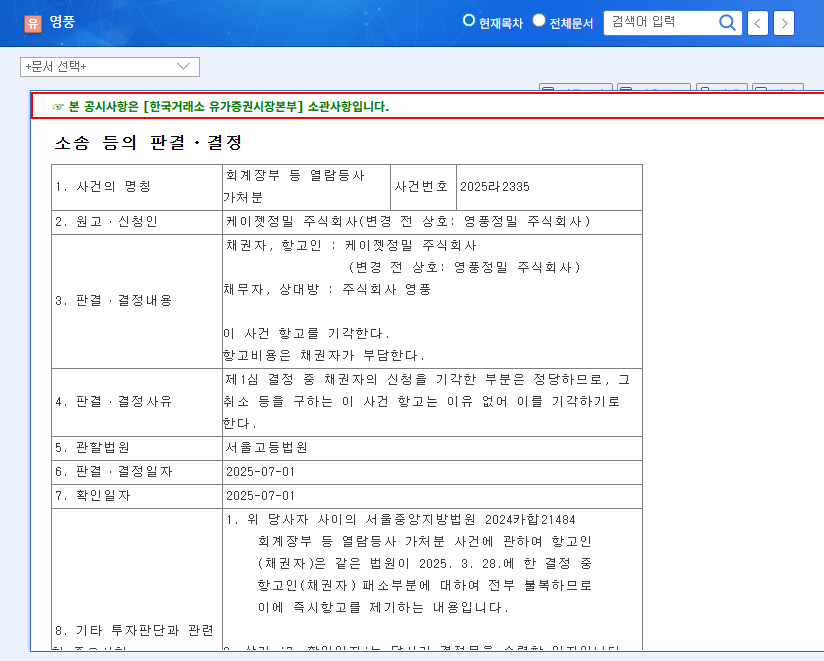
    On September 2, 2025, the Seoul High Court dismissed Youngpoong’s appeal against the injunction filed by KZ Precision (formerly Youngpoong Precision) regarding the inspection of its accounting books. This upholds the original court’s decision.

    Why Does It Matter?

    This ruling is significant due to the ongoing dispute between Youngpoong and KZ Precision regarding stake ownership or management control. The dismissal provides short-term certainty for Youngpoong’s operations and can be seen as a positive sign for investors. However, the possibility of further legal action by KZ Precision remains.

    What’s Next?

    • Stock Impact: A positive short-term impact is possible, but Youngpoong’s financial performance (declining sales and operating loss) will be key to its stock price trajectory.
    • Company Operations: Direct restrictions on accounting practices and management are unlikely. However, further actions by KZ Precision could change this.
    • Long-Term Outlook: Strengthening core businesses (non-ferrous metal smelting, electronic components) and addressing environmental concerns related to the Seokpo smelter will determine Youngpoong’s long-term growth.

    What Should Investors Do?

    Instead of reacting to short-term fluctuations, investors should consider Youngpoong’s financial recovery, potential responses from KZ Precision, and strategies to strengthen its core businesses when formulating a long-term investment strategy.


    FAQ

    Will this ruling positively impact Youngpoong’s stock price?

    A positive short-term impact is anticipated, but Youngpoong’s earnings improvement is crucial.

    How is KZ Precision expected to respond?

    Further legal action is possible, and the situation warrants close monitoring.

    What is the long-term investment outlook for Youngpoong?

    It depends on strengthening core businesses and addressing environmental concerns.


    Youngpoong's Appeal Dismissal: What it Means for Investors 관련 이미지
    Youngpoong's Appeal Dismissal: What it Means for Investors 관련 이미지


  • Youngpoong’s 2025 Semi-Annual Report: Declining Sales, Hidden Profits, and Investment Strategies

    1. What Happened at Youngpoong?

    Youngpoong recorded consolidated revenue of KRW 1.17 trillion in the first half of 2025, a sharp 58.1% decline year-on-year. The sluggish performance of the smelting and electronic components divisions is cited as the main cause. While operating losses continued, net income turned to a profit of KRW 264.3 billion on a consolidated basis. However, this is attributed to non-operating factors such as investment asset valuation gains, making it difficult to view this as a substantial business improvement.

    2. Why These Results?

    The global economic slowdown, weakening Chinese demand, and geopolitical risks are putting downward pressure on zinc demand. Strengthening environmental regulations and litigation risks also continue to burden Youngpoong’s profitability. Despite positive factors such as IT industry growth and increasing demand from advanced industries, the electronic components division is struggling due to intensifying competition and low-price offensives from China.

    3. What’s Next for Youngpoong?

    In the short term, negative factors such as continued sluggish sales, operating losses, environmental and legal risks, and high financing costs are likely to put downward pressure on the stock price. However, investments in new businesses such as battery recycling and hydrogen could act as long-term growth drivers, and the treasury stock cancellation plan is a positive sign for shareholder value enhancement.

    4. What Should Investors Do?

    Short-term investors need to be cautious due to the low visibility of earnings improvement and persistent risk factors. Long-term investors should comprehensively consider the success potential of new businesses, the company’s ability to respond to environmental regulations, and changes in the macroeconomic environment.

    Q: How much did Youngpoong’s sales decline in the first half of 2025?

    A: Sales decreased by 58.1% year-on-year to KRW 1.17 trillion.

    Q: What does Youngpoong’s return to profitability signify?

    A: It’s attributed to non-operating factors and is not necessarily indicative of a real business turnaround.

    Q: What are Youngpoong’s future growth drivers?

    A: Investments in new businesses like battery recycling and hydrogen are expected to be key drivers.