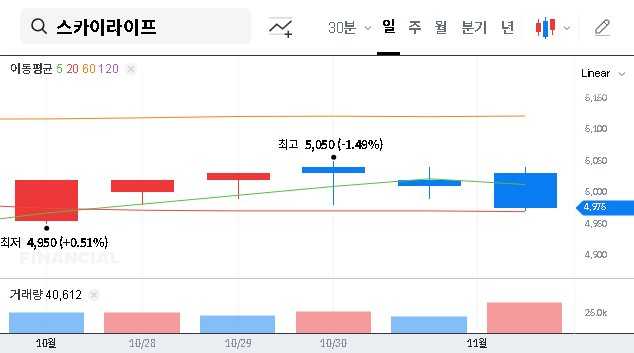
In a significant strategic maneuver, KT Skylife Co., Ltd. has announced a plan that will reshape its corporate structure and future trajectory. The upcoming KT Skylife spin-off involves separating specific channel business units from its subsidiary, KT ENA Co., Ltd., into a new, independent entity. This decision is far more than a simple corporate restructuring; it’s a calculated move designed to unlock value, enhance focus, and navigate the fiercely competitive media landscape. For investors, this raises critical questions about business competitiveness, financial health, and long-term shareholder value. This in-depth analysis will dissect the background, objectives, and potential impact of this pivotal corporate action.
The Mechanics of the KT Skylife Spin-Off
On November 3, 2025, KT Skylife will execute a simple physical spin-off of three channel divisions from its subsidiary, KT ENA. These divisions—‘Channel Ching’, ‘O&T’, and ‘Health Medi TV’—will be consolidated into a newly established entity, tentatively named ‘Channel Ching’. A physical spin-off means the parent company (in this case, the KT Skylife/KT ENA structure) creates a new, independent company and distributes its shares to the parent company’s existing shareholders. However, KT Skylife has indicated no plans for re-listing the new entity, suggesting it will remain a consolidated subsidiary, directly impacting KT Skylife’s overall financial reporting. The official details of this restructuring can be found in the company’s Official Disclosure.
The core objective is to maximize corporate and shareholder value by fostering specialization. The surviving KT ENA can focus on its core strengths, while the new ‘Channel Ching’ can pursue a more agile, niche-focused growth strategy.
Analyzing the Impact on Business and Financials
Enhancing Business Competitiveness
KT Skylife operates in a challenging market characterized by the slowdown of traditional paid broadcasting and intense competition from domestic IPTV services and global OTT giants like Netflix. Despite positive indicators like growing UHD and mobile subscribers, strategic adaptation is necessary. This spin-off is a direct response, aiming to create more nimble and specialized units. By separating distinct channel assets, each entity can tailor its content, marketing, and operational strategies without being constrained by a larger corporate structure. For a deeper understanding of corporate strategy, you can explore resources on corporate restructuring.
Financial Health and Post-Spin-Off Outlook
As of mid-2025, KT Skylife reported a sound financial position with consolidated revenue of KRW 490.1 billion and an operating profit of KRW 18.1 billion, complemented by a healthy, decreasing debt-to-equity ratio. The financial impact of the KT Skylife spin-off will be twofold:
- •KT ENA (Surviving Entity): It will experience an initial, unavoidable decrease in revenue and profit as assets are transferred. However, the long-term goal is to achieve higher operational efficiency and profitability by focusing on its streamlined portfolio of businesses.
- •Channel Ching (New Entity): As an independent but consolidated entity, its performance will directly influence KT Skylife’s group financials. Its success will hinge on its ability to operate efficiently and carve out a profitable niche, potentially leading to improved margins and focused growth.
Investment Outlook: Opportunities and Risks
For investors, the KT Skylife investment thesis is now more nuanced. This strategic spin-off presents both a clearer path to value creation and specific risks that warrant careful monitoring. For an external perspective on market trends, high-authority sources like Bloomberg offer valuable macroeconomic analysis.
Potential Upsides (The Bull Case)
- •Increased Efficiency: Smaller, specialized units often lead to better resource allocation and faster decision-making.
- •Enhanced Shareholder Value: The market may assign a higher valuation to two focused, well-run entities than to a single, more complex conglomerate (sum-of-the-parts valuation).
- •Strategic Flexibility: The new ‘Channel Ching’ could become an attractive partner for M&A or strategic investments from parties interested in its specific niche.
Potential Risks (The Bear Case)
- •Execution Risk: The success of the spin-off depends entirely on the new management’s ability to execute its strategy and secure market competitiveness.
- •Short-Term Volatility: The market may react with uncertainty in the short term, leading to stock price fluctuations as investors digest the changes.
- •Loss of Synergy: There is a risk of losing economies of scale or cross-promotional benefits that existed when the units were integrated.
Ultimately, while the KT Skylife spin-off is a strategically sound and positive move for long-term growth, investors should adopt a prudent approach. Monitoring the execution, market reaction, and the new entity’s early performance will be crucial.
Frequently Asked Questions (FAQ)
What is the timeline for the KT Skylife subsidiary spin-off?
The decision date for the spin-off is November 3, 2025, which is when the new entity, ‘Channel Ching (tentative name),’ is set to be formally established.
What is the primary goal of this spin-off?
The main purpose is to unlock greater corporate and shareholder value by allowing each business unit to specialize. This is expected to improve management efficiency, focus, and long-term growth potential for both the surviving and new entities.
How will this affect KT Skylife’s financials?
While the surviving KT ENA will see a planned reduction in revenue initially, it aims for improved stability and efficiency. The new entity, ‘Channel Ching,’ is expected to remain consolidated in KT Skylife’s financial statements, meaning its performance will continue to impact the parent company’s results.

Leave a Reply