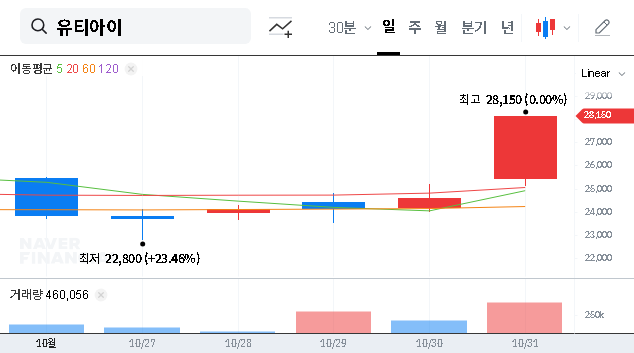
The recent announcement of the UTI INC. (유티아이) convertible bond issuance, valued at KRW 52 billion, has sent ripples through the investment community. This move represents a critical juncture for the company: it’s a strategic effort to fund promising new ventures like Flexible Glass, yet it also adds to a growing mountain of debt amidst deteriorating profitability. For investors, this raises a crucial question: is this a calculated risk for explosive growth or a sign of deepening financial distress?
This comprehensive analysis will dissect the details of the UTI INC. convertible bond, evaluate the company’s current financial health, and outline a clear investment strategy to help you navigate the potential risks and rewards. We will explore what this means for the UTI INC. stock and your portfolio.
Breaking Down the KRW 52 Billion Convertible Bond
On November 27, 2025, UTI INC. is set to finalize a private convertible bond issuance amounting to a substantial KRW 52 billion. This figure is not insignificant, representing roughly 10.81% of the company’s market capitalization. A convertible bond is a type of debt security that the holder can convert into a specified number of shares of the issuing company’s common stock. For a deeper understanding, you can learn more about how convertible bonds work on Investopedia.
The key terms of this issuance, as per the Official Disclosure (DART), are crucial for investors to understand:
- •Investor: The primary investor is ‘Seven Bridge No.6 Unique Glass Private Investment Partnership.’
- •Conversion Price: Set at KRW 24,575, a figure dramatically higher than the current stock price.
- •Conversion Period: The bonds can be converted into common stock anytime between November 27, 2026, and October 27, 2030.
UTI INC.’s Financial Landscape: A Tale of Two Futures
To understand the motive behind this massive capital raise, we must look at the company’s current state. UTI INC. is at a crossroads, with promising technological advancements clashing with troubling financial metrics.
The Bull Case: Growth Through Innovation
- •Diversification into High-Growth Markets: UTI INC. is strategically pivoting from its core business of smartphone camera cover glass to advanced materials like Flexible Glass and TGV substrates. This positions them in a rapidly growing sector crucial for next-generation displays and electronics.
- •Key Strategic Alliance: The partnership with industry giant Corning is a significant vote of confidence. This collaboration enhances UTI’s technological edge, particularly in Hard Coating technology, and opens doors to a wider market and revenue streams.
- •Anticipated Order Expansion: There is market anticipation for an increase in new project orders in 2025, which could significantly boost revenue and begin to turn the financial tide.
The Bear Case: Mounting Financial Pressures
- •Deteriorating Profitability: As of H1 2025, revenue fell 8.0% year-over-year to KRW 10.23 billion, while the operating loss widened to KRW 19.29 billion. This trend is unsustainable without a major turnaround.
- •Soaring Debt: Total debt reached KRW 101.55 billion, an increase of 17.9% from the previous year-end. This new KRW 52 billion bond will further inflate this figure, increasing interest expenses and financial risk.
- •Underutilization of Core Assets: The production utilization for camera window manufacturing is at a low 17.6%. This inefficiency adds to fixed cost burdens and puts pressure on margins.
The core conflict for UTI INC. is clear: can the promise of future technology like Flexible Glass generate returns fast enough to overcome the immediate and significant financial challenges? This convertible bond is the fuel for that engine, but it also increases the weight of the vehicle.
Investment Strategy: Navigating the UTI INC. Stock
Given the complex situation, a nuanced UTI investment strategy is required. A ‘wait and see’ approach with a neutral stance is prudent, while closely monitoring key performance indicators.
Short-Term vs. Long-Term Outlook
Short-Term (3-6 months): Expect continued volatility and potential downward pressure on the UTI INC. stock. The market will likely react negatively to the increased debt load and the specter of future share dilution. The extremely high conversion price reduces immediate dilution risk but creates a psychological ceiling for the stock price.
Mid-to-Long-Term (1-3 years): The outlook is entirely dependent on execution. The success of the Flexible Glass business is the primary catalyst. If UTI INC. can successfully leverage the new capital to scale this business, secure major contracts, and demonstrate a clear path to profitability, the long-term upside could be substantial.
Key Monitorables for Investors
Before considering an investment, monitor these critical factors, which you can learn more about in our guide to analyzing tech stocks:
- •Quarterly Financial Reports: Look for any signs of revenue stabilization, margin improvement, or a reduction in the rate of cash burn.
- •New Business Milestones: Watch for announcements of new patents, client acquisitions for Flexible Glass, or positive updates from the Corning partnership.
- •Debt Management: Pay attention to the company’s debt-to-equity ratio and any further fundraising activities.
Frequently Asked Questions (FAQ)
What kind of business does UTI INC. (유티아이) operate?
UTI INC. primarily manufactures camera window cover glass for smartphones. It is actively diversifying into advanced materials, focusing on high-growth areas like Flexible Glass and TGV substrates.
What are the short-term impacts of the KRW 52 billion convertible bond issuance?
In the short term, the issuance is likely to exert downward pressure on the stock price. This is due to concerns over increased financial burden from the new debt and the potential for future stock dilution, which can weigh on investor sentiment.
What is the long-term investment outlook for UTI INC.?
The long-term success of UTI INC. hinges on its new ventures. If the company can successfully commercialize its Flexible Glass technology, secure significant orders, and achieve profitability, the investment could prove highly rewarding. The key is execution.
What are the main risks when investing in UTI INC.?
The primary risks include the failure of its new business ventures to gain market traction, continued financial losses, the heavy burden of its rising debt, and the potential for significant stock dilution if and when the convertible bonds are exercised.

Leave a Reply