T-Robotics Co., Ltd., a notable name in the advanced robotics sector, has announced a significant corporate action that demands investor attention. The upcoming T-Robotics new share rights exercise is a pivotal event that could influence the company’s equity structure, stock price, and long-term valuation. For current and prospective investors, this raises a critical question: is this a sign of strategic fundraising for growth, or a red flag signaling underlying financial instability? This comprehensive analysis will dissect the announcement, evaluate the company’s current financial health, and provide a clear investment thesis.
While new share issuance can inject vital capital, it invariably brings the risk of share dilution and can signal deeper financial challenges. Understanding the context behind the numbers is paramount for making an informed decision.
Breaking Down the New Share Rights Exercise
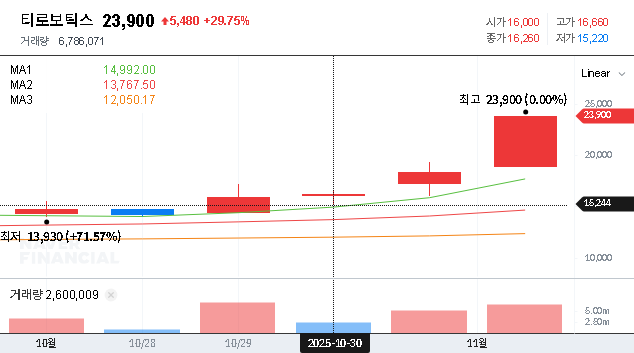
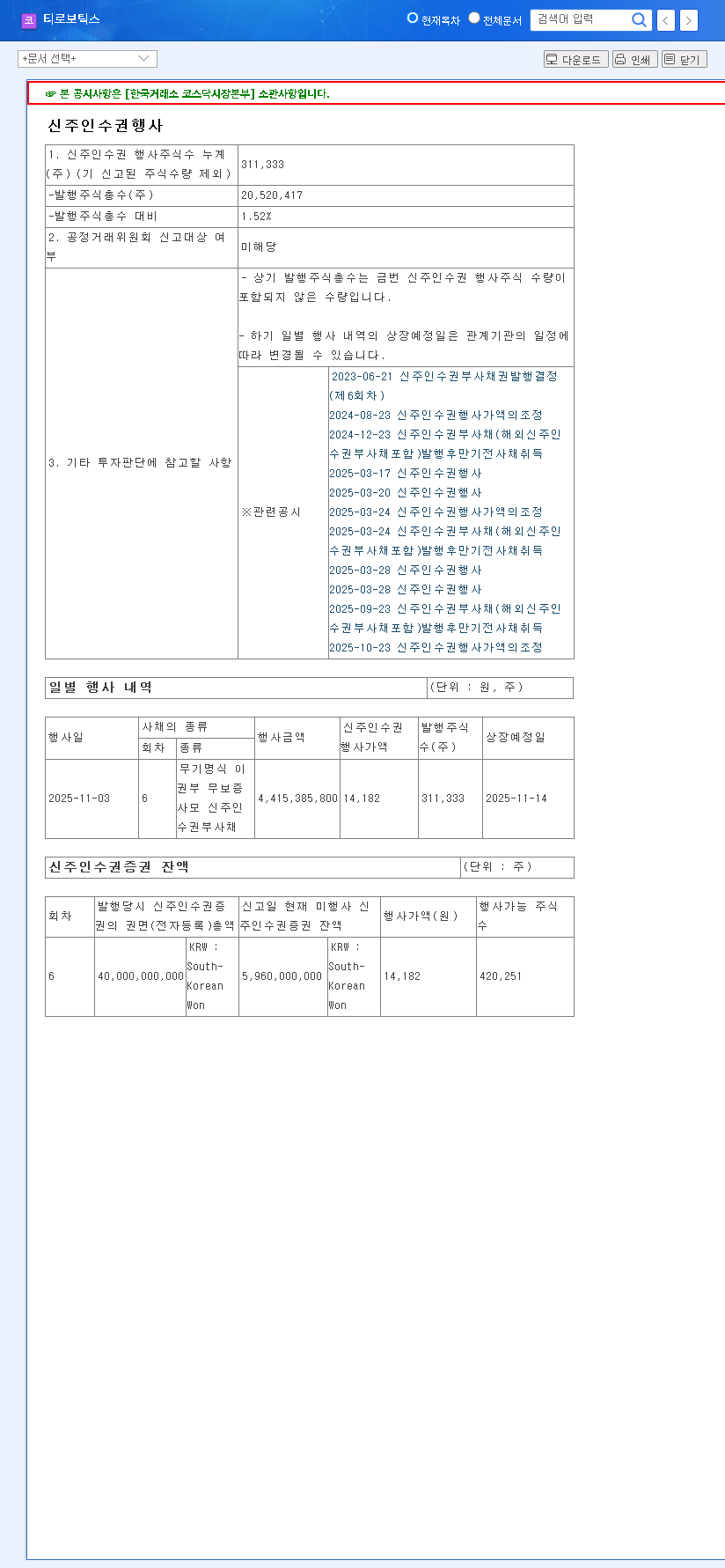
T-Robotics has confirmed its plan to issue 311,333 new shares, which are scheduled for listing on November 14, 2025. This issuance stems from the exercise of new share rights, a mechanism often tied to convertible bonds or bonds with warrants. According to the Official Disclosure, the conversion price is set at KRW 14,182. This is significantly lower than the recent stock price of KRW 23,900, creating a strong incentive for holders to exercise their rights and potentially sell for an immediate profit.
These new shares represent approximately 1.52% of the company’s market capitalization (KRW 479.2 billion). While a 1.52% increase in outstanding shares may seem minor, the primary concern for the market is not just the immediate selling pressure but the implications of share dilution and what it says about the company’s need for capital.
Financial Health Under the Microscope: A Look at T-Robotics’ Financials
To understand the context of the T-Robotics new share rights exercise, we must perform a thorough T-Robotics stock analysis focusing on its fundamentals. The latest data from H1 2025 paints a mixed but concerning picture.
Profitability and Balance Sheet Weakness
Revenue in the first half of 2025 saw a 14.1% year-over-year decrease to KRW 23.64 billion. While the operating loss showed a commendable improvement (narrowing to -KRW 0.73 billion), the net loss alarmingly widened to -KRW 17.24 billion. More critically, the company’s financial structure has deteriorated significantly. Total equity shrank by 32.8%, while total liabilities grew by 8.6%. This culminated in the debt-to-equity ratio surging to a precarious 247.1%. Such a high ratio, which you can learn more about from authoritative sources like Investopedia, signals substantial financial risk and reliance on debt.
Technological Edge vs. Market Dependency
T-Robotics boasts a strong technological foundation. Its core revenue streams are vacuum transfer modules (43.0%) and vacuum robots (43.2%), where it holds a unique position as the sole domestic supplier for OLED manufacturing. This is a powerful competitive advantage. However, it’s also a structural vulnerability. This heavy dependence on the cyclical OLED industry makes T-Robotics highly susceptible to downturns in a single market. Diversification into areas like autonomous mobile robots (currently 11.7% of revenue) is critical for long-term, stable growth in the competitive robotics stock investment landscape.
Investment Strategy: A Neutral Stance with Key Watch Points
Given the conflicting signals—technological strength versus financial weakness—a “Neutral” investment recommendation is appropriate. The capital raised from the new share issuance is unlikely to be a silver bullet for the company’s deep-seated financial issues. The 1.52% dilution, while not massive, adds another layer of downward pressure on a stock already burdened by fundamental concerns. For a broader view, consider reading our guide to investing in the robotics sector.
Investors should shift their focus from the share issuance itself to the company’s strategic response. The key lies in management’s ability to execute a turnaround.
Key Factors to Monitor Moving Forward:
- •Financial Improvement Plan: Look for a clear, transparent, and actionable strategy from management to reduce the debt-to-equity ratio and achieve sustainable net profitability.
- •Business Diversification: Monitor progress in growing the autonomous mobile robot segment and any new initiatives to reduce reliance on the OLED market.
- •Insider and Institutional Activity: Keep an eye on whether insiders are buying or selling, and if institutional ownership is increasing or decreasing post-issuance.
In conclusion, the T-Robotics new share rights exercise is more of a symptom than a cause. The real story is the company’s underlying financial health. Until there is concrete evidence of a fundamental turnaround, a cautious, wait-and-see approach is the most prudent course of action for investors.
Leave a Reply